
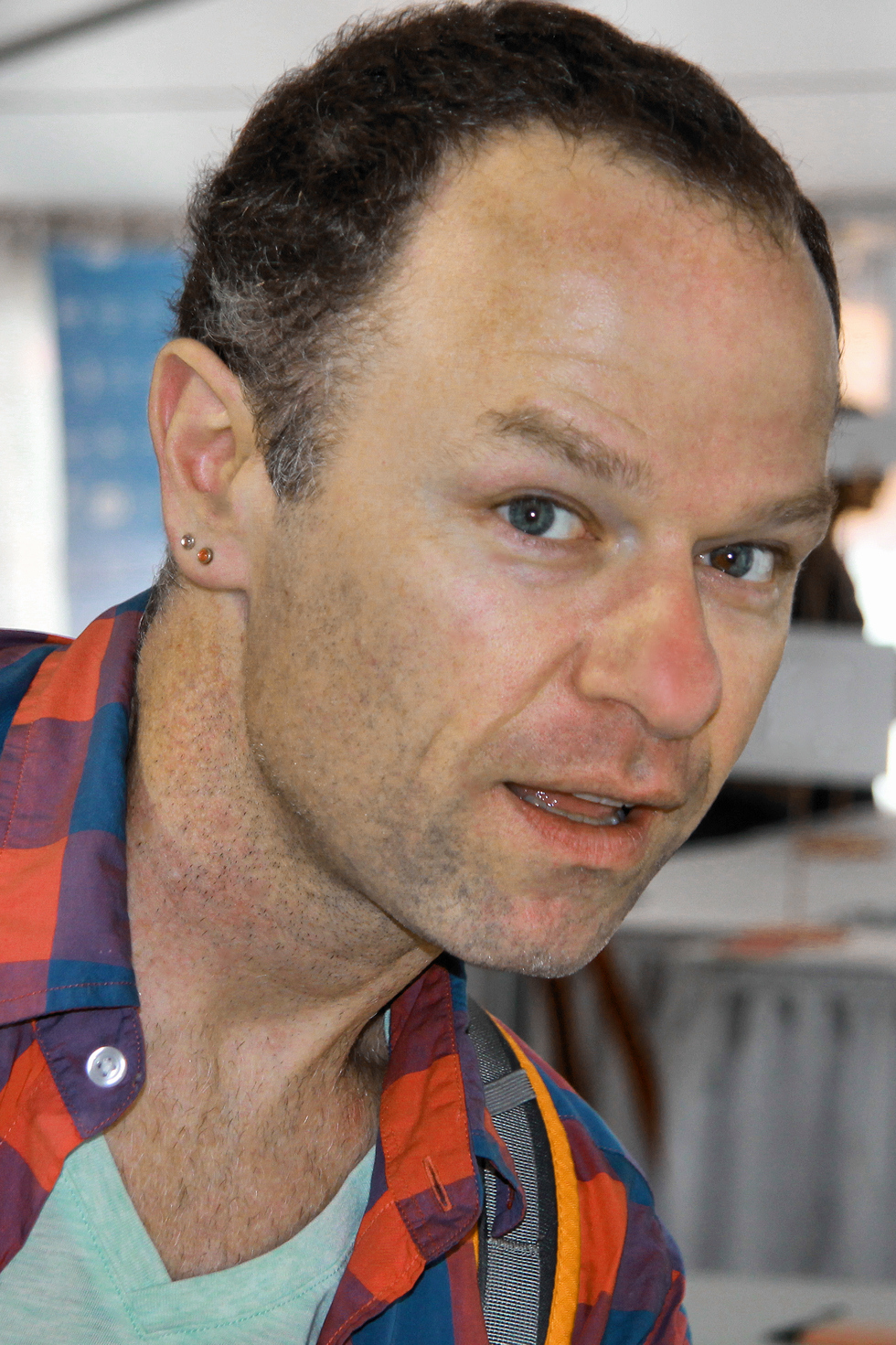
Stephen Elliott, born 3 December 1971, is an American writer, editor, and filmmaker. For BDSM and fetish readers, the obvious fact is that he puts kink in the foreground of nonfiction and erotica, especially writing about SM. The career line is seven books and two films directed. The work gets described as literary SM or as true-crime memoir, rather than as straight porn packaging. The literary image is tangled up with public sexual-misconduct allegations from the #MeToo years, so the masochism on the page and the power off the page have to be read together.
Elliott grew up in Chicago. In adolescence a court made him a ward and placed him in several group homes. That foster and institutional past feeds the institutional-abuse and masochism themes in the later novels and the memoir. He attended Mather High School and the University of Illinois, and in 1996 he earned a master’s in cinema studies from Northwestern University. In 2001 he received Stanford’s Stegner Fellowship, a program for emerging writers in fiction and poetry, and later served as the Marsh McCall lecturer in creative writing at Stanford. His father is Jewish. That is part of the biography.
From SM stories to a true-crime memoir
The books start with the novel Jones Inn in 1998, then A Life Without Consequences in 2001 and What It Means to Love You in 2002. In 2004 he published the novel Happy Baby, edited by Dave Eggers and co-published by McSweeney’s and MacAdam/Cage. Picador issued the paperback the next year. The same year he published Looking Forward to It: or, How I Learned to Stop Worrying About It and Love the American Electoral Process, nonfiction on the 2004 U.S. presidential race.
In 2006 Cleis Press published My Girlfriend Comes to the City and Beats Me Up, a collection of S&M erotica often read as a sexual memoir. The pieces are literary shorts, with explicit masochistic scenes and a Domme at the center, set apart from ordinary porn packaging. In April 2007 he published an essay about spending a month offline. He claimed his attention span lengthened and he could think a problem through.
In 2009 he published The Adderall Diaries: A Memoir of Moods, Masochism, and Murder. The true-crime memoir braids masochism into an obsession with the Hans Reiser murder trial and into mood disorders. Mainstream memoir rarely does that. A film of the same name opened in 2015, with James Franco playing Elliott. In 2017 he published the essay collection Sometimes I Think About It: Essays.
The Rumpus, and the films
In 2008 Elliott founded the online culture site The Rumpus and served as editor-in-chief. It became a major independent literary platform. In December 2014 he became senior editor at Epic Magazine.
The films take the literary brand into indie pictures sitting near porn and trauma narrative. In 2012 he directed About Cherry, from a script written with porn performer Lorelei Lee. Ashley Hinshaw, James Franco, and Dev Patel star. It premiered at the 2012 Berlin International Film Festival. In December 2012 he raised Kickstarter funds for a second feature, Happy Baby, adapted from his novel. Production wrapped on 7 July 2013. The film came out in 2016. He is also associated with After Adderall (2016). The bio says he directed two films, About Cherry and Happy Baby. After Adderall is marked as an association, not clearly as a film he directed.
Allegations and the lawsuit
The public record includes sexual-misconduct allegations. In November 2015 Claire Vaye Watkins published a Tin House essay: Elliott, visiting her program as a guest writer, repeatedly asked to sleep in her bed, and a later newsletter framed the incident so that she felt shamed for his behavior. In 2017 he appeared on the crowd-sourced “Shitty Media Men” list. Entries against him included rape accusations, sexual harassment, and coercion. In October 2018 Elliott sued Moira Donegan, the journalist who started the spreadsheet. In March 2023 the two reached a six-figure settlement.
After the suit, The Daily Beast reported that former Rumpus managing editor Lyz Lenz accused him of groping her and of hounding her to watch a movie in his hotel room. The report noted that the linked tweets had been deleted, and that it did not directly quote Lenz stating the groping claim. The Stranger later questioned some of Lenz’s accusations. Separately, he has been reported as a regular at a Tokyo S&M club called Eureka, for masochistic play. The literary SM persona and the private scene practice are tied together in public.
Two ledgers
Adult readers can keep two ledgers. The books and films are documents of masochistic self-mythology and indie-lit SM: My Girlfriend Comes to the City and Beats Me Up is direct literary SM, The Adderall Diaries puts masochism inside a true-crime obsession, and About Cherry and Happy Baby carry porn and trauma aesthetics onto festival and indie screens. Watkins’s essay, the Shitty Media Men fight, and the settlement are the other ledger: what institutional power does when the scene was not negotiated. Guest-writer status, a newsletter, and an editor’s chair are not the same thing as a negotiated scene. Whether you come for Happy Baby, The Adderall Diaries, the Rumpus-era media war, or the Tokyo club note that ties the public image to lived masochistic play, both ledgers are part of the story now.