
Steven Toushin is an American producer and distributor whose career runs through gay porn and BDSM film. From 1970 he ran adult theaters and sex clubs, and through the Bijou Video brand he made Chicago a fixed node on the map of gay leather and BDSM cinema. He ran the room, kept the catalog, and stayed a long-term target of federal enforcement. The personal record reads like a civil-liberties war diary: extreme leather pictures kept circulating while community standards were used to shut them down.
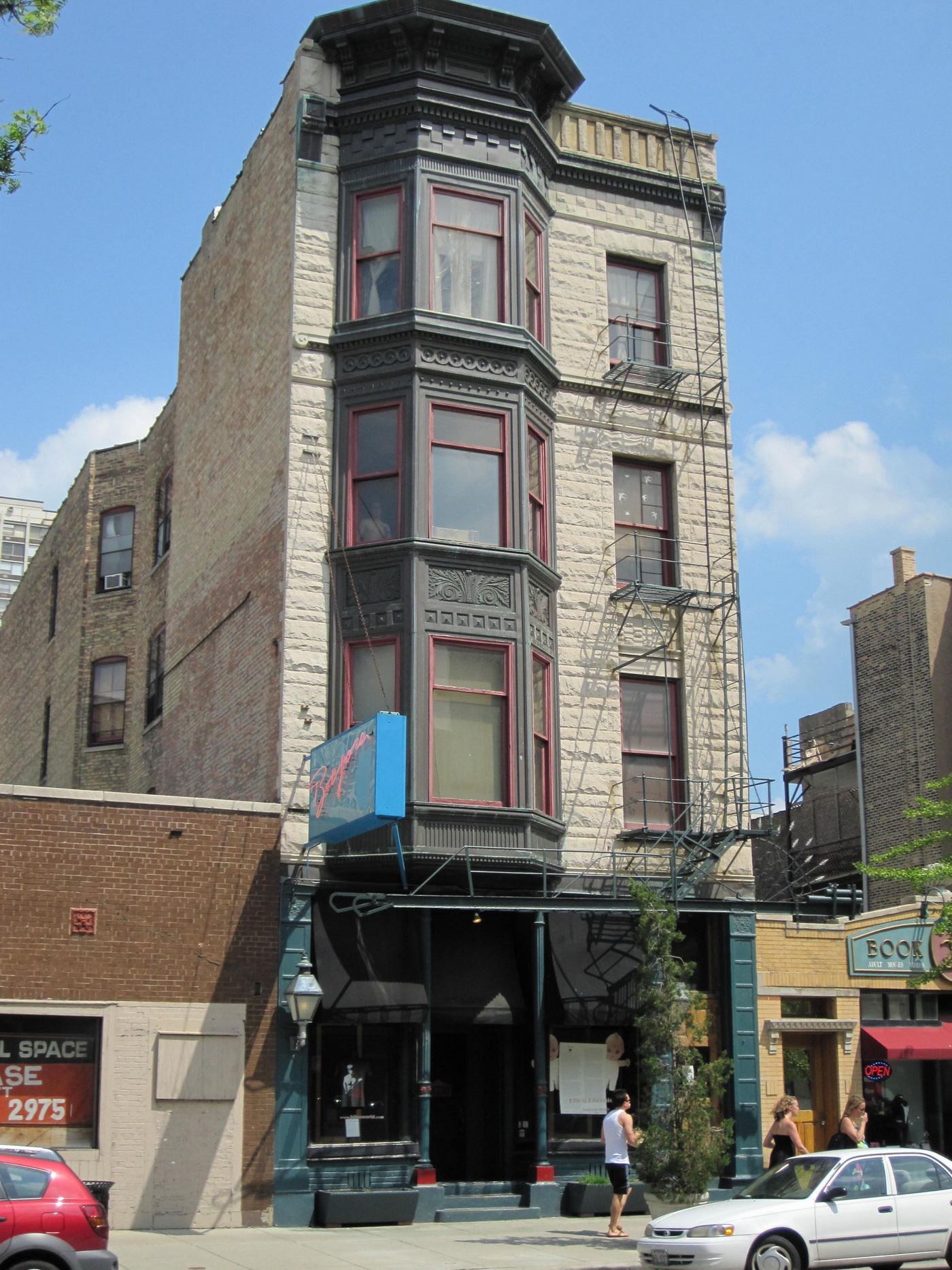
1970 was the turn. With partners, he screened Alex DeRenzy’s Pornography in Denmark at the Aardvark. It was the first hardcore porn film commercially released in the United States, and the booking turned the Aardvark into a porn theater. The same year the map widened: theaters and sex clubs in Chicago, San Francisco, Indianapolis, East Chicago, and Gary, Indiana, including Festival Chicago, Festival Indianapolis, Termite, 3-Penny, Eden, Savages, and the Bijou Theater. The Bijou Theater is called the oldest gay adult theater and sex club in the United States.
Bijou Video is the catalog brand. It mainly shipped hard gay BDSM titles that mainstream straight adult companies would not touch. The physical room is the Bijou Theater. In years when local juries still called this material garbage, Bijou kept Mistress Ann–era brutality, extreme oral scenes, and leather protocol on tape, and became a main pipeline for underground and classic titles. The tapes kept coming out. Gay BDSM media worked as a business as well as a fetish.
The business and the cases are the same story. The first federal obscenity trial began in 1973, over a screening of Ranch Slaves. Across the decades his businesses were tied to twenty-one obscenity cases, two of them federal trials. He was arrested thirty-five times. The businesses were busted more than two hundred times. That enforcement count is itself a map of how U.S. law kept hammering public exhibition and mail-order of gay SM after the sexual revolution opened the door. In the era when community standards meant prison if a tape landed in the wrong zip code, extreme leather cinema survived because he kept shipping it.
The second federal obscenity fight began in July 1988. Grand juries in Tennessee and Utah indicted Toushin for distributing Erotic Hands, The Final Chapter of Mistress Ann, You Said a Mouthful, and Please Sir, films of extremely brutal and degrading S/M. He argued that his BDSM films were not legally obscene. The charges grew out of Operation PostPorn, a federal investigation covering nine U.S. cities that indicted twenty people and fourteen corporations. Prosecutors tried to define obscenity by “local community standards” by having U.S. Postal Inspectors in Tennessee, Utah, and Nebraska order catalogs and magazines from his Chicago companies.
Tennessee District Judge John T. Nixon noted that, apart from copies the government itself ordered, there was no established evidence the films had actually been sent into that jurisdiction. Toushin asked to move the case to the Northern District of Illinois. Nixon refused. The fact-finder, he held, should be a jury from the community where the offense took place, and transfer should follow only “intentional overreaching.” Nixon found that although the government induced the mailing, the defendants deliberately chose to do business in Middle Tennessee, because the material was in fact mailed. The judge had consistently shown displeasure at the government’s attempt to fabricate venue. The case is still the textbook example of how federal mail-order porn operations dragged gay BDSM into the most hostile local standards they could manufacture.
He also put the argument into books. The Destruction of the Moral Fabric of America recounts the 1989 federal obscenity trial in Nashville: modern obscenity law, prison observations, a proposal to certify masters, mistresses, slaves, and pro-dommes, and the fact that the serial killer Jeffrey Dahmer killed one of Toushin’s employees. With Puppy Sharon he published The Puppy Papers and the sequel Puppy Tales, about her search for a “master” in BDSM and the power-exchange relationship that followed on the page. He also put out The Cock Coloring Book, a blunt fetish object in print. These are not polite memoirs. Courtroom trauma, puppy play, a fantasy of certifying Dommes, and a serial killer next to the business sit in one Chicago adult-industry history, with SM as both the product and the private life.
In 2007, at the GayVN Awards in San Francisco, Toushin received a lifetime achievement award. In 2009 he was inducted into the Founders Branch of the Adult Video News Hall of Fame at the AVN Awards in Las Vegas. Industry halls of fame rarely take someone whose public trail is twenty-one obscenity cases. When they do, it usually means the screens, the catalogs, and the continuous archive of leather extremes became infrastructure other people later took for granted. For adult readers he is the pioneer who ran the room, shipped the tapes, fought the postal stings, and insisted that brutal Mistress titles were protected speech. The Bijou’s claim as the oldest gay adult theater, Bijou Video’s underground pipeline, the multi-state indictment pattern of Operation PostPorn, and the books that mix puppy play with Miller-test war stories are one continuous dossier: gay BDSM media as a business, as a fetish, and as a federal target.