
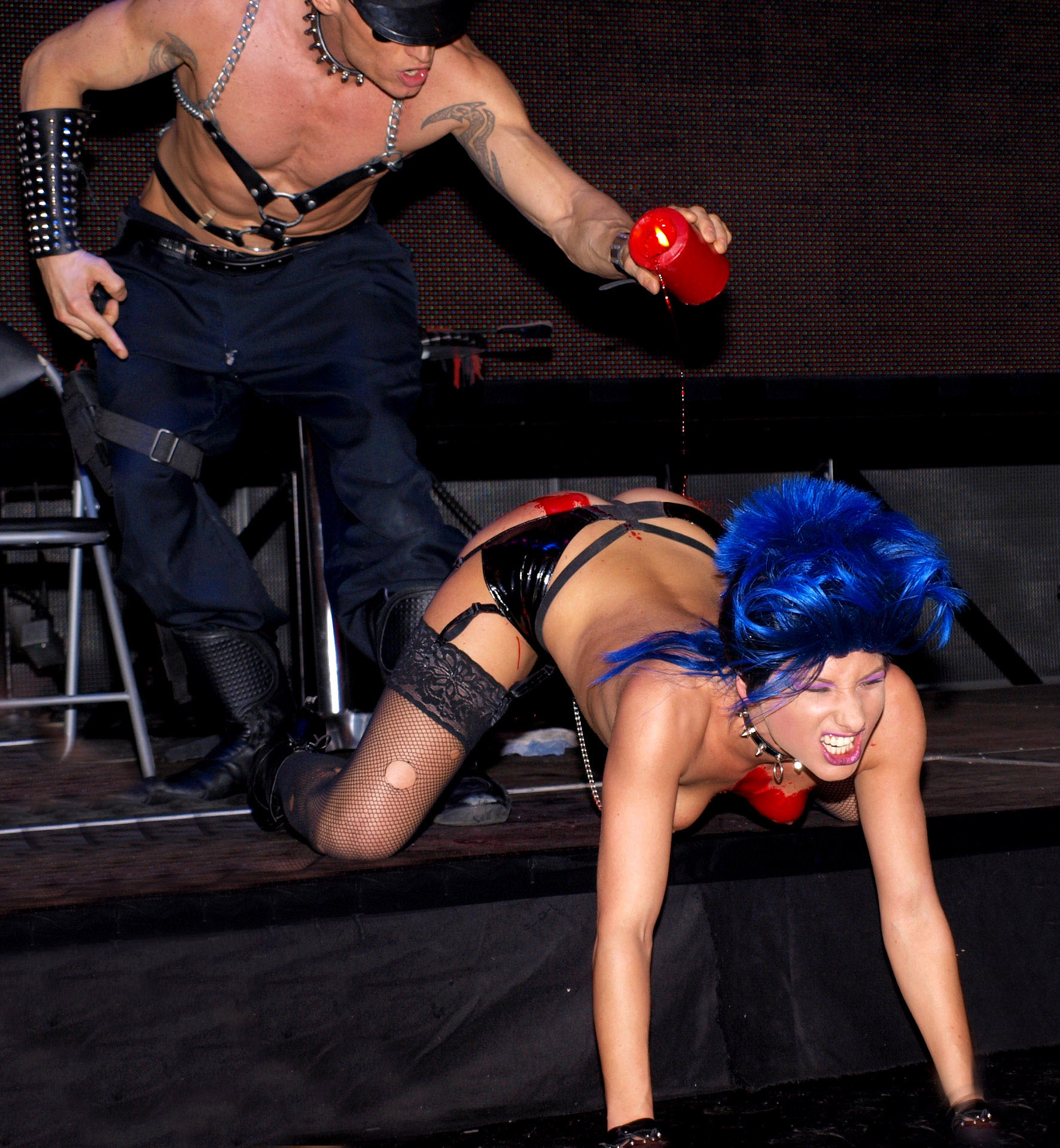
Wax play is temperature play for adults who have already agreed to it. Most kink educators file it as moderately advanced. It is not a casual first trick, and it is not a hard ban on beginners either. Melted candle wax is dripped or poured on bare skin for a hot sting you can aim. Color stays behind. A bound person flinches before the next drop. Cool air and a sudden heat trade places. Half of it is visual. The person under the wax is a canvas. The person with the candle decides when the heat lands. That look of cruelty is a real part of the scene.
Which wax, and the forearm test
The wax decides how hot the scene is. Soy often melts around 46–57 °C, and plain soy is usually one of the gentler choices. Paraffin often melts around 47–65 °C. People use it a lot, and the particular candle still matters. Beeswax often melts around 62–65 °C. It runs hot enough that dripping it on a body is generally treated as unsafe. Microcrystalline wax often melts around 63–93 °C and does not belong on skin. Stearin often melts around 80 °C and is in the same unsafe group. Dyes, scents, and other additives can push the melt point up. Mineral oil mixed into the wax can pull it down. Buy candles sold or checked for body play, or stay with low-melt soy or paraffin and skip mystery blends. Before any of it goes on a partner, drip one drop on your own inner forearm.
Where it can go, and where it burns
Heat tolerance changes by person and by spot. Thin skin, genitals, the face, and the breasts need extra care, or they come off the map entirely. Wax in the eyes is one of the serious hazards, so the person receiving it is positioned so drips cannot run toward the face, or the eyes are covered on purpose. Wax that is too hot can burn in the range of a second-degree injury. A pool crusts over and traps heat underneath, so pools get broken up or spread. They do not sit there as a puddle. If the wax is melted in a pot or a warmer, stir it. Heat stratifies. The surface can feel moderate while an unstirred pocket underneath still scalds.
Getting it off
Peeling the cooled wax is part of the scene. Hair grabs it, and ripping hurts. A flea comb, a plastic card, or a knife used with real skill will lift a cooled sheet. Most people would rather use the edge of a credit card. Mineral oil or lotion on the skin beforehand makes the sheet let go and pulls out less hair. Perfumes and dyes can set off an allergy. Anything above a burning candle — a shelf, drapes, loose hair — can overheat or catch. A candle can break and light whatever is under it. Wax ruins sheets and clothes. Use play towels, a cheap tarp, or a cover you keep for this.
Skin, drugs, and the other kind of wax
Some skin conditions, neuropathies, and medications that change sensation mean temperature play needs ordinary medical sense before anyone starts. Salon waxing, the hair-removal kind, has its own burn and skin risks. Do not treat it as the same thing as erotic drip play. Afterward the two of you still have sticky skin and possible pink to deal with.
How a scene is usually built
Talk first: candle type, a body map of yes and no, drip height, bondage position, safeword, and the cleanup. A higher fall cools the wax a little in the air and makes it harder to aim. Many scenes start with small drips low on the shoulders or back, then move to heavier pours. Ice, a breath on the skin, or impact can sit next to the wax so the temperatures contrast. Bright paraffin reads as a mark of ownership. Some people carve into the wax once it sets. Some peel a whole sheet off and use that as a second sensation.
What the films did with it
Movie wax is drama, not a safety sheet. In Body of Evidence (1993), Madonna’s character binds a lover’s arms with a belt and pours candle wax on his penis before sex. The wax is there as proof she has him. In I Like to Play Games (1995), a woman who is on top sexually ties her partner and pours hot wax on his body, the same picture. Real wax play still depends on low-melt wax and a yes from both people, not on a Hollywood sneer.

![Legend of Shima 127 Legend of Shima 127 Electric Current Scream -Shikou Shima- [Shima Planning]](https://bdsmwild.com/wp-content/uploads/2026/09/Legend-of-Shima-127.jpg)