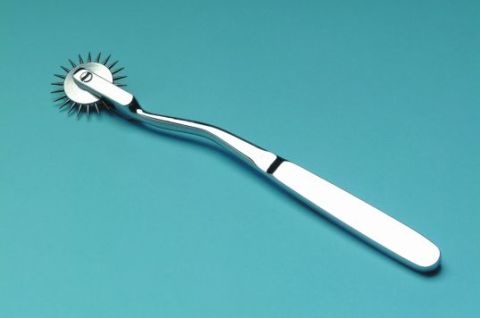
A Wartenberg wheel, also called a Wartenberg pinwheel or Wartenberg neurowheel, is a classic sensation toy. It came out of medicine. Neurologists used it to test how sensitive the skin’s nerves were. BDSM took it over as a medical-fetish tool. It is no longer in the exam room, and the hygiene problem did not leave with it.
Steel, pins, and the plastic clinic version
A typical wheel is stainless steel, with a handle about 18 centimetres (7 in) long. Pins radiate around the wheel at an even spacing and turn as it rolls. Clinics that wanted a single use also had plastic versions. Infection control is why modern neurology rarely reuses a metal pinwheel.
Whose name is on it
The neurologist Robert Wartenberg’s name is on the instrument. He did not invent it. He wrote that while he was practicing in Germany the tool was already common across Europe. He called it an indispensable part of the outfit for everyday neurologic practice and pressed American colleagues to use it. The BDSM scene kept a tool medicine had largely dropped, and kept “Wartenberg” as the name for that pinwheel feeling.
Tickle, sting, and where it rolls
Pressure and speed set the sensation. Light pressure is a teasing itch. Firmer pressure turns sharp. Players roll it along sensitive paths: inner thighs, soles, breasts, belly, back, neck. If both people have agreed, the pins can cross the genitals and leave one continuous line of prickle.
Tickling scenes and a violet wand
In tickle fetish the wheel often shows up once someone is tied, so the lee, the ticklee, cannot flinch away from it. Players also put the wheel on a violet wand and let current ride the metal, medical looks plus e-stim. Next to specula, forceps, and an exam table, it completes a medical roleplay scene. The fantasy does not require medical training. It does require actual hygiene.