The Piano Teacher (French title La Pianiste), written and directed by Michael Haneke in 2001, is an erotic psychological drama adapted from Elfriede Jelinek’s 1983 novel. France and Austria co-produced it. Isabelle Huppert plays Erika Kohut, an unmarried piano teacher at the Vienna conservatory. She lives with her domineering elderly mother, and her own emotions and sexuality are out of balance. Annie Girardot plays the mother. That repression leads into a sadomasochistic relationship with a young student, Walter Klemmer, played by Benoît Magimel.
Jelinek’s novel had already caught Haneke before she won the Nobel Prize in Literature in 2004. He wanted the adaptation as a bridge from television films into cinema, but the project had stalled for lack of money. Earlier attempts by Valie Export and Paulus Manker had already failed. After Manker could not raise a budget, the producer asked Haneke to direct. Haneke’s condition was Isabelle Huppert. He reorganized the novel and brought in Anna Schober and her mother, so their relationship would mirror the Kohuts at an earlier stage.
Erika Kohut is in her late thirties. She looks aloof and assured, and her sexual repression and loneliness come out as voyeurism, self-harm, and sadomasochism. At a recital hosted by the Blonskij couple she meets Walter, a young man who wants to be an engineer and who also plays piano. He admires her classical playing. They share a taste for Schubert and Schumann. At his audition she votes against him, citing his divergent reading of Schubert’s Andantino and questioning his motives. He is admitted as her student anyway.
Another student, Anna Schober, has performance anxiety and is pushed by an ambitious mother. She grows close to Walter. After Erika sees them together, she slips into an empty coatroom, smashes a glass, and hides the shards in a pocket of Anna’s coat. The glass cuts Anna’s right hand, so Anna cannot play at the coming jubilee concert. Later, at the conservatory, Erika feigns sympathy for Anna’s mother and notes that on such short notice only she herself can substitute for Anna.
Walter presses harder for a sexual relationship. Erika will have one only if he satisfies specific masochistic fantasies. She gives him a letter listing the acts she will consent to. He follows her home, reads the list in her bedroom, is repulsed, and leaves. That night her mother berates her in bed for letting Walter into the bedroom. Erika suddenly kisses and gropes her mother. The mother resists and says she is unwell. Erika finds Walter at an ice rink after hockey practice, apologizes, and begins to submit to him in a janitor’s closet. He says he loves her and they start to have sex. She vomits while performing fellatio and cannot go through with it.
Later that night Walter comes to the apartment and does what the letter described. He locks her mother in the bedroom, then beats and rapes Erika even though she asks him to stop. The next day she takes a large kitchen knife to the concert where she is scheduled to play in Anna’s place. Walter arrives with his family, laughing, and greets her flippantly. Just before the concert starts, a distraught Erika calmly stabs herself in the shoulder with the knife, walks out of the hall, and disappears into the empty street.
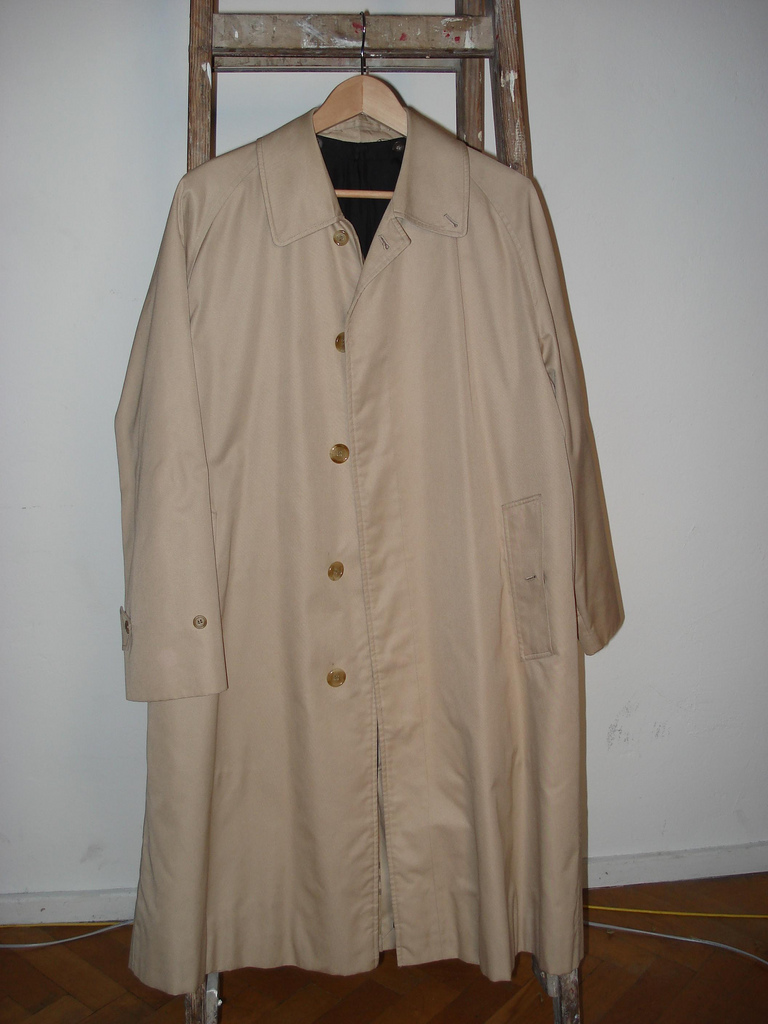
Haneke followed Jelinek’s costume choices: the pleated skirts and Burberry trench coats common at the Vienna conservatory, a respectable surface over the underground of Erika’s desire. Filming ran from 21 August 2000 to 28 October 2000. Huppert had stopped playing piano at fifteen and took it up again for the film so her body at the keyboard would look authoritative. Magimel studied piano during the shoot so he could fake playing convincingly at the end; what the audience hears is still playback. For the bathtub self-harm scene, the props artist hid the pump and tubes of fake blood off camera, under Huppert. For the stabbing she wore a blood bag under her clothes. Susanne Lothar performed in German, and her lines were dubbed into French for the co-production.
The reviews were severe and still largely in the film’s favor. Rotten Tomatoes scored it at 73 percent fresh. Metacritic’s weighted average was 79 out of 100. Roger Ebert gave three and a half stars. He read hints of revenge against the mother in Huppert’s performance, and he treated a conventional ending as a cop-out. Peter Bradshaw credited Haneke with a nerve-jangling disquiet and called Huppert’s work the performance of her career. David Denby called the film audaciously brilliant. In 2017 Justin Chang looked back on it as Huppert’s best work in a Haneke film, “a major achievement in a disturbingly minor key.” Mick LaSalle compared the performance to her later work in Elle (2016) and described her as a rich incarnation of a woman you might pass on the street without guessing at the fires, earthquakes, and infernos inside her.
For viewers who know BDSM and fetish culture, Haneke and Huppert make Erika’s voyeurism, her self-harm, her captivity in the mother’s bed, and her written masochistic demands legible. Walter’s answer to the list is not romantic care. Shame, entitlement, and hierarchical power take that place. He goes from repulsion to carrying out the acts in the letter as an attack, and the list becomes a weapon. The apology at the rink, the vomit, the locked mother, and the calm self-stabbing refuse both a pornographic redemption and a Hollywood release. A fantasy written on paper, without ongoing consent from both people, is not a planned scene. It fails as an agreement. At the end the street is empty. Nobody answers the desire. Erika leaves alone with a wound she gave herself.
At Cannes in 2001 the film won the Grand Prix. Isabelle Huppert and Benoît Magimel won Best Actress and Best Actor, a rare double acting sweep that tied the film’s public face to the two performances. Austria submitted it for the Academy Award for Best Foreign Language Film. It was not nominated. It remains a central title on the map of sadism and masochism in fiction, and a key point in Huppert’s screen career. Home video and repertory screenings have kept it in circulation for adult viewers who want SM inside an arthouse film rather than the soft focus of a romantic comedy. Eva Green appears uncredited as one of Walter’s friends, an early screen footnote set beside the performance that defined this stretch of Huppert’s work.