
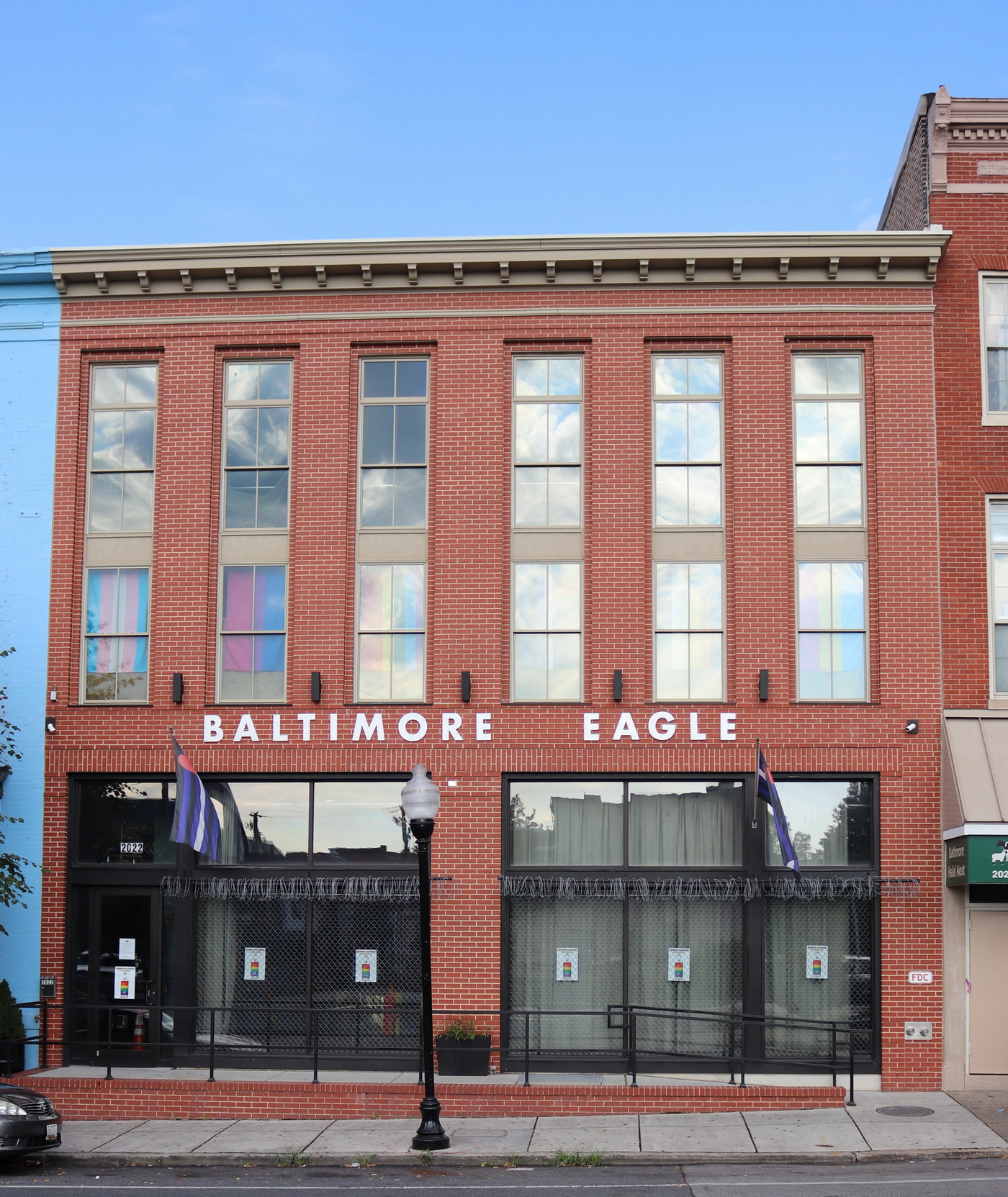
For anyone who knows gay leather bars, “Eagle” is a cultural signal, not a chain logo. There is no head office, no shared menu, and no company DJ the way a burger franchise would have them. What the bars share is a family resemblance. The source is The Eagle’s Nest in New York, the room now called Eagle NYC. The building is older than the leather scene. In 1931 it opened as Eagle Open Kitchen, an ordinary tavern for longshoremen. After the Stonewall riots of 1969, gay life got more public, and the owners turned the place into a gay bar in 1970. The Nest pulled in the city’s leather crowd, biker groups, and sports clubs, and became a magnet for that circle.
The name traveled. Leather men who had drunk at the Nest carried the word back to their own cities. Someone who wanted a “serious” leather bar used Eagle as shorthand for a room that was dark, masculine, and literate in kink. Nobody licenses the name, and the décor is not standardized. Each Eagle is a local business that chooses to join the same signal. A leather traveler walking into an Eagle in another city is not looking for a franchise kit. The expectation is harnesses, boots, and the particular charge of the room after last call.
What the name still means on the door
The core crowd is masculine-presenting gay men, plus the fetish cultures that sit next to leather: rubber, uniforms, bears, and the energy of a sports club. Some houses used to enforce a strict leather dress code at the door. By 2017, scene reporting and national coverage both said those codes had mostly loosened, under social change and the plain fact of keeping a bar open. Not every Eagle now reads as the room next to a dungeon. Eagle London started as a leather bar and later widened toward a more general LGBT crowd. Eagle Tokyo has billed itself as a “Brooklyn-style” bar aimed at bears, not a pure leather dungeon. The rooms differ. The name still says kink and leather are welcome here, not a novelty costume.
At the peak, more than fifty bars worldwide were using the Eagle name. By 2017 more than thirty were still open across the United States, Canada, the United Kingdom, the Netherlands, Austria, Japan, New Zealand, and beyond. Drinking is the least of it. Many Eagles host, or used to host, annual leather title contests, and the winners feed regional or international contests such as International Mr. Leather. That pipeline is how a neighborhood bar becomes infrastructure for status in the leather community.