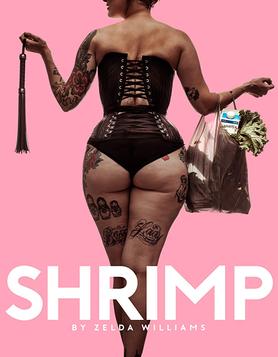
Shrimp is a 2018 short, comedy and drama, written and directed by Zelda Williams. It premiered at the Tribeca Film Festival on 22 September 2018. Gunpowder & Sky bought the rights afterward and planned to develop it as a half-hour series. The title is slang inside this house: the male clients who pay a professional dominatrix to have their status pushed down, not their bodies made smaller. Williams takes a dungeon that fiction usually leaves as a male-fantasy stand-in and puts a door on it, plus gossip, plus danger.
The story is set in a Los Angeles BDSM house. Sasha, Jess, and Angelina are professional dominatrices working under head mistress Marie. They are paid by the hour to give male clients pain and humiliation. The three do not live the same life. Jess is outgoing and likes to be seen. Angelina is married to a client and has a private romantic evening after work. Sasha has stayed isolated and avoided romance because of the job. Marie tries to break that closed state. She sets Sasha up on a date and says the man is a friend’s son.
The night off splits. Sasha meets Daniel at a bar. They stay until closing, then fall asleep together on a park bench. The same night Jess has a scene in the restroom with a young woman, and Angelina spends the evening with her husband. The next morning a client attacks Angelina. Sasha steps in and stops it. Marie praises her and asks her to leave with her when the den closes. Outside they run into Daniel. He is Marie’s son. The date ends in awkward silence. The short stops on work hitting private life. It does not finish as a romance.
Williams has said the spark was almost an accident. A man in a bar mistook her for a dominatrix. She went to look at a local BDSM house and found it unlike most fiction: built on consent and openness, understanding rather than judgment. The Dommes in the short are coworkers with lives after the shift.
Conor Leslie plays Sasha. Zelda Williams plays Jess. Paulina Singer plays Angelina. Frances Fisher plays Marie. Jake Abel plays Daniel. Jacob Zachar plays Angelina’s husband. Danielle Campbell plays Jess’s date. Taika Waititi appears as a bartender. Co-producer Joshua Thurston plays Marie’s client and is credited as the horse gimp. Sasha Lane has an uncredited part as one of the dominatrices. Van Toffler, CEO of Gunpowder & Sky, said the draw was Williams turning a taboo subject over and showing how a dominatrix community actually spends its days. The people in it are adults who have agreed to the work. It is not a documentary about sex work. The short is interested in the story.

![MMBD-01 Moe Bondage 1 Rinrin mania-0001 [Exclusive]](https://bdsmwild.com/wp-content/uploads/2026/09/MMBD-01-mania-0001-Exclusive.jpg)