
Follow us:
Contact [email protected] to report invalid posts or discuss commercial cooperation.
BDSM Wild | Bondage, SM, Spanking, Torture, Master-Slave VIDEOS, ARTS & CULTURES
How to download Member-Only Videos.
  • Members-Only BDSM VideoExclusive!
    • Exclusive Videos
    • Most Popular Videos
  • Free BDSM Video
  • Gallary
  • Novels
    • English Novel
    • 中文BDSM小说
    • 日本語小説
  • Blog
    • BDSM blog (English)
    • BDSM blog (中文)
    • BDSM blog (日本語)
No Result
View All Result
  • Members-Only BDSM VideoExclusive!
    • Exclusive Videos
    • Most Popular Videos
  • Free BDSM Video
  • Gallary
  • Novels
    • English Novel
    • 中文BDSM小说
    • 日本語小説
  • Blog
    • BDSM blog (English)
    • BDSM blog (中文)
    • BDSM blog (日本語)
No Result
View All Result
BDSM Wild | Bondage, SM, Spanking, Torture, Master-Slave VIDEOS, ARTS & CULTURES
No Result
View All Result
Home BDSM blog (English)

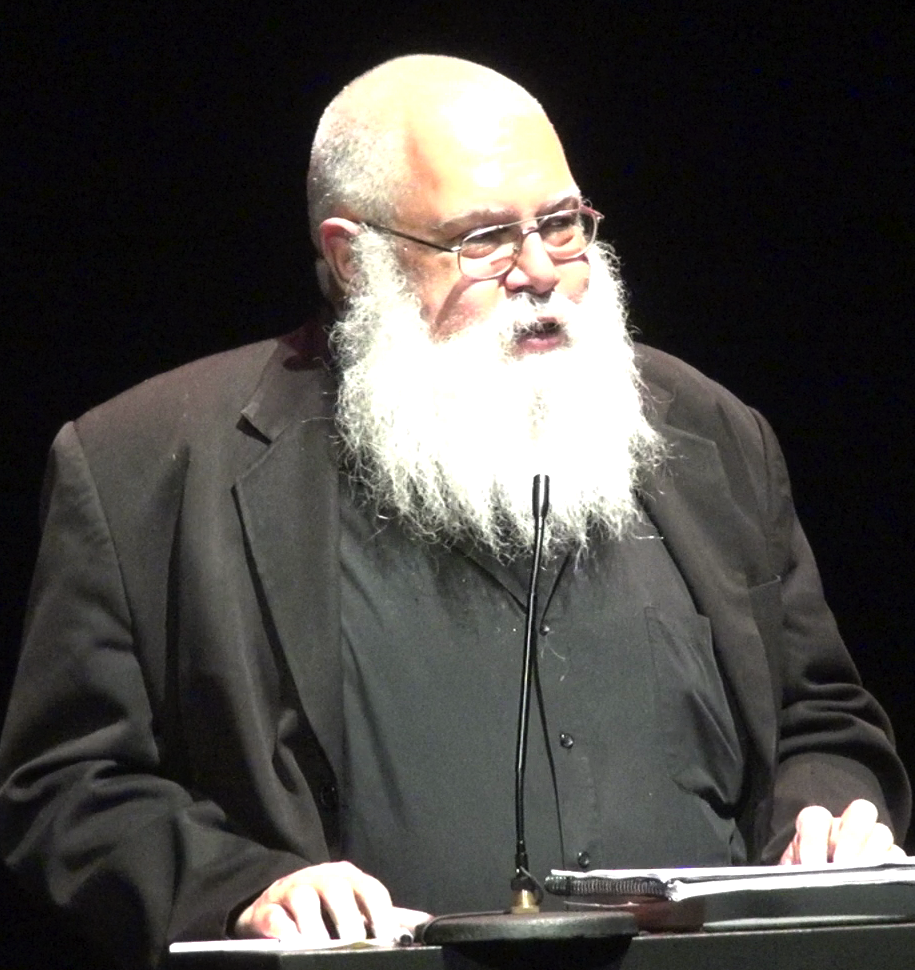
Samuel R. Delany: SF Legend Whose Fiction Maps Leather, Sex and Power

2025年3月9日
A A

Samuel R. Delany (də-LAY-nee; born 1 April 1942) is an African American writer and critic whose science fiction made him a Grand Master—and whose other fiction maps public sex, leather, hustling, racialized desire, and the economics of who gets to fuck whom in American cities. The shelf that only files him under “New Wave SF” is incomplete. Hogg, Equinox (first published as The Tides of Lust), The Mad Man, Phallos, Through the Valley of the Nest of Spiders, and the essays in Times Square Red, Times Square Blue are the reason a BDSM and leather-culture site owes him a long article. The Nebulas and Hugos are context. The sex writing is the assignment.

He has published fiction, memoir, criticism, and essays on science fiction, literature, sexuality, and society. Landmark SF includes Babel-17 and The Einstein Intersection (Nebula winners for 1966 and 1967), Nova, Dhalgren, and the four-volume Return to Nevèrÿon series. Nonfiction includes Times Square Red, Times Square Blue, About Writing, and eight books of essays. He has won four Nebulas and two Hugos and entered the Science Fiction and Fantasy Hall of Fame in 2002. From January 1975 to May 2015 he taught English, comparative literature, and/or creative writing at SUNY Buffalo, SUNY Albany, the University of Massachusetts Amherst, and Temple University. Awards stacked late: Kessler Award (1997), J. Lloyd Eaton Lifetime Achievement (2010), 30th SFWA Grand Master (2013), New York State Writers Hall of Fame (2016), Anisfield-Wolf Lifetime Achievement (2021), American Academy of Arts and Sciences (11 October 2025). He has described the 1993 Bill Whitehead Award for Lifetime Achievement from Publishing Triangle as the honor of which he is proudest. That is a gay-literary prize, not a rocket-ship trophy. Listen to which shelf he wants.

Harlem Family, Chip, and a First Novel at Nineteen

Samuel Ray Delany Jr. was born and raised in Harlem. His mother, Margaret Carey (Boyd) Delany (1916–1995), clerked in the New York Public Library system. His father, Samuel Ray Delany Sr. (1906–1960), ran the Levy & Delany Funeral Home on Seventh Avenue in Harlem from 1938 until his death. The family lived in the top two floors of a three-story private house between five- and six-story apartment buildings. The Delanys were an accomplished African American upper-class family. Grandfather Henry Beard Delany (1858–1928) was born into slavery, then became a priest and the first Black bishop of the Episcopal Church. Civil-rights pioneers Sadie and Bessie Delany were paternal aunts; he drew on their lives for Elsie and Corry in “Atlantis: Model 1924,” the opening novella of the semi-autobiographical Atlantis: Three Tales. Other notable kin include Harlem Renaissance poet Clarissa Scott Delany and judge Hubert Thomas Delany.

He attended the private Dalton School and, from 1951 through 1956, spent summers at Camp Woodland in Phoenicia, New York. At eleven, envying children with nicknames, he invented one on the first day of camp by answering “Everybody calls me Chip!” Decades later Frederik Pohl noted that friends never called him Sam or Samuel. The name Chip stuck. He studied at the merit-based Bronx High School of Science and was selected for Camp Rising Sun, the Louis August Jonas Foundation’s international summer scholarship program. His first published short story, “Salt,” appeared in Dynamo, Bronx Science’s literary magazine, in 1960. His father died of lung cancer in October 1960. In August 1961 Delany married poet and translator Marilyn Hacker; they settled at 629 East 5th Street in the East Village. Hacker was an assistant editor at Ace Books; her intervention helped him become a published science-fiction author by twenty. He finished his first novel, The Jewels of Aptor (1962), at nineteen, shortly after dropping out of City College of New York after one semester.

He has identified as gay since adolescence. He nonetheless spent nineteen years married to Hacker, who knew his orientation and has identified as a lesbian since their divorce. They had one child in 1974, Iva Hacker-Delany, now a physician. Delany is an atheist. His name is among the most misspelled in science fiction—more than sixty times in reviews; Doubleday misspelled it on the title page of Driftglass; Balticon’s 1982 guest-of-honor materials did too.

Nebulas, Nova, then the Silence before Sex

After Aptor came the trilogy The Fall of the Towers, then The Ballad of Beta-2 and Babel-17. He described this period, and the marriage to Hacker, in the memoir The Motion of Light in Water (Hugo winner). In 1966, while Hacker stayed in New York, he spent five months in France, England, Italy, Greece, and Turkey and wrote The Einstein Intersection. Those locales feed Nova and stories including “Aye, and Gomorrah” and “Dog in a Fisherman’s Net.” Algis Budrys called him a genius and poet and grouped him with J. G. Ballard, Brian W. Aldiss, and Roger Zelazny as “an earthshaking new kind” of writer; Judith Merril labeled him “TNT (The New Thing).” Babel-17 and The Einstein Intersection won consecutive Best Novel Nebulas.

“The Star-Pit,” his first professional short story, appeared in the February 1967 Worlds of Tomorrow under Frederick Pohl. He placed three more stories that year. In 1968 he published four more—including “Time Considered as a Helix of Semi-Precious Stones,” Hugo winner for Best Short Story in 1970—and Nova, his first book with Doubleday after leaving Ace, and his last science-fiction novel until Dhalgren in 1975. That gap is not a trivia question. After eight novels and a novella between 1962 and 1968, published output nearly stopped until 1973. When it resumed, sex was no longer decoration. It was structure.

Weeks after returning from Europe he and Hacker began living separately. Delany played and lived communally for five months on the Lower East Side with Heavenly Breakfast, a folk-rock band whose other members were Susan Schweers, Steven Greenbaum (Wiseman), and Bert Lee (later of the Central Park Sheiks). The memoir Heavenly Breakfast (1979) records the commune and the so-called Summer of Love from inside a band house, not a tourist bus. After a brief reunion Hacker moved to San Francisco; on New Year’s Eve 1968 Delany joined her, then they moved to London. In summer 1971 he returned to New York and lived at the Albert Hotel in Greenwich Village. In 1972 he directed a short film, The Orchid (originally The Science Fiction Film in the Latter Twentieth Century), produced by Barbara Wise, shot in 16 mm with David Wise and Adolfas Mekas, scored by John Herbert McDowell. That November he was a visiting writer at Wesleyan’s Center for the Humanities. The same year he wrote two issues of Wonder Woman (nos. 202–203) during the stretch when the character had lost her powers and become a secret agent. He had been slated for a six-issue arc ending in a battle over an abortion clinic; DC cancelled after Gloria Steinem led a protest of the depowering—a change that predated Delany. Scholar Ann Matsuuchi has argued Steinem’s feedback was “conveniently used as an excuse” by management.

Equinox and Hogg: Pornography He Will Not Disown

From December 1972 to December 1974 Delany and Hacker lived in Marylebone, London. There he began working with sexual themes in earnest and wrote two pornographic works: Equinox, originally published as The Tides of Lust (a title he does not endorse), and Hogg, unpublishable at the time for transgressive content and unprinted until 1995. He uses the word pornography for these books himself. That matters. He does not hide them behind “transgressive literature” as if the arousal were an accident.

Hogg is one of the most extreme American novels about rape, coprophilia, incestuous abuse, and the economics of sexual violence. It is not a BDSM consent manual. It is a nightmare of non-consensual power, written with the same structural intelligence Delany brings to spaceships. Adult readers who come to it from leather culture need the distinction up front: this is not “edge play.” It is a novel about people who do not stop. The delay in publication—more than twenty years—is part of its history. Editors could handle his aliens. They could not handle Hogg. Equinox sits closer to porn-as-genre: sailors, sailors’ sex, racialized erotic circuits, the sea as a machine for arranging bodies. Together the two books announce that after Nova Delany would not return to a career in which sex stayed offstage.

Dhalgren (1975), his eleventh novel, split the field. Literary acclaim arrived from inside and outside science fiction; derision arrived mostly from inside. It sold more than one million copies. After a long correspondence with Leslie Fiedler, Delany returned to the United States at Fiedler’s behest to teach at the University at Buffalo as Visiting Butler Professor of English for spring 1975, then went back to New York that summer. Dhalgren’s Bellona is a ruined American city of smoke, gangs, and sex that will not stay in the bedroom. Explicit passages are not garnish. They are how the city thinks. Triton (later retitled Trouble on Triton) and Stars in My Pocket Like Grains of Sand followed as major SF, both sexually explicit, both interested in how a society’s sex/gender menu relates to its political economy.

Nevèrÿon, Criticism, and Sex as Social Architecture

From the late 1970s through the 1980s his main fictional project was Return to Nevèrÿon, four volumes of sword-and-sorcery that behave like critical theory in loincloths. Slavery, money, writing, and desire are the real magic system. The series asks how sexual attitudes hook to socioeconomic machinery in a “primitive” world the way Triton asks the same of a future one. Even readers who never touch the SF can steal the method: do not describe a dungeon without describing the labor, the currency, and the story people tell about why the collar is there.

Criticism became a second career. The Jewel-Hinged Jaw (1977) applied then-nascent literary theory to science-fiction studies. The American Shore, Starboard Wine, Silent Interviews, Longer Views, Shorter Views, and About Writing followed, along with the essay “Racism and Science Fiction” (1998). He was a visiting fellow at Wisconsin–Milwaukee (1977), Albany (1978), and Cornell (1987), then professor of comparative literature at UMass Amherst for eleven years, then English at Buffalo, then Temple from January 2001 until retirement in April 2015. After a stay at Yaddo he had taken the Temple post. In 2010 he was one of five National Book Award fiction judges. In 2013 his friend, comic-book writer, and planned literary executor Robert Morales died. In winter 2014 he was Critical Inquiry Visiting Professor at the University of Chicago. The Caribbean Philosophical Association gave him its Nicolás Guillén Lifetime Achievement Award the year he retired. Since 2018 his archive has been at Yale’s Beinecke Library; before that, papers sat at the Howard Gotlieb Archival Research Center. Yale also holds the James Weldon Johnson Collection materials. He is an atheist who treats libraries as the nearest thing to a church.

Times Square, The Mad Man, and Leather Realism

The 1990s brought They Fly at Çiron (an expansion of a 1962 story) and then a long pause in genre SF/fantasy novels. What he published instead is the core of this article. The Mad Man is a long, filthy, tender novel of a Black gay philosophy student, hustlers, homelessness, and sex in the first decade of the AIDS epidemic—piss, shit, public contact, the ethics of desire when the city is dying. It is one of the few American literary novels that treat leather, rough trade, and extreme scat/watersports not as a freak show but as a social world with rules, jokes, and grief. Phallos follows a gay man’s quest for happiness and security from Syracuse in the second-century reign of Hadrian; a mythical beast mentioned at the start of The Mad Man graces the Phallos cover—Delany linking the books in a minor key. Dark Reflections (Stonewall Book Award, 2008) is contemporary: repression, old age, the writer’s unrewarded life. The three novels talk to each other without being a trilogy.

Times Square Red, Times Square Blue (NYU Press, 1999; twentieth-anniversary edition 2019 with a foreword by Robert Reid-Pharr) is the nonfiction twin. Two essays. One is a memoir of movie houses and public sex among working-class men in Times Square. The other is a theory of contact versus networking: how urban redevelopment that “cleans up” sex businesses also destroys the cross-class, cross-race encounters those spaces forced. For leather and cruising history it is a primary document. Delany is not nostalgic in the tourist sense. He is precise about blowjobs in the balcony, about which theaters tolerated what, about how HIV changed the risk calculation, and about why a Disney store is not a morally neutral replacement for a grindhouse. If you want to understand why BDSM communities argue about public play spaces, zoning, and gentrification, this book is more useful than most scene memoirs.

In 1991 he entered a committed, nonexclusive relationship with Dennis Rickett, previously a homeless book vendor. Their courtship is the graphic memoir Bread and Wine: An Erotic Tale of New York (1999), drawn by Mia Wolff, introduced by Alan Moore—another text in which sex, class, and care are the same plot. Fred Barney Taylor’s documentary The Polymath, or, The Life and Opinions of Samuel R. Delany, Gentleman debuted at Tribeca on 25 April 2007 and tied for Jury Award for Best Documentary at the 2008 Philadelphia International Lesbian and Gay Film Festival. In 2007 he was the April “calendar boy” in Village Care of New York’s “Legends of the Village” calendar. In 2012, on his birthday, Magnus Books published Through the Valley of the Nest of Spiders, a science-fiction novel that is also a multi-decade gay sex chronicle: two men, a Black gay enclave, work, aging, and an unembarrassed volume of explicit acts. In 2013 Yale gave him the Brudner Prize for contributions to gay literature. In 2022 he won a Lambda Literary Award for LGBTQ Erotica and a World Fantasy Lifetime Achievement Award. The pairing is the career in one sentence.

Jewels, Mirrors, and What the Sex Is Doing

Jewels, reflection, and refraction—not only as images but as operations on text and concept—run through the work. Titles advertise it: The Jewels of Aptor, The Jewel-Hinged Jaw, “Time Considered as a Helix of Semi-Precious Stones,” Driftglass, Dark Reflections. In Dhalgren characters wear optic chains of prisms, mirrors, and lenses. In “We… move on a rigorous line” a ring is described at every turn. Narrative reflection and refraction take center stage in Nevèrÿon. After 1968 the new theme is sex itself. Dhalgren and Stars in My Pocket include several sexually explicit passages. Equinox, The Mad Man, Hogg, and Phallos can be called pornography; he does. Even books without SF furniture—Atlantis: Three Tales, The Mad Man, Hogg—build vivid cities: Jazz Age New York, AIDS-decade New York, 1950s private schools, 1960s Greece and Europe, and in Hogg a generalized small-town America that is all trap.

C. Riley Snorton has read Triton as a novel about how gender, sexual, and racial difference get instrumentalized by the state even in a world of infinite technological identities. The proliferation of subject positions happens inside “technologically determined biocentrism,” bodies mapped into categories. Triton questions anti-normative political projects that do not challenge, but actually reify, constrictive categories of the human. Tavia Nyong’o, in Afro-Fabulations, makes a related argument about The Einstein Intersection as an “extended study of the enduring power of norms” written at the peak of 1960s anti-systemic movements. Both critics connect Delany to Sylvia Wynter’s “genres of being human” and place him as an interlocutor in queer theory and Black studies—not only as a gay Black SF writer who “also” wrote porn, but as a theorist whose fiction was already doing the theory.

For kink readers the usable core is more street-level. Delany writes contact: bathrooms, theaters, trucks, docks, leather bars, the etiquette of who pays, who hosts, who can be invited home. He writes race inside those rooms without making Blackness a spice. He writes HIV without turning every scene into a pamphlet. He writes age gaps, homelessness, disability, and the eroticization of filth with an eye on who has housing when the scene ends. He is not a safe-word pedagogue. He is the novelist who refused to let gay male sex—including its leather, piss, and hustler economies—be cleaned up for the respectability politics that Times Square redevelopment sold as health.

Awards as a Map, Not a Trophy Case

A compressed honors list still tells a story if you read the granting bodies. Pilgrim Award, Science Fiction Research Association, 1985: lifetime SF scholarship. David R. Kessler Award, CLAGS, 1997: LGBTQ studies. Hall of Fame, 2002. Eaton lifetime achievement, 2010. Brudner, Yale LGBTS, 2012. SFWA Grand Master, 2013. New York State Writers Hall of Fame, 2016. Sir Arthur Clarke Imagination in Service to Society Award, 2021. Anisfield-Wolf lifetime, 2021. World Fantasy lifetime and Lambda erotica, both 2022. PBS Articulate profile, 2022. Guest of honor at the 2024 Sturgeon Symposium, “Stars in Our Pockets: Celebrating Samuel R. Delany.” MAPACA Divine Impact Award, 2024. Academy of Arts and Sciences, 2025. The institutions that claim him now include the same literary establishment that could not print Hogg in 1973. That is not redemption. It is the usual lag.

Comics and collaborations sit beside the novels: Empire with Howard Chaykin (1978); “Seven Moons’ Light Casts Complex Shadows” in Epic Illustrated (1980); Bread & Wine with Wolff. With Hacker he edited the Quark anthologies (1970–71). Memoirs and letters include Heavenly Breakfast, The Motion of Light in Water, 1984: Selected Letters, In Search of Silence: The Journals, vol. 1 (1957–1969), and Letters from Amherst. He has written introductions for Joanna Russ, Theodore Sturgeon, Robert Reid-Pharr, Rachel Pollack, Neil Gaiman’s Sandman: A Game of You, and others—a map of the writers he wanted beside him. Stories for Chip (2015), edited by Nisi Shawl, is the festschrift. Julian Lucas’s 2023 New Yorker profile, “How Samuel R. Delany Reimagined Sci-Fi, Sex, and the City,” is the mainstream key that finally puts the hyphen in the right place: sci-fi, sex, and the city are one project.

How to Read Him on a Leather Shelf

Start with Times Square Red, Times Square Blue if you want the nonfiction of public sex and zoning. Start with The Mad Man if you want the novel that treats extreme gay sex as a world with weather. Read Hogg only if you can stand a book about rape culture with the safety catch off—and do not confuse it with erotic instruction. Read Equinox as the early porn he would rather you not call The Tides of Lust. Read Through the Valley of the Nest of Spiders as late style: long, explicit, domestic, science-fictional only as much as it needs to be. Use Dhalgren and Nevèrÿon when you want the SF-famous books that already contain the later obsessions. Use The Motion of Light in Water when you want the young gay writer in the city before the prizes.

Delany’s importance to BDSM culture is not that he wrote “about BDSM” in the workshop sense. It is that he refused the split between speculative intelligence and sexual intelligence. Leather, hustling, interracial desire, public sex, and the power differentials those practices organize are, in his pages, as thinkable as faster-than-light travel. The academy now files him under queer theory and Black studies. The leather bar can file him under writers who told the truth about contact. Both filings are correct. The mistake is to keep only the Nebula shelf and leave Hogg in the locked cabinet as if the locked cabinet were not the point of the career that started when the rocket books stopped.

Contact Versus Networking, Collars Versus Castles

The most portable idea in Times Square Red, Times Square Blue is the contrast between contact and networking. Contact is the messy, interclass, interracial collision that a cheap movie house or a truck-stop bathroom forces: you share air and risk with people you would not meet at a faculty party. Networking is what a “cleaned-up” city prefers: people of similar class exchanging cards. Leather bars, play parties, and public-sex architecture live or die on that distinction. When a city rezones the theaters out, it does not only reduce STI risk; it changes who can find whom. Delany’s essays make that argument with the authority of a man who was in the balconies, not a planner with a spreadsheet.

Return to Nevèrÿon is the fantasy-world version of the same thought. Collars, slaves, money, and the invention of writing are not costume. They are a theory of how erotic ownership language gets hooked to real labor. Scene people who use Master/slave rhetoric without thinking about history will find the series either irritating or necessary. Delany will not let you wear the collar as a fashion accessory without asking what the word slave has already done in the world. That is a harder ethics than a checklist of safewords, and it is why the sword-and-sorcery books belong next to the porn rather than in a separate “just SF” pile.

Through the Valley of the Nest of Spiders then asks what a life looks like if the sex is not a crisis but a decades-long practice: work, aging bodies, a Black gay town, partners who keep having sex after the plot would have ended in a more respectable novel. Late Delany is almost the opposite of Hogg. One book is a machine of violation. The other is a machine of duration. Together they refuse the lie that gay male extremity is only trauma or only utopia. Leather readers who can hold both books at once will understand more about power, care, and appetite than a dozen workshop paperbacks will teach them. Chip Delany—Harlem funeral-home son, Ace prodigy, communal-band memoirist, unprintable pornographer, Grand Master, Times Square witness—already wrote the syllabus. The rest is whether the scene is willing to read past the rocket ships.

BDSM → Literature
BDSM Video Overview
BDSM视频概览
BDSMビデオの概要
Tags: BDSMBDSM literatureBDSM writersBDSM-related mass media
Tweet117ShareShareShare186ShareShare
Previous Post

Samois: First US Lesbian Feminist BDSM Organization (1978–1983)

Next Post

Samuel Steward (Phil Andros): Tattooist, Diarist & Leather Sex Writer

Related Posts

BDSM blog (English)

Alan Selby: Mayor of Folsom Street and Founder of Mr. S Leather

2025年3月9日
BDSM blog (English)

Bondage (BDSM): rope, cuffs, safety, and erotic restraint practice

2025年3月9日
BDSM blog (English)

Fakir Musafar: Modern Primitive Pioneer of Body Ritual and Suspension

2025年3月9日

Popular Videos

Members-Only Video

NKM-000 真髄 彩女 kansai-0825 [Exclusive]

by BDSM wild
2025年8月26日
0

Read moreDetails
Members-Only Video

SMS-06 SM SPECIAL 6 東京エネマゾーン 彩美奈子 [Exclusive]

by BDSM wild
2026年1月24日
0

Read moreDetails
Members-Only Video

CN-372 放課後の麗奴 川村遥 [Exclusive]

by BDSM wild
2026年5月21日
0

Read moreDetails
【Exclusive】 TLD-008 生縛り 小沢奈美 桜樹ルイ 林由美香 野坂なつみ 松本まりな -雪村春樹-
Members-Only Video

TLD-008 生縛り 小沢奈美 桜樹ルイ 林由美香 野坂なつみ 松本まりな -雪村春樹- 【Exclusive】

by BDSM wild
2025年1月29日
0

Read moreDetails
Members-Only Video

BA-033 濡木痴夢男 緊縛秘伝【十一】 お仕置きの女事務員 久利生まや [Exclusive]

by BDSM wild
2025年12月17日
0

Read moreDetails
Members-Only Video

DMS-01 女スパイ くすぐり・電マ拷問1 -松下一夫- spy-0001 [Exclusive]

by BDSM wild
2026年4月8日
0

Read moreDetails
Members-Only Video

[Art Video] Complete Collection of Art Video Trailers 【ART-SM 预告片全集】No.2340-No.2417 [Exclusive]

by BDSM wild
2025年5月12日
0

Read moreDetails
Members-Only Video

VS-304 インモラル天使 11 麻生かおり [Exclusive]

by BDSM wild
2026年1月11日
0

Read moreDetails

Exclusive Videos

Members-Only Video

CN-139 エネマ痴帯 4 CS-133 [Exclusive]

by BDSM wild
2026年2月3日
0

...

Read moreDetails
Members-Only Video

KR-08 被虐美三様・美乳豊乳なぶり責め 野崎純子 広咲千絵 -濡木痴夢男- fuji-0116 [不二企画] [Duga.jp][Exclusive]

by BDSM wild
2025年5月29日
0

...

Read moreDetails
Members-Only Video

CK-06 着衣緊縛06 [Exclusive]

by BDSM wild
2026年5月11日
0

...

Read moreDetails

Tags

3P・4P BDSM Bondage | 緊縛 | 捆绑 SM Wax | ろうそく | 滴蜡 Whipping & Flogging | むち打ち | 鞭打 アクメ・オーガズム アナル アナルセックス イラマチオ スレンダー ドラマ ハイビジョン フェラ ベスト・総集編 レズ レズキス 中出し 乱交 人妻 単体作品 女子校生 妄想族 巨乳 強姦 拘束 拷問 放尿 浣腸 淫乱・ハード系 潮吹き 熟女 独占配信 痴女 素人 緊縛 縛り・緊縛 美少女 羞恥 調教 調教・奴隷 辱め 野外・露出 顔射 鬼畜

Site Overview

  1. How to download Member-Only videos from this website
  2. Members-Only BDSM Video Overview
  3. BDSM / Kink Gallary Overview
  4. BDSM Blog (English) Overview
  5. BDSM Blog (Chinese) Overview
  6. BDSM Blog (Japanese) Overview
  7. BDSM / Kink Novels (English) Overview
  8. BDSM / Kink Novels (Japanese) Overview
  9. BDSM / Kink Novels (Chinese) Overview
  10. Free BDSM Video Overview

Follow us

Categories

  • BDSM blog (Chinese)
  • BDSM blog (English)
  • BDSM blog (Japanese)
  • BDSM Gallary
  • English Novel
  • Free Video
  • Members-Only Video
  • Uncategoriezed
  • 中文BDSM小说
  • 日本語小説

Archives

  • August 2026
  • July 2026
  • June 2026
  • May 2026
  • April 2026
  • March 2026
  • February 2026
  • January 2026
  • December 2025
  • November 2025
  • October 2025
  • September 2025
  • August 2025
  • July 2025
  • June 2025
  • May 2025
  • April 2025
  • March 2025
  • February 2025
  • January 2025
  • December 2024
  • November 2024
  • October 2024
  • September 2024
  • August 2024
  • July 2024
  • June 2024
  • May 2024
  • April 2024
  • March 2024
  • February 2024
  • January 2024
  • December 2023
  • November 2023
  • October 2023
  • September 2023
  • August 2023
  • July 2023
  • June 2023
  • May 2023
  • April 2023
  • March 2023
  • February 2023
  • Members-Only BDSM Video
  • Free BDSM Video
  • Gallary
  • Novels
  • Blog

© 2023 BDSMwild - download BDSM videos.

Welcome Back!

Login to your account below

Forgotten Password?

Retrieve your password

Please enter your username or email address to reset your password.

Log In

Add New Playlist

No Result
View All Result
  • Members-Only BDSM Video
    • Exclusive Videos
    • Most Popular Videos
  • Free BDSM Video
  • Gallary
  • Novels
    • English Novel
    • 中文BDSM小说
    • 日本語小説
  • Blog
    • BDSM blog (English)
    • BDSM blog (中文)
    • BDSM blog (日本語)
How to download Member-Only Videos.

© 2023 BDSMwild - download BDSM videos.