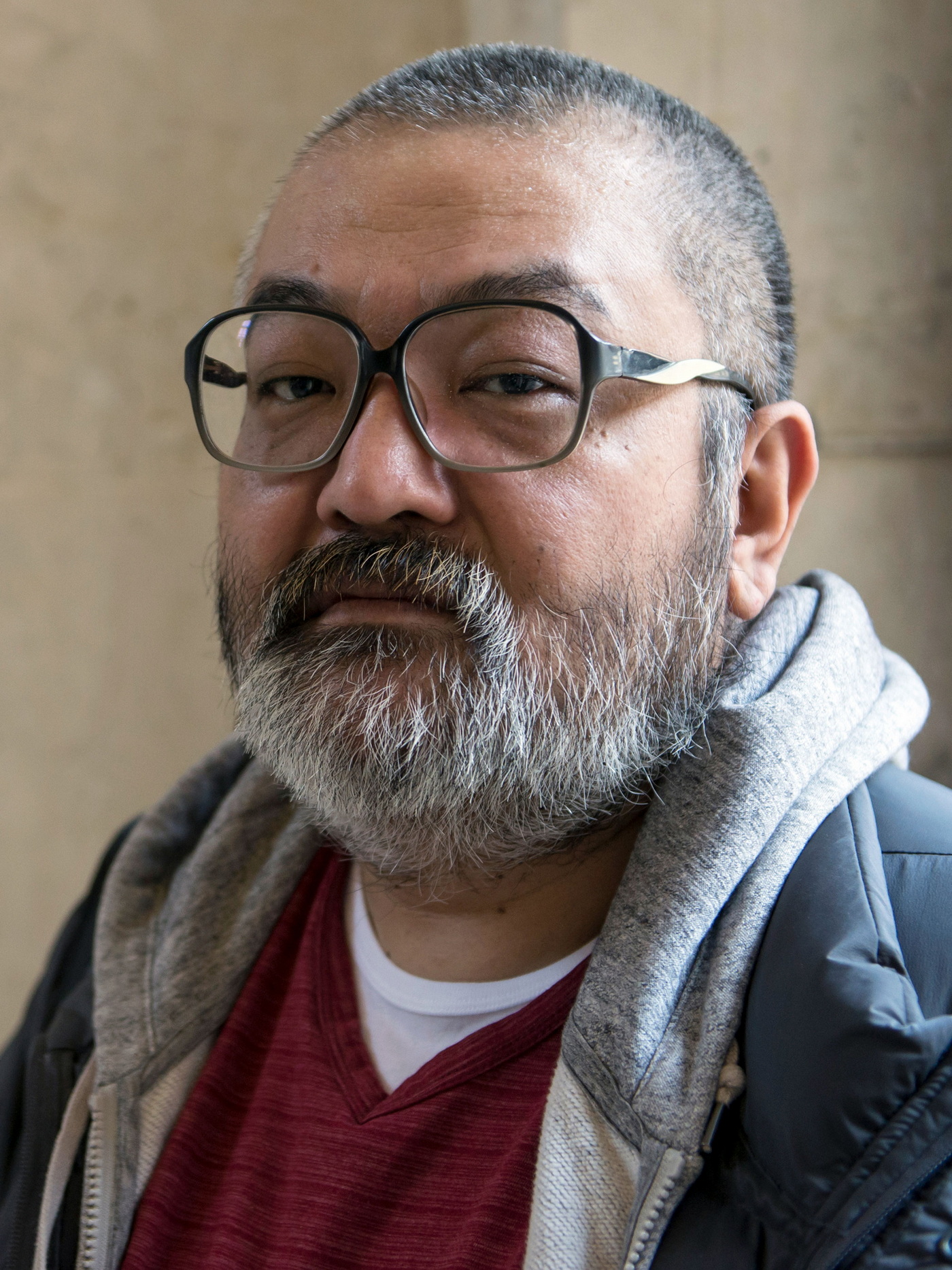
Gengoroh Tagame (田亀 源五郎) is widely treated as the most prolific and influential artist in Japanese gay manga. He was born in Kamakura on February 3, 1964, into a family distantly descended from samurai. At home he was barely allowed manga. His parents made an exception for Osamu Tezuka, which they thought of as literary. In barbershop waiting rooms he found a wider range of shōnen, including violent, sexual work by Kazuo Umezu and Go Nagai. The Marquis de Sade, and Renaissance, which reprinted underground BDSM manga zines, pulled him toward sadomasochism first. Italian Hercules films, Planet of the Apes, and the gay magazine Sabu later made it clear to him that he was gay. He studied graphic design at Tama Art University, supported himself at first with commercial design, and took a pen name from two water-bug species so it would not sound like the macho or romantic names then in fashion.
In the 1980s the market for gay media in Japan grew as Western work came in. In 1987 Tagame debuted in Sabu as a gay erotic manga artist. The comics were for gay men, not female-oriented BL. The Toyed Man (嬲り者), serialized from 1992 to 1993, became the first commercially successful gay comic in Japan. In 1995 he and editors founded G-men, aimed at muscular, large, older bear-type men, against the bishōnen look that had been on top. The magazine pushed street style in Shinjuku Ni-chōme toward that bear look. In the same stretch of work he settled a bear-type style built on bondage, leather, fisting, and other fetish sex, and on masculinity played out inside power.
Outside Japan he was picked up in the 2000s. In 2005 the French house H&O Editions published a French edition of Gunji, not an English one. Paris showed his work in 2009. In English, the 2012 anthology Thickness, from Ryan Sands and Michael DeForge, included the short story Standing Ovations. In 2013 PictureBox published the English anthology The Passion of Gengoroh Tagame. He did not drop the general-audience market. In 2013 Futabasha asked him for an all-ages manga. My Brother’s Husband looks at same-sex marriage in Japan from a straight viewpoint. It won an Eisner Award in 2018, and NHK turned it into a live-action drama the same year. Our Colors, serialized after that, widened the mainstream readership. Tagame has said that keeping erotic manga and mainstream work in balance matters to his state of mind.
The comics turn on hypermasculinity and on hierarchies breaking. His men are muscular and hairy, and extreme sex is how they perform hegemonic masculinity. The Silver Flower follows an Edo-period man forced into sexual slavery by debt who discovers his own masochism. It is not a war story. Tagame rejects the “bara” label used by people outside Japan and calls it pejorative. Scholar William Armour’s point is narrower: these hypermasculine Japanese men undercut the Western picture of Asian men as effete and small. Fictional plots can include rape, bestiality, incest, and body modification. Critics generally do not file him under ero guro. When he talks about a beauty of destruction, he is citing Shakespearean tragedy, German opera, and Japanese folktales. That line is his, not Armour’s. He draws for sexual excitement, and he also uses the images to look at humanity, the darker side of desire, and bonds between men.
He also edited the multi-volume Gay Erotic Art in Japan, a history of Japanese gay erotic art from the 1950s to the present. Some critics write off parts of the short comics as simple “S&M theater.” The magazine and the art-history books are still the shelf that gay manga sits on. New readers can start with the SM work in The Passion of Gengoroh Tagame, read The Silver Flower for the historical story, or come in through My Brother’s Husband.