
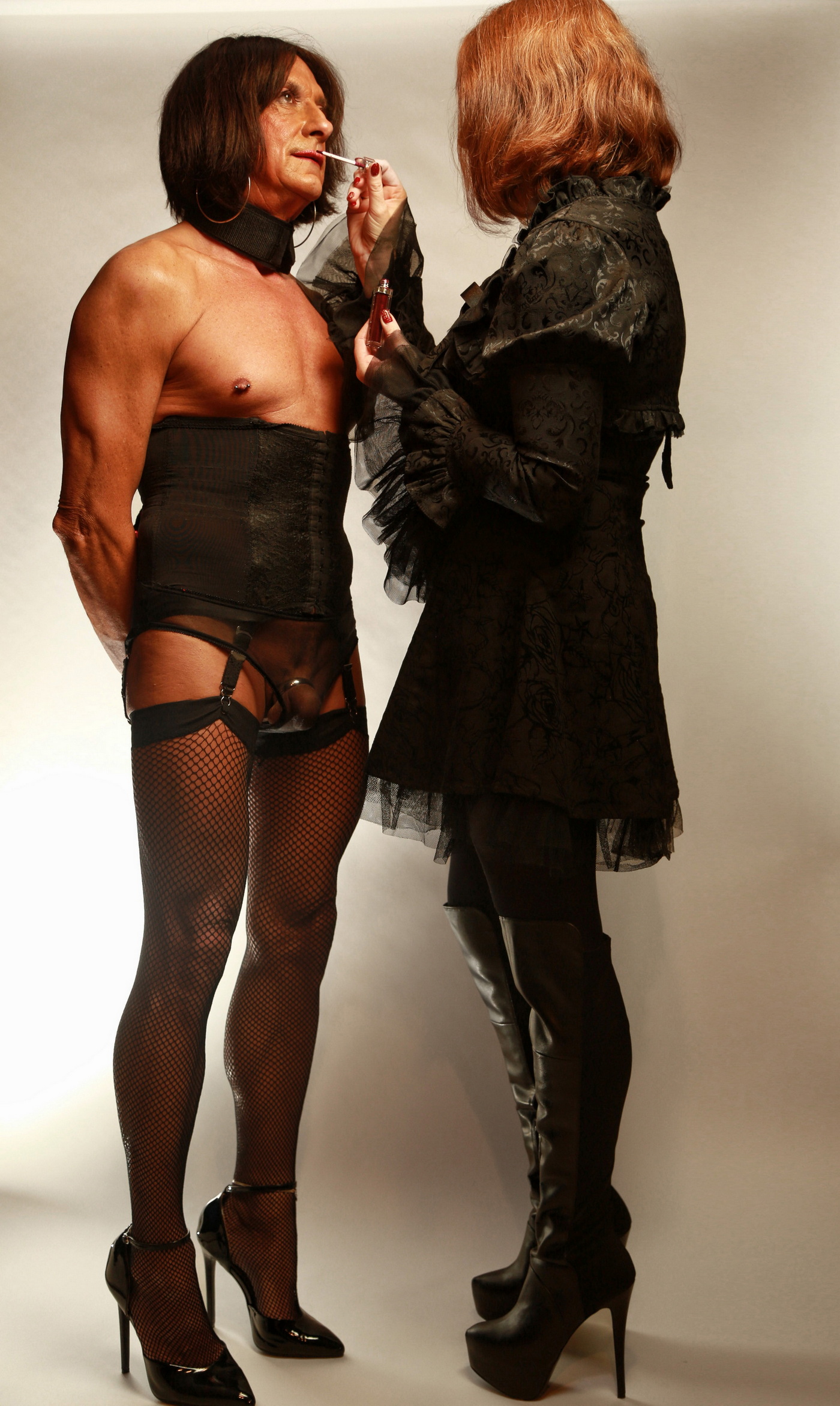
Feminization (also spelled feminisation), sometimes called forced feminization—shortened to forcefem or forced femme—and also known as sissification, is a dominance/submission and kink practice built on gender-role reversal: a submissive male takes on a feminine role that typically includes cross-dressing. Subsets include “sissy training” and related protocols where the submissive is gradually trained toward ultra-feminine presentation and behavior. Feminization as a sexual fetish is not the same thing as being a transgender woman; the submissive partners involved are most often heterosexual, cisgender men. Writers and educators have linked the draw of the fetish to social pressure on men to stay traditionally masculine—and to the erotic charge of violating that rule under negotiated “force.”
What feminization looks like in practice
In D/s and kink cultures, feminization reverses expected gender roles so a submissive partner—typically a man—occupies a feminine role, often for humiliation-based sexual pleasure. That can mean cross-dressing in lingerie, makeup, jewellery, and perfume; acting in a feminine manner; being called by a feminine name; taking anal sex as the receptive partner; wearing prosthetic breasts; or tucking. Participants often build scenes around femininity or feminine clothes: being “caught” trying on panties or lipstick; discovered in frilly lingerie under street clothes; cast as a princess or damsel in distress; or hired “as a woman” for a female-coded job—nurse, cheerleader, sex worker, businesswoman.
HuffPost described one dominatrix’s sissification sessions as humiliating the submissive by parading them in high heels, makeup, and lingerie; another framed her sessions more as cheerleading men into exploring femininity. Despite the label “forced” feminization—and despite role-play that pretends the submissive is feminized against his will—the fantasy is agreed in advance by the people involved. Not everyone wants full BDSM intensity; some only enjoy dressing up. Others add spanking, pegging, bondage, and verbal humiliation (for example mocking a small or soft penis and calling it a clitoris). The feminized partner is often called a “sissy” and said to have been “sissified.”
Sissy training, sissy maid, and slut training
Sissy training is a common subset: the dominant slowly trains the submissive into a sissy role, pushing ultra-feminine behaviors and activities. Training often includes cross-dressing; shaving the body including the genitals; wearing makeup; and wearing women’s underwear so the body reads more “womanly.” Activities can be non-sexual (makeup practice, housework) or sexual. Sissy maid training is a frequent scenario: the sissy becomes a maid—housework, serving drinks and food at a party—while behaving submissively in a frilly or revealing maid uniform (French maid, rubber maid dress, and so on). The dominant oversees the work and may punish real or invented infractions with spanking, humiliation, or bondage; good behavior might earn an orgasm.
Slut training is another subset: the submissive is dressed in “slutty” feminine clothing that shows skin and curves, then teased or chided for being promiscuous or overly sexual. The aim is often to push a shy or embarrassed sub past those blocks so provocativeness becomes more instinctive—holding poses such as spreading the buttocks or exposing the genitals on cue. In slut-training scenarios the submissive partner is most commonly a woman; dominant partners can be any gender. In sissy maid scenarios the dominant is typically a woman.
Who plays, and why it hooks people
According to a HuffPost feature interviewing sex workers—including dominatrixes and escorts—forced feminization is among the most common client fantasies; one dominatrix said a vast majority of her clients wanted to be sissified. In Danielle J. Lindemann’s Dominatrix, about a third of a sample of 305 sex-worker clients were interested in being made to cross-dress. The fantasy is practiced largely by heterosexual, cisgender men as the submissives, though Vice reported bisexual and pansexual men at a feminization meetup, plus some genderfluid and transgender people.
Kinkly describes much of the appeal as pressure on men to be traditionally masculine and the guilt that can attach to feminine desire. When a man drawn to femininity does “feminine” things inside a scenario where he is supposedly forced, the frame can both express the desire and relieve guilt—because, in fantasy, an outside force made him do it. Stigma still makes the topic hard for many couples to raise. Some people also use feminization to explore sexuality more broadly. As BDSM role-play, being feminized can make the submissive feel vulnerable and lock in the submissive role. Dominants may enjoy drawing out a partner’s “female persona” or erotically humiliating a lack of masculinity.
In Fetish Sex, Violet Blue notes that although outsiders may read the kink as devaluing women, submissive men in the practice often hold women in high regard. In Gender Reversals and Gender Cultures, Sabrina P. Ramet argues that the apparent contradiction—femininity as humiliation while often paired with femdom—is not a simple equation of “women’s clothes equal female superiority.” Humiliation often tracks the cultural taboo of a man wearing women’s clothing; femdom and feminization can travel together without being identical fantasies.
Art, media, and the line with transgender identity
Visual artist Río Sofia made a 2019 self-portrait series themed around forced feminization, influenced by and sharing a name with the magazine Forced Womanhood!. Television drama has also dipped into the subject: an episode of Law & Order: Criminal Intent featured feminization and was called an unrealistic portrayal by Helen Boyd in My Husband Betty.
As a sexual fetish, feminization is very different from being a transgender woman. Ana Valens, writing for The Daily Dot, has still described forced-feminization fantasy as common among some trans women—a way the stigmatized need to be women can surface before someone fully admits that need. That observation does not collapse fetish sissification into transition; it only notes overlapping fantasy material in different life stories. Related practices and tropes for further reading include cuckoldry, cuckqueanry, chastity devices, masculinization as a parallel gender-play practice, pinafore eroticism, and historical erotic texts such as Gynecocracy (1893) by Viscount Ladywood. Gloria Brame’s Come Hither: A Commonsense Guide to Kinky Sex (2000) remains a practical general kink reference for readers mapping forcefem among other D/s games.
Negotiation notes for the scene
Forced feminization is theater of non-consent wrapped in real prior consent. Partners should negotiate clothing levels, public versus private exposure, name and pronoun use during play, genital shaming language, chastity or orgasm control, pegging, and whether “sissy” is an erotic title or a hard limit off-scene. Sissy maid and slut-training protocols need clear rules about punishment, reward, and when the persona ends. Because the kink leans on cultural taboo, aftercare may include help shedding the feminized headspace and reconnecting as equals outside the scene. Done well, feminization is not “turning someone into a woman against their will”—it is a negotiated power exchange that weaponizes lingerie, makeup, service, and humiliation for mutual erotic payoff.
Common scene ingredients and equipment
Beyond lingerie and makeup, forcefem kits often include wigs, breast forms, hip pads, gaffs or tucking tape, chastity cages, butt plugs, heels that enforce gait training, and written protocols (posture, speech, daily tasks). Online sissy communities add training journals, photo proof of obedience, and long-distance dominant instruction—extensions of the same D/s structure into digital space. Pegging and receptive anal play frequently pair with the feminine role because they script the submissive as sexually “taken,” while verbal play may re-label anatomy (clit, pussy) to deepen the headspace. None of that gear is mandatory: some couples keep feminization as weekend dress-up without chastity or penetration; others run multi-month sissy-maid contracts with strict rules and punishments.
Public risk needs separate negotiation. Parading a feminized sub at a fetish club is not the same as outing them at a vanilla workplace party. Photo consent, social-media bans, and “no real-name” rules matter because humiliation kink can become non-consensual exposure if images leak. Dominants who market professional sissification sessions typically define wardrobe, time limits, and whether outdoor tasks are included before money changes hands—another place where fantasy “force” must stay inside booked consent.
Where forcefem sits among neighboring kinks
Feminization overlaps erotic humiliation, femdom, chastity, cuckold/hotwife storylines (sometimes), and clothing fetish without being identical to any of them. A man who only loves nylon may not want sissy names; a service submissive may clean house without ever putting on a maid dress; a trans woman exploring early gender feelings may use forcefem fantasy differently than a straight cis man seeking taboo relief. Keeping those distinctions clear prevents the lazy claim that all cross-dressing is one pathology—or one identity. On a BDSM site, the operational definition stays practical: feminization is negotiated gender-role play, usually male-submissive, often humiliation-tinged, sometimes service-heavy, always dependent on real consent under the “forced” label. Train the makeup, write the rules, keep the safeword, and end the persona when the scene is over—unless both partners have agreed that the sissy role is a longer lifestyle layer with its own exits.