
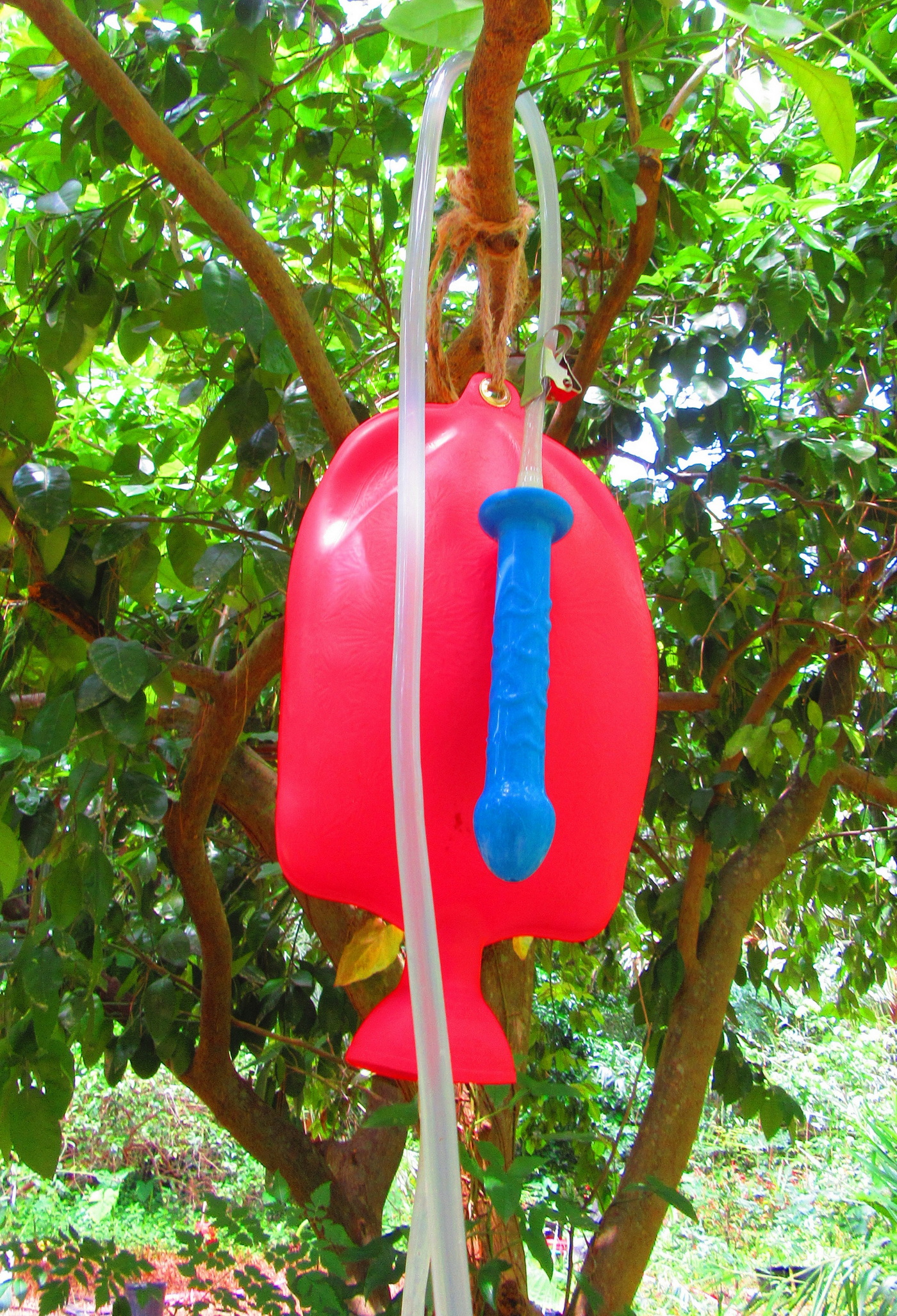
An enema (also historically called a clyster) is the rectal administration of fluid into the lower bowel through the anus. The word can also mean the liquid itself or the device that delivers it. In medicine, enemas most often relieve constipation or cleanse the bowel before exams and procedures; they also appear in barium imaging, some drug delivery, rare rehydration methods, and other specialized uses. Outside clinics, enemas show up in klismaphilia (sexual enjoyment of enemas), BDSM humiliation and sensation play, rectal douching before anal sex, religious and folk ritual, dangerous “detox” scams, and even torture. For adult readers, both the medical mechanics and the erotic culture matter—because the same anatomy that nurses irrigate is the anatomy kinky partners play with, and bad technique injures either way.
Medical Uses in Brief
As bowel stimulants, enemas serve when oral laxatives fail or are unsuitable: constipation, fecal impaction, and pre-procedure emptying (for example before colonoscopy). A large-volume enema aims to cleanse as much colon as feasible; a low enema mainly addresses stool in the rectum. Liquid volume expands the gut; some solutions also irritate mucosa, stimulate peristalsis, and lubricate stool. Efficacy depends on volume, temperature, and composition. Patients are usually asked to retain solution about five to fifteen minutes if tolerated.
Large-volume “soapsuds” style enemas dilate the colon so it contracts and propels contents toward the rectum. Plain water works mechanically; normal saline is gentler on electrolyte balance and suits longer retention for softening impaction. Castile soap is sometimes added to increase urgency—household detergents should not be. Dilute glycerol (for example 5%) acts as a mucosa irritant and hyperosmotic. Milk-and-molasses mixtures heated slightly above body temperature have been used with low reported complication rates in some emergency-department series. Mineral oil lubricates and softens but can irritate skin and leak. Micro-enemas and commercial preparations (sodium phosphate/Fleet-type products, bisacodyl, docusate, sorbitol, combination brands such as MICROLAX-type formulas, Klyx, Micolette, and others) offer small-volume options; phosphate enemas can cramp hard and have serious adverse-effect profiles in high-risk patients.
Transanal irrigation (retrograde irrigation) is a structured bowel-management method for fecal incontinence, constipation, and obstructed defecation, with 2013 international consensus guidance on practice. It differs from the surgically created Malone antegrade continence enema. People with bowel disability may use daily enemas as part of a predictable toilet routine. Barium enemas and water-soluble contrast studies image the colon radiologically; retained barium can cause constipation or impaction. Medications—antiemetics in some settings, topical corticosteroids and mesalazine for inflammatory bowel disease, experimental adjuncts such as butyrate enemas for certain infections—can be delivered rectally to limit first-pass gut transit. Historical and rare uses include proctoclysis (rectal rehydration), fecal microbiota transplant via retention enema (first reported 1958; later partly superseded by colonoscopic methods), and ancient-to-early-modern nutrient enemas of predigested food (documented from Galen through military hospital manuals as late as 1941), now replaced by tube and IV feeding. Enemas around childbirth lack evidence of benefit and are discouraged. Full pharmacy laundry lists (every ATC A06AG code and every brand combination) matter to clinicians; for a general and kink-facing overview, the principle is enough: volume, osmolarity, and irritants drive effect, and not every drugstore bottle is safe for recreational play.
Risks and Contraindications
Improper administration can cause electrolyte imbalance (especially with repeated enemas), bowel or rectal tears, and internal bleeding—the rectum’s low pain sensitivity can hide damage until infection or dark/red stool appears. Rupture is a medical emergency. Frequent use can create laxative dependency. Tube and solution may stimulate the vagus nerve and trigger arrhythmias such as bradycardia. Enemas should not be used for undiagnosed abdominal pain (risk of rupturing an inflamed appendix). Use is cautious or avoided with diverticulitis, ulcerative colitis, Crohn’s disease, severe hemorrhoids, tumors, recent bowel surgery (unless directed), heart disease, kidney failure, and pathologies that raise perforation risk. Ozone-water enemas have been linked to microscopic colitis. A case series of eleven phosphate-enema patients with five deaths underlines danger in high-risk groups. Erotic players who treat medical products as toys still inherit these risks—plus intoxication and infection hazards discussed below.
History: From Ebers Papyrus to Disposable Microenemas
Enema entered English around 1675 from Latin/Greek roots meaning “injection”; clyster (late 14th century, from Greek “to wash out”) is the older literary term, sometimes spelled glister. Ancient Egyptian sources (Ebers Papyrus, c. 1550 BCE) already describe rectal medicine; specialists included a “Shepherd of the Anus,” and mythology credited Thoth with inventing the enema. African traditions used calabash gourds (including oral inflation or gravity methods), ox horns (Bhaca), and gourd-and-cane kits along the upper Congo. In the Americas, Olmec and Maya cultures used ritual and medical enemas—Maya classic-period art shows gourd and clay syringes, female attendants, and hallucinogenic clysters; colonial sources document digestive treatments; North American indigenous groups used tobacco smoke enemas; South American peoples used early rubber bag-and-nozzle designs while Europe still favored syringes. Asia records Babylonian cuneiform references (c. 600 BCE), Chinese use by Zhang Zhongjing (c. 200 CE) with pig’s bile and bamboo tube, Indian surgical lists in Sushruta (5th century BCE) with bamboo/ivory/horn tubes and animal scrotum bulbs, and Avicenna’s collapsible “clyster-purse.” Greeks and Romans—Hippocrates, Asclepiades of Bithynia, Soranus, Celsus, Galen—discuss enemas for evacuation, nutrition, and other indications. Medieval Europe illustrated pig-bladder bulb syringes; piston clysters dominated the 15th–19th centuries.
From the 17th century, self-administration kits spread, especially in France. Mauriceau (1694) noted clysters for laboring women; Woyts (1753) described bladder-and-tube bags; 18th-century Europeans copied tobacco smoke resuscitation enemas (Royal Humane Society kits along the Thames). At Louis XIV’s court, clysters were fashionable enough for court memoir gossip. Nineteenth-century gravity bags and buckets became common; early twentieth-century disposable microenemas are associated with Charles Browne Fleet. That arc—from sacred rectum-keepers to drugstore squeeze bottles—is the backdrop against which modern medical and erotic use both sit.
Alternative Medicine: Detox Myths and Dangerous Protocols
“Colonic irrigation” in gastroenterology can mean legitimate stoma/conduit irrigation for constipation; the same phrase in wellness culture often means unproven “detox” rinses based on discredited autointoxication theory. The FDA has ruled against marketing colonic equipment for general well-being. Historical extremes include John Harvey Kellogg’s high-volume machine enemas plus yogurt “from above and below.” Dangerous modern scams include chlorine dioxide / MMS “bleach enemas” fraudulently sold for autism and other diseases—linked to catastrophic injury (including colon removal in a child), FDA complaints, and death—and coffee enemas, which lack proven benefit and have caused infection, severe electrolyte imbalance, colitis, sepsis, abscess, heart failure, and documented deaths. Gerson-type protocols that mix coffee, castor oil, peroxide, or ozone enemas remain medically unsupported as cancer therapy. None of this is kink; it is medical fraud with rectal delivery.
Klismaphilia: Pleasure in the Enema Itself
Klismaphilia is sexual enjoyment of enemas; a person with the interest is a klismaphile. Medically it is classed among paraphilias, but in adult practice it is simply a specific anal/visceral fetish. Women and men may enjoy giving or receiving enemas heterosexually or homosexually; arousal can come from belly distension, internal pressure, the ritual of preparation, the equipment (bags, nozzles, tables), medical role-play scenarios, or the full sequence through elimination. For some, enemas are auxiliary to genital sex; for others they substitute for it. Alfred Kinsey’s Sexual Behavior in the Human Female already noted enemas among occasional female masturbatory techniques (within an ~11% group using various nonstandard methods). Fantasy alone can satisfy some klismaphiles; others need the physical fill and cramp. Equipment fetish—rubber bags, red nozzles, clinical white sheets—often travels with the interest.
BDSM Uses: Humiliation, Sensation, Control
In sadomasochistic play, enemas are used for erotic humiliation, enforced endurance of cramping, mess and control dynamics, medical play, and forced retention. A Dominant may prescribe volume, temperature, and hold time; a submissive may be displayed, photographed, or made to beg for the bathroom. That is distinct from klismaphilia pure and simple: here the enema is a tool of power exchange, not only a private sensual fill—though many scenes blend both. Consent, negotiation of mess limits, bathroom access, and aftercare are non-negotiable adult requirements. Using irritant soaps, extreme volumes, or alcohol “for fun” turns edge into injury. Related scene language overlaps with medical fetish, watersports-adjacent control, and anal training culture, but the fluid mechanics and perforation risks are specific.
Rectal Douching Before Anal Sex
Separate from klismaphilia is rectal douching: rinsing the rectum to empty it before anal sex or other receptive play. Many receptive partners do this for comfort and perceived cleanliness. It is not the same as erotic enjoyment of the enema itself. Importantly, douching before anal sex can increase risk of transferring HIV, hepatitis B, and other infections by irritating mucosa and altering barriers—safer-sex education often warns against aggressive rinsing even while acknowledging how common the practice is. Gentle, infrequent technique and barrier methods matter more than perfectionist “cleanliness” rituals that damage tissue.
Alcohol and Drug Enemas: High Overdose Risk
Alcohol enemas can push ethanol into the bloodstream very quickly through colonic membranes; deaths from alcohol poisoning via enema are documented. Only small amounts are needed compared with drinking. Drug delivery the same way can likewise spike absorption. A cleansing enema beforehand may accelerate uptake further. This is edge behavior with a body count—not a party trick. If your scene involves intoxication play, rectal alcohol is among the stupidest delivery routes available.
Ritual, Religion, and Force
Across Mesoamerica, ritual enemas delivered balché, alcohol, tobacco, peyote, and other entheogens for faster, deeper trance; Maya art is especially clear, and some practices continue. In Ayurveda, basti/vasti herbal rectal therapies form part of Panchakarma. Forcibly applied enemas have also been punishment and torture: post-independence Argentina used chili and turpentine on political dissenters; the U.S. Senate Intelligence Committee report on CIA torture documented degrading enemas and forced nutrient enemas on Guantanamo detainees described as tools of “total control.” Erotic CNC fantasies about forced enemas are role-play; state violence is not play.
Arts, Pop Culture, and the Enema Monument
Literature from satyr plays through Don Quixote, Molière’s purge-obsessed doctors and The Imaginary Invalid, Peyton Place, and Sybil uses clysters for comedy, hypochondria, or abuse subtext. Film examples include barium-enema embarrassment in The Right Stuff and the enema-assault porn narrative of Gerard Damiano’s Water Power, loosely tied to criminal Michael H. Kenyon—also referenced in Frank Zappa’s “The Illinois Enema Bandit.” Blink-182’s Enema of the State album cover famously plays nurse-and-procedure imagery. In Zheleznovodsk, Russia, a 365 kg brass statue of a syringe enema bulb held by cherubs (unveiled 19 June 2008 outside the Mashuk spa) is billed as the only known monument to the enema—local spa culture treats mineral-water clysters as regional identity.
Equipment and Technique Basics
Home and play kits usually mean a bag or bulb, tubing, and a nozzle or tip. Gravity bags hang above the recipient so fluid flows without force-pumping; bulb syringes suit smaller volumes. Tips should be smooth, well-lubricated, and introduced slowly with the recipient in a comfortable position (side-lying, knee-chest, or over a toilet/pad setup). Temperature near body-warm reduces cramping; cold or scalding fluid is a bad idea outside carefully negotiated temperature play—and even then, thermal injury is real. Retention time is part of the scene design: short hold for cleansing; longer hold for distension fetish, with clear signals for “I need the bathroom now.” Never leave someone bound without a release plan if cramps or panic hit. Shared toys need condom covers or dedicated hygiene protocols; porous rubber that cannot be sterilized is a one-owner item.
Practical Notes for Adult Enema Play
If you play with enemas for pleasure or BDSM: use clean equipment dedicated to that purpose; prefer plain warm water or saline over harsh soaps and mystery “detox” additives; start with modest volume; never force past sharp pain; avoid play with GI disease, recent surgery, heart/kidney issues, or undiagnosed abdominal pain; do not use alcohol or bleach; plan bathroom access and cleanup; negotiate humiliation and photography limits in advance; stop for bleeding, severe dizziness, or faintness. Klismaphilia and SM enema scenes can be intensely satisfying visceral play—distension, surrender, mess, medical theater—but they sit on the same anatomy that can perforate.
Scene negotiation should cover volume targets, additives (usually none), mess tolerance, photography, safewords, and aftercare—including hydration, rest, and watching for delayed pain or fever. Dominants who “surprise” partners with industrial volumes or detergent soaps are not edgy; they are reckless. Submissives who chase ever-larger fills should know that capacity is not a competition score. Related topics: bowel management, dry enema, fecal microbiota transplant, nutrient enema, tobacco smoke enema, and transanal irrigation. Treat the kink as adult risk-aware sensation, not as a cure for autism, cancer, or a hangover—and never confuse erotic ritual with the medical scams that have already killed people with coffee and bleach in the rectum.