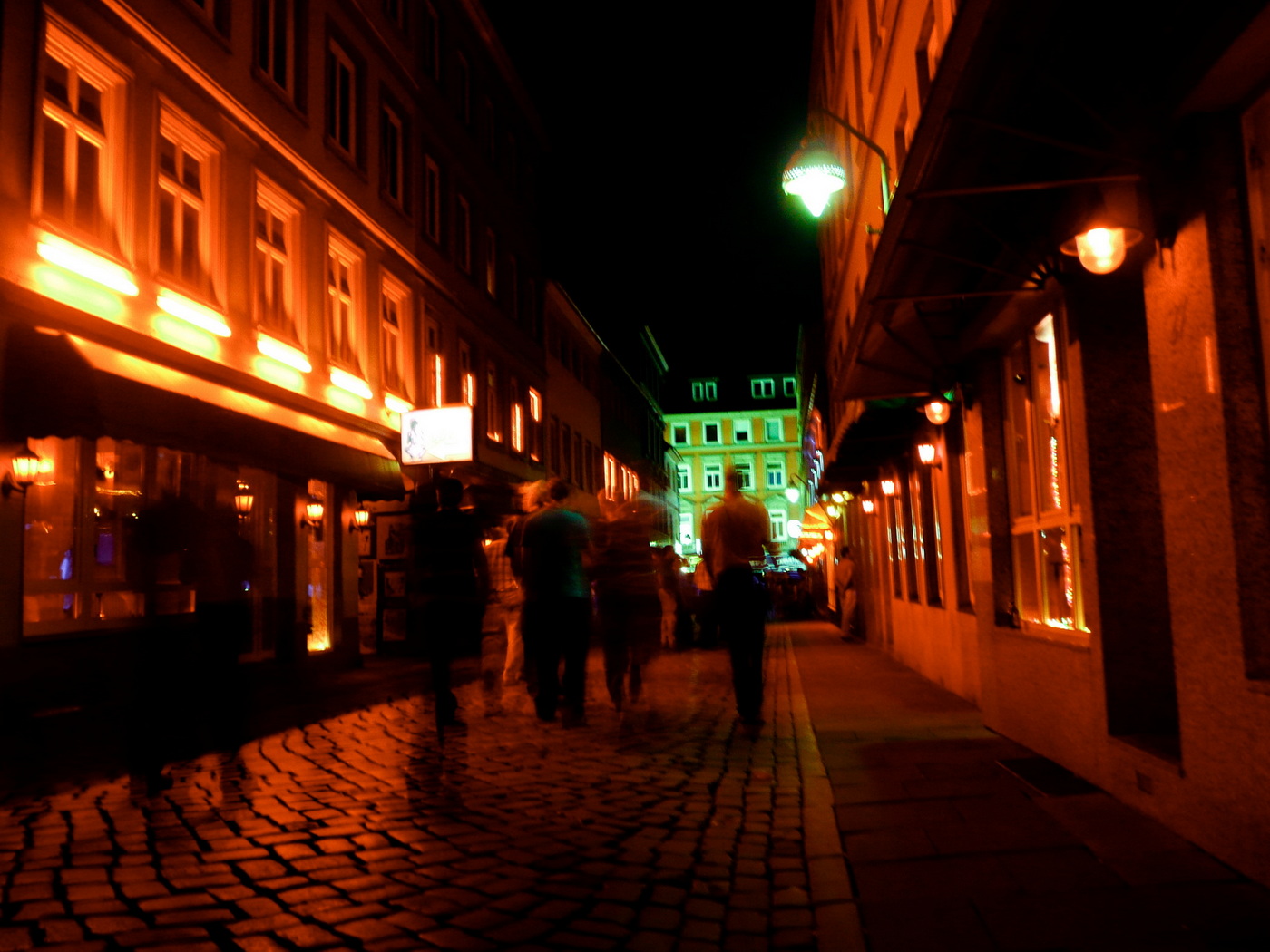
Domenica Anita Niehoff (August 3, 1945 – February 12, 2009), known in public as Domenica, was a German prostitute, dominatrix, and activist. She used television and print to treat professional domination and street prostitution as labor and politics, instead of leaving them as scandal footage. She worked the red-light streets of Hamburg’s St. Pauli and argued, on national talk shows, for the rights of sex workers. For BDSM readers she is a clear case of a pro domme who also became a public advocate. The people in this history are adults.
She was born in Cologne. Her mother, Anna, supported Domenica and her brother Amando by fortune-telling and petty crime. After Anna was arrested, the children were sent to a Catholic orphanage. Domenica stayed until she was fourteen and began work as a trainee clerk. At seventeen she met a brothel owner she later married. He died by suicide in 1972, and the marriage ended with that death. The same year she started working as a prostitute on Herbertstraße, Hamburg’s best-known regulated sex-work street. She later opened a studio and became known as a dominatrix, folding SM sessions into a career that already sat on the edge of German public morality.
Television, books, and Ragazza
From the 1970s she was a regular on German television talk shows, arguing for prostitutes’ rights and for legalization of the work. The record of that argument is also on paper and in pictures. Fee Zschocke and Andrej Reiser’s Domenica und die Herbertstraße appeared in 1981. Domenicas Kopfkissenbuch followed in 1989. The graphic set Domenica Portfolio came out in 1993. Hans Eppendorfer recorded the memoir Körper mit Seele. Mein Leben, published in 1994. Those projects kept her face and her case inside German public memory.
She also did ordinary outreach. In 1991 she helped found Ragazza e.V., a nonprofit for young prostitutes, and in the same period she worked with drug users. By the 1990s she had stepped back from selling sex herself and stayed inside Hamburg’s red-light economy by running a bar. A bar she owned from 1998 closed in 2000 over unpaid taxes. She kept on the sex-worker rights side of the argument: prostitution law, reform, and decriminalization.
The cemetery and the street
In February 2009 Domenica died in a Hamburg hospital of lung disease and complications of diabetes. She was buried in the Garden of Women at Ohlsdorf Cemetery. The funeral coordinator said she was the first prostitute buried in that section, which is reserved for distinguished women. In November 2016 Hamburg’s Altona district announced that a street would be named for her. The recognition moved off the tabloid page and onto the city map. The German National Library and IMDb both list her, and the portfolio still circulates in art and in histories of sex work. Professional domination is often visible only as a tease. Domenica pushed it into the open as labor that needs law, health support, and a public voice.