Suspension bondage, for consenting adults, means hanging a bound partner from overhead anchors so that rope, cable, or chain — not the floor — carries part or all of their weight. Among BDSM restraints it is advanced ground. It looks spectacular on a stage and hits hard in private, and it does not forgive failed gear or failed technique. What adult players are chasing is helplessness, display, the body-high of being off gravity, and total dependence on the rigger. What follows is how the forms are described and what goes wrong. It is not a set of steps for tying or lifting anyone.
Full air time is not the only shape. In a partial suspension one foot may still touch, or the upper back stays down while the legs are tied up to a point until the lower spine and hips leave the floor. That already changes balance, breathing, and the panic threshold, with only a share of the weight on the lines. In a full suspension the bottom never touches down. Every pound is on the system. Both forms need hardpoints and rope craft far past mattress bondage or a decorative single-column tie. Endurance and the top’s skill set the limit on shape and duration.
Headspace
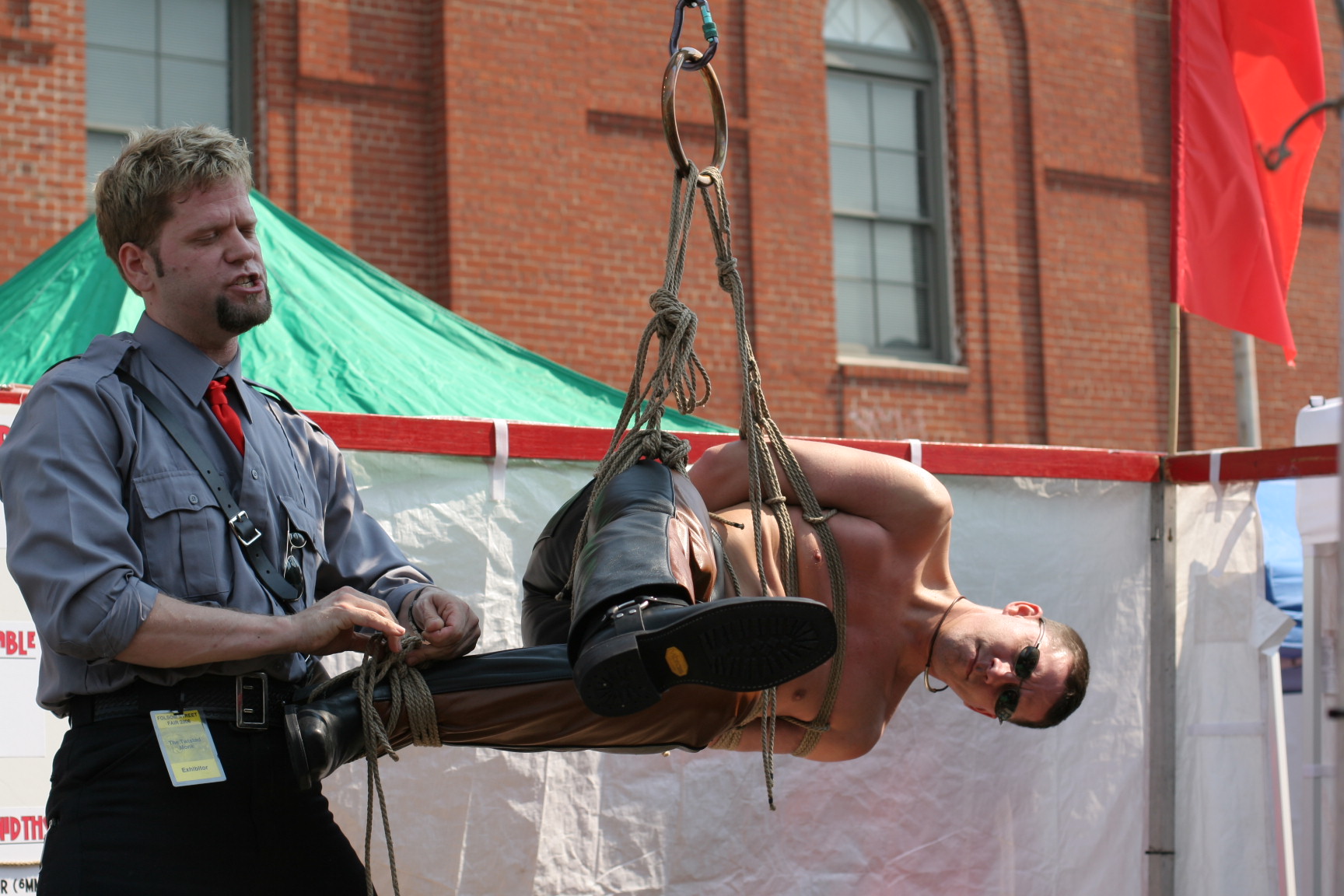
The hang is built to amplify one idea: escape is dangerous. Thrash free and you may fall. That mental lock sits on the knots and the hardware as tightly as the limbs are held. A spacious room increases objectification and erotic helplessness, for the person in the air and for spectators watching a body turn into a hanging sculpture. Convention stages and fetish nightclubs treat rope suspension as performance art and sell vulnerability as public theater.
Some bottoms experience the opposite of imprisonment: a glide, control of the spin, play with orientation, when the rig allows them to direct the motion. Many report trance — the novelty of anti-gravity, hyper-awareness of skin and joints, and the erotic surrender of ordinary strength. Solo suspension that involves choking or asphyxia is a known autoerotic risk pattern. It is not casual self-play advice. Self-suspension communities that exist still treat hardpoints, cutaways, and spotters as non-negotiable once the hang goes beyond simple partial weight.
Vertical: wrists versus a harness
The main orientations are vertical, horizontal, and inverted. Vertical work often starts with a lift from the wrists, rope or dedicated suspension cuffs. Wrist anatomy is thin. Pure rope load brings soft-tissue injury and lost circulation quickly, so a pure wrist-rope hang stays brief. Metal handcuffs as hang points are common in films and pulp. In reality they are brutal and they mark deeply. They are a look, not a comfort design and not a safety design. Purpose-made suspension cuffs spread force around the wrist. They are the least hostile option when the wrists have to take weight for any real time.
Many vertical scenes hang from a body harness instead: rope around the torso, the upper arms near the shoulders, the thighs, and the groin, with several attachment points sharing load the way a parachute harness does. A skilled partner can keep someone upright in the air without destroying the wrists in the first minutes. Free-hanging arms and legs are part of the picture. Without someone outside cutting or untying, unaided escape is nearly impossible. That is closer to how serious riggers actually work than the cinematic image of handcuffs on a beam.
Horizontal, and the suspension bow
Horizontal suspension lays the body out face up or, more often, face down. Weight can travel through wrists and ankles, through padded wrap points built to take load, or through both. A spreader bar can force limbs apart for display and access. A hogtie or a ball tie can be finished on the floor and then raised on load-ready lines, so the move from floor bondage to air is controlled rather than invented halfway up.
When the wrists lock to a spreader or to a midpoint between the ankles, the hogtie becomes a suspension bow: arched, tight, highly presentational. Face down, breasts may hang free, depending on how strict the arch is. Clamps, weights, or clamp lines fixed to the floor add pain and make thrashing cost something immediately. Horizontal hangs give long visual lines, access for impact and for genitals, nipple play that uses gravity, and the floating-prey dynamic: the top walks around a body that cannot plant a foot or push off a wall.
Inverted, then the failures
Upside down, blood pools toward the head. Scenes are usually short. Dizziness, visual change, and nausea are stop conditions, not badges. Lift is typically ankle rope or ankle suspension cuffs. Ankles and lower legs accept far more stress than wrists. Boots give a sacrificial surface so the rope is not sawing bare skin. Legs together or spread — a bar, or two anchors — change both stability and exposure.
An open-leg inversion puts genitals on display and within reach. High vulnerability, high charge, and a hard limit for some bottoms. Time, blood-pressure symptoms, and a clear plan for getting the person down matter more here than aesthetic greed. A head-first fall of a few inches from inversion can kill or permanently paralyze. That fact should govern which hardpoint you trust and where the spotter stands. It does not replace the hardpoint or the spotter.
Suspension risk is routinely compared to heavy breath play. Poorly managed rope can become a breathing emergency mid-scene. The headline failure is a fall from a weak beam, a failed carabiner, a cut rope, or bad technique. An inverted head-first fall is the nightmare case. Quieter injuries include compressed nerves with a lasting deficit, circulation collapse, fainting in rope, and harness hang syndrome — hangs where the legs hang below the heart with no standing load on the feet, such as a pure standing vertical hang.
An unconscious lower is messy. A stuck hoist or a jammed winch is worse. Experienced tops bring spotters, trauma shears, redundant anchors, and a rehearsed emergency sequence. They do not invent one while a partner hangs limp. The teaching culture is cautious on purpose. Well-known riggers demo in controlled settings and often refuse to dump full technique manuals online, because copycats without anatomy training and progressive practice get injured, and the blame lands on the form. Internet pages and books do not replace live instruction, hardpoints rated for dynamic human loads, and a partner who can cut someone free in seconds. Body-modification suspension — hooks through skin, ritual hangs, pull events — is a neighboring practice with its own safety talk. It is not the same thing as erotic rope suspension, even though both put a body in the air. If the fantasy is air, helplessness, and rope, learn from people who already know how to get a limp body down before the scene leaves the ground. This is not floor bondage with a ceiling hook added afterward.