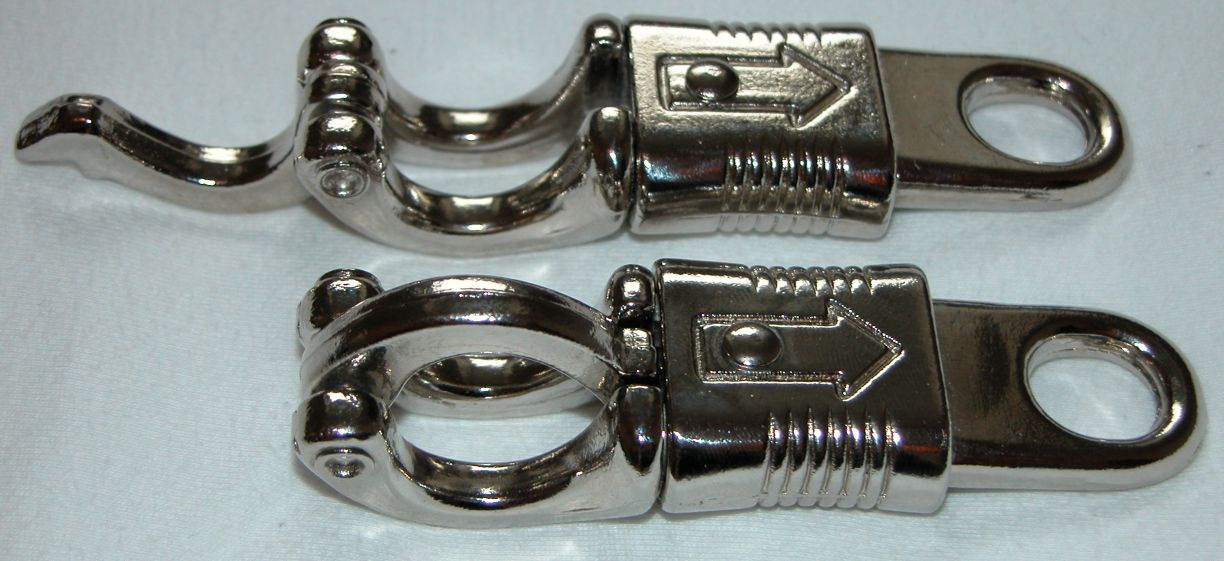
A panic snap is hardware that can still be opened when a lead or a line is already tight. In horse tack it usually sits between the lead and a harness or halter. The latch path is separated from the main load path, so a handler does not have to fight the whole load to unclip a rope that is already carrying weight. That under-load release is why the fitting showed up in BDSM bondage, in leather suspension gear, and in plans for when a bound adult is in trouble.
Ordinary snaps often become nearly impossible to open once body weight or a hard pull is on them. A panic snap is built so release is not the same fight against the full load. That makes it a safety piece and a hazard. When a loaded line lets go, the energy comes off at once: the rope can whip, hardware can fly, and the person on the line can drop. The point is a controlled emergency release, not a fidget in the middle of a scene.
Suspension and redundancy
Some lightweight suspension setups use panic snaps. Most consumer snaps are not for heavy mass. A whipping line and an uncontrolled descent both injure people. Serious rigging needs rated hardware and redundancy. Millwright-level skill belongs to industrial work, not to a default dungeon expectation. In BDSM, treat the snap as an emergency disconnect. It does not replace a rated point, load math, or a person watching. Suspension carries fall risk and risk to nerves and circulation. It is not ordinary gear.
Who holds the snap
A top uses a panic snap so that one hand can free someone in a medical emergency, a fire alarm, a circulation problem, or gear failure. A rarer setup leaves the snap where the bottom can reach it, in case the top is the one who goes down. Even then, check first whether self-release turns into a worse fall. Leather suspension harnesses use the same idea. Marketing often calls them quick release cuffs. If the snap opens, does the person drop with nothing holding them? Pad what you can, keep someone beside the rig, and lower rather than dump the line. Agree in advance who controls each snap. Dry-test the release. Keep shears in reach. Do not assume barn hardware was rated for suspending a human being.
Related kit includes locking carabiners, quick-release collars, and cutters. Faster freedom means a higher flail risk. The snap is not a reason to skip redundant safety.