
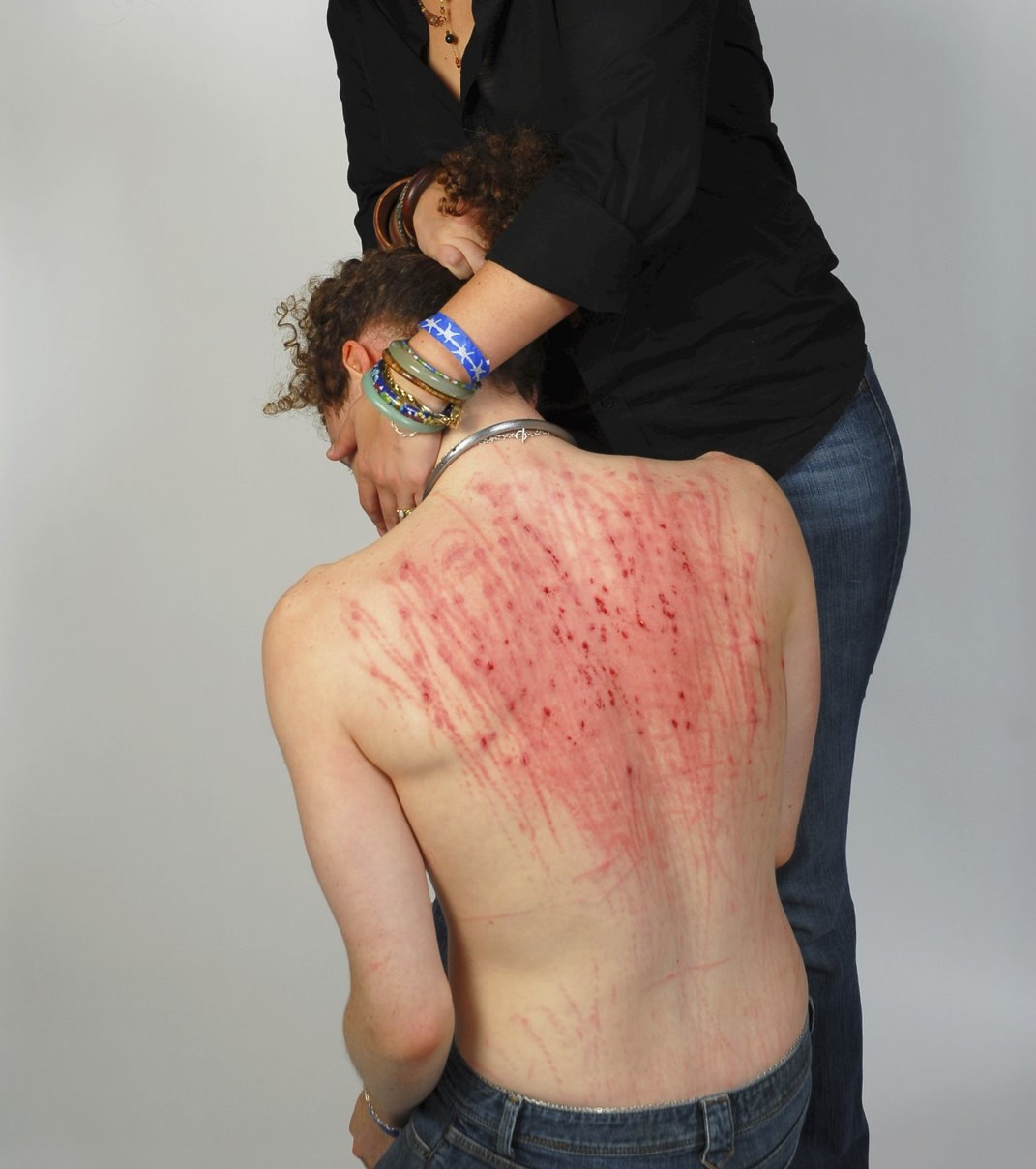
Masculinization, also spelled masculinisation, and sometimes called forced masculinization, is not a medical gender transition. It is a dominance-and-submission and fetish practice. The person in the role is often a woman. Inside a frame both people have agreed, she temporarily, or for that situation, takes on a role traditionally coded as male. The point is the play. The people are consenting adults. They are not minors, and the scene is not a transition.
The erotic range is wide, from light humiliation to a full reversal of roles. Someone may wear clothes coded male: a suit, a tie, men’s underwear, or men’s outerwear. They may inhabit an occupational stereotype, “the boss” or “the mechanic.” Voice, posture, and protocol send a signal of masculine authority, or of masculine service, depending on the power map of the scene. The performance is a way of trying gender expressions that ordinary life flattens or stereotypes.
The charge is not one thing. For some people it is a controlled way out of a fixed identity, a chance to push on the edge of a social norm or to live there for a scene. For others the charge is humiliation: being “forced” into a masculine role against a feminine self-image, touching a taboo or a private fantasy. Power can flip. Someone who is usually submissive may take a more dominant stance by presenting as masculine. A dominant may put a partner into masculine drag and treat that as service. They turn the gender script around because both people are curious.
Kink writing documents masculinization less often than feminization. Cultural history still has cases of women taking male roles in religious rites or as warriors. Those can be read as cultural or spiritual masculinization, even when they were not erotic. In modern BDSM communities the subject is discussed in forums, workshops, and writing, alongside cross-dressing, feminization as a sexual practice, gender-role theory, and negotiated persona.
Players who actually do it usually check the details first: the clothes, the names and pronouns inside the scene, whether the word “forced” is hot or harmful, whether the presentation is public or private, and aftercare when the performance drops. On adult-video shelves it is less common than sissy or forced-feminization material. It is still a consensual tool. It is often paired with strap-on play, a boss-and-secretary reversal, or a butch service role. Nobody in the scene has to identify as trans or non-binary. The script belongs to the people in the room. It is not somebody else’s identity paperwork.
![[Art Video] 2073 Slave Dispatch No.15 Collapsed Masochist Slave Mayumi Mayumi Kuroki [Exclusive]](https://bdsmwild.com/wp-content/uploads/2026/08/Art-Video-2073-Exclusive.jpg)