
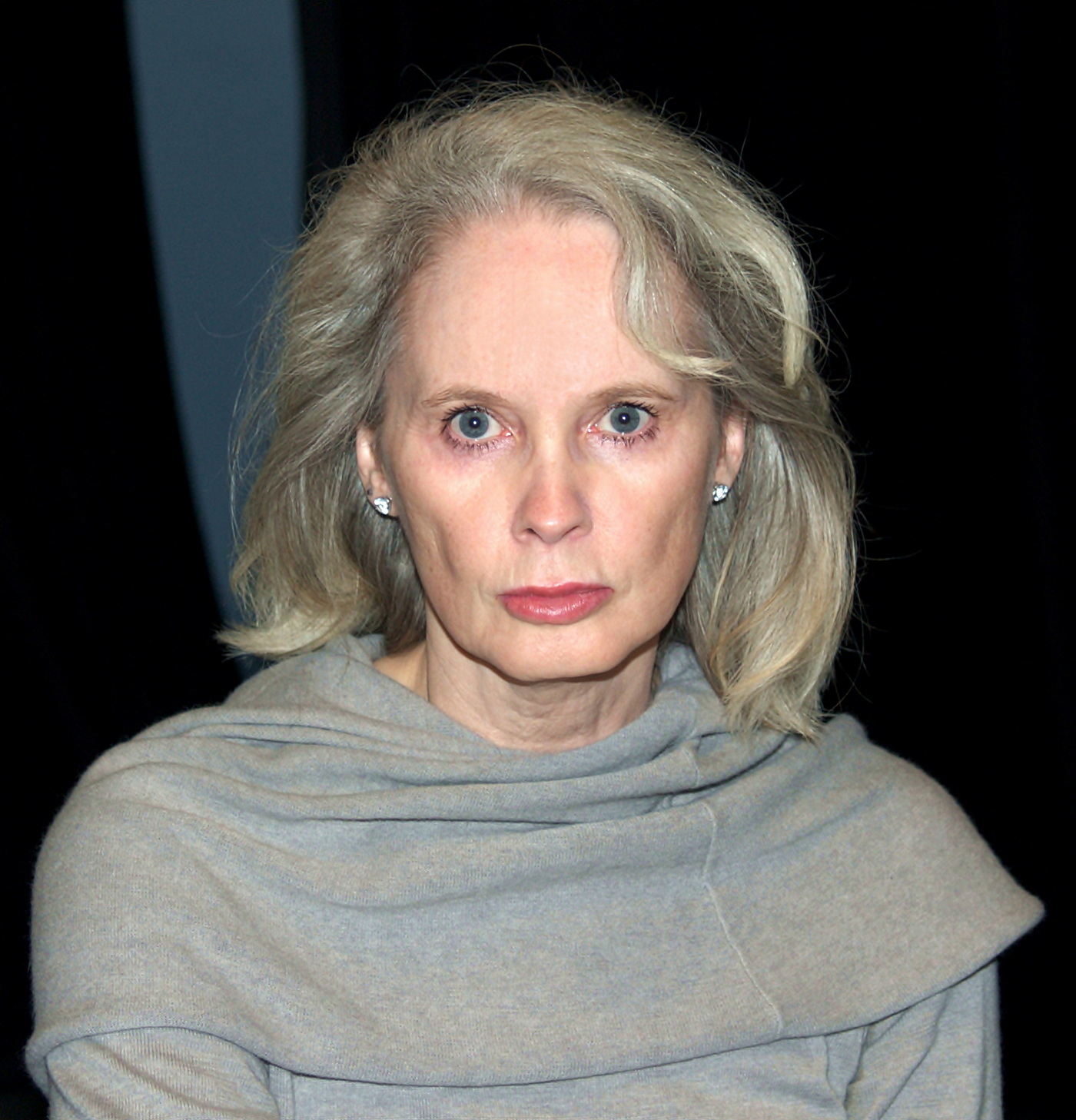
Mary Gaitskill (born 11 November 1954) is an American novelist, essayist, and short-story writer whose fiction has made sadomasochism, sex work, and emotionally jagged desire into serious literary material rather than only genre erotica. Her work has appeared in The New Yorker, Harper’s Magazine, Esquire, The Best American Short Stories (1993, 2006, 2012, 2020), and The O. Henry Prize Stories (1998, 2008). Landmark books include the story collection Bad Behavior (1988) and the novel Veronica (2005), a National Book Award and National Book Critics Circle finalist. For BDSM-literate readers she is a primary “literary rough sex” author: cold clarity about power, shame, and appetite without instruction-manual consent theater.
Life and Teaching
Gaitskill was born in Lexington, Kentucky. She has lived in New York City, Toronto, San Francisco, Marin County, and Pennsylvania. She earned a B.A. from the University of Michigan in 1981 and won a Hopwood Award. As a teenage runaway she sold flowers in San Francisco. In a BOMB Magazine conversation with Matthew Sharpe she said she chose writing at eighteen out of indignation—“things are wrong in the world and I must say something.” In the essay “Revelation” she describes becoming a born-again Christian at twenty-one and lapsing after six months. She married writer Peter Trachtenberg in 2001; they divorced in 2010. She has taught at UC Berkeley, the University of Houston, NYU, The New School, Brown, Syracuse, and in Temple University’s MFA program; she has been Writer-in-Residence at Hobart and William Smith Colleges and Baruch College. As of 2020 she was a visiting professor of literature at Claremont McKenna College.
Bad Behavior and the SM Stories
It took about four years to place her first book, Bad Behavior (1988). The first four stories are largely third-person from male points of view (the second, “A Romantic Weekend,” splits male and female POV). The remaining five center female perspectives. “Secretary” is the only first-person story. Recurring matter includes sexuality, romance, love, sex work, sadomasochism, addiction, being a writer in New York, and living in New York. “A Romantic Weekend” and “Secretary” specifically track BDSM and the psychology of dominance and submission. “Connection” maps the growth and breakdown of a female friendship. Gaitskill’s fiction typically follows women through inner conflict and treats “taboo” subjects—prostitution, addiction, S/M—matter-of-factly. She has said she worked as a stripper and call girl, and she wrote with similar candor about rape in the Harper’s essay “On Not Being a Victim,” which also intervenes in 1990s feminist debates about date rape, victimization, and responsibility, stressing how subjectivity blocks universally agreed conclusions.
The 2002 film Secretary is based on the Bad Behavior story of the same name, though the two share little DNA. Gaitskill called the movie “the Pretty Woman version, heavy on the charm (and a little too nice),” while noting that if an adaptation is made you get money and exposure and people can decide for themselves. In 2023 she revisited “Secretary” not as a sequel but as a retelling in The New Yorker (27 March 2023). Speaking with Deborah Treisman, she described the protagonist looking back through a MeToo-era lens: in a perverse way what the lawyer did awakened her and made her feel more alive than before or since—but that aliveness came at a heavy price.
Two Girls, Fat and Thin and the Masochistic Self
The novel Two Girls, Fat and Thin follows Justine Shade (thin) and Dorothy Never (fat) from childhood into adulthood. Justine works through sadomasochistic issues; Dorothy works through her unstable commitment to “Definitism” and founder “Anna Granite”—thinly veiled satires of Objectivism and Ayn Rand. When journalist Justine interviews Dorothy for an exposé, an unusual bond forms. Gaitskill has explained Justine’s masochistic impulse as a kind of inward aggression: it looks like self-contempt but is inverted contempt for everything, rooted not necessarily in sexual abuse but in a childhood world too inadequate to give her a full-spirited self—disgust that becomes “the gestalt of who you are,” so that masochism says, in effect, I will make myself a debased object because that is what I think of your love.
Veronica, The Mare, and Later Work
Veronica (2005) centers on a former fashion model and her friend Veronica, who contracts AIDS. Gaitskill mentioned the novel in a 1994 interview, set it aside that year, and returned in 2001. Wyatt Mason, writing in Harper’s (March 2006), argued that across four books in eighteen years Gaitskill had been asking how we live in an inscrutable world; earlier books described places we get painfully caught, while Veronica finally showed how life can also be a place of meaningful release. The Mare (2015) is told through multiple perspectives—especially Ginger, a middle-aged woman, and Velvet (Velveteen), a young adolescent she meets through the Fresh Air Fund—plus Paul, Silvia, Dante, and horse trainer Beverly.
Other books include story collections Because They Wanted To (1997) and Don’t Cry (2009); essay collection Somebody with a Little Hammer (2017); novella This Is Pleasure (2019); memoir Lost Cat (2020; earlier in Granta 2009); The Devil’s Treasure: A Book of Stories and Dreams (2021); the 2023 New Yorker story “Minority Report”; and essay collection Oppositions (2023).
Awards and Influences
Honors include the Arts and Letters Award in Literature from the American Academy of Arts and Letters (2018), a Cullman Research Fellowship at the New York Public Library (2010), a Guggenheim Fellowship for fiction (2002), a PEN/Faulkner nomination for Because They Wanted To (1998), National Book Award and NBCC finalist status for Veronica, a Hopwood Award, and election as a Royal Society of Literature International Writer (2022). Favorite writers shift over time, but Vladimir Nabokov remains constant—she has said Lolita will stay on her top-ten list for life—along with Flannery O’Connor. Despite well-known S/M themes, she does not treat the Marquis de Sade as a literary influence: “I don’t think much of Sade as a writer, although I enjoyed beating off to him as a child.”
On a BDSM literature shelf Gaitskill belongs with the serious fiction, not the how-to manuals: Bad Behavior’s D/s stories, the film and later retelling of “Secretary,” Justine’s theorized masochism in Two Girls, essays that refuse simple victim/agent binaries, and a career-long refusal to sand rough desire into romance-novel consent choreography. She writes the emotional weather of power exchange—humiliation, hunger, aftershocks—without offering a safeword chart, which is exactly why literary kink readers keep returning to her.
Essays, This Is Pleasure, and the Ethics of Desire
Gaitskill’s nonfiction is as important as her stories for readers who care how culture argues about sex. Somebody with a Little Hammer gathers criticism and personal essays; Oppositions continues that line. The novella This Is Pleasure (2019) entered #MeToo-era debates about accusation, loyalty, and the murk of literary-world sexual misconduct—territory adjacent to, though not identical with, her earlier S/M fiction. Across forms she distrusts tidy moral algorithms. That stance can frustrate activists who want fiction to deliver verdicts; it is also why her work stays useful for adult readers who know that erotic power is rarely a clean flowchart.
Interviews across decades—with Sheila Heti in The Believer, Matthew Sharpe in BOMB, Emily McLaughlin at Fiction Writers Review, and others—show a writer impatient with being reduced to “the S/M lady” yet unwilling to disown the material. She has lived in enough cities, taught in enough MFA programs, and published in enough prestige magazines that the rough content arrives with full literary institutional backing. That combination—canonical venues plus unsentimental kink psychology—is rarer than pure erotica shelves suggest.
Bibliography Snapshot for Kink Readers
- Bad Behavior (1988) — stories; includes “Secretary” and “A Romantic Weekend”
- Two Girls, Fat and Thin (1991) — novel; masochism and cult-philosophy satire
- Because They Wanted To (1997) — stories; PEN/Faulkner nominee
- Veronica (2005) — novel; National Book Award finalist
- Don’t Cry (2009) — stories
- The Mare (2015) — multi-perspective novel
- Somebody with a Little Hammer (2017) — essays
- This Is Pleasure (2019) — novella
- Lost Cat (2020) — memoir
- The Devil’s Treasure (2021); Oppositions (2023); “Secretary” retelling / “Minority Report” in The New Yorker (2023)
Start with Bad Behavior if you want the concentrated D/s charge; read Two Girls for a full novel-length masochistic psychology; use the 2023 “Secretary” revisit to see how the same power-imbalanced workplace lust looks after cultural language about harm has shifted. Gaitskill will not tell you how to scene-safely cane someone. She will show what it feels like when desire, class, gender, and cruelty tangle—and that remains the literary service kink-aware readers hire her for.
Film and magazine culture keep recycling her name whenever workplace D/s or literary rough sex re-enters the discourse: the 2002 Secretary movie as pop gateway, the 2023 New Yorker retelling as revision, Mason’s claim that Veronica finally showed release as well as catch. For this site she is the American literary counterweight to pure erotica—SM as psychology and class feeling, not only gear catalogue.