Irving Klaw was a merchant, not a photographer known for camera craft. He was born in Brooklyn, New York, on November 9, 1910. His father was a subway conductor and died while Irving was still in high school. Klaw grew up in a blended family. His stepsister, Paula Klaw, became the business partner he could not do without. In 1938 the two of them opened a struggling used bookstore in a basement at 209 East 14th Street in Manhattan. Teenagers kept tearing star photos out of the movie magazines, so Klaw switched to selling star stills and lobby cards. The stills sold. The shop moved up to street level, took the name Movie Star News, and grew a mail-order trade in cheesecake and Hollywood posters that reached buyers outside the country.
In 1948 the collector Little John and magazine publisher Robert Harrison pushed him all the way into fetish pictures. He carried on the commercial line already associated with Charles Guyette and John Willie. He hired models including Barbara Leslie, Vicky Hayes, Joan Rydell, Lili Dawn, and Bettie Page, and he commissioned illustrators Eric Stanton and Gene Bilbrew to draw adventure and bondage serials. Those drawings supplied the extreme costumes and cliffhanger plots that photographs of the time could not.
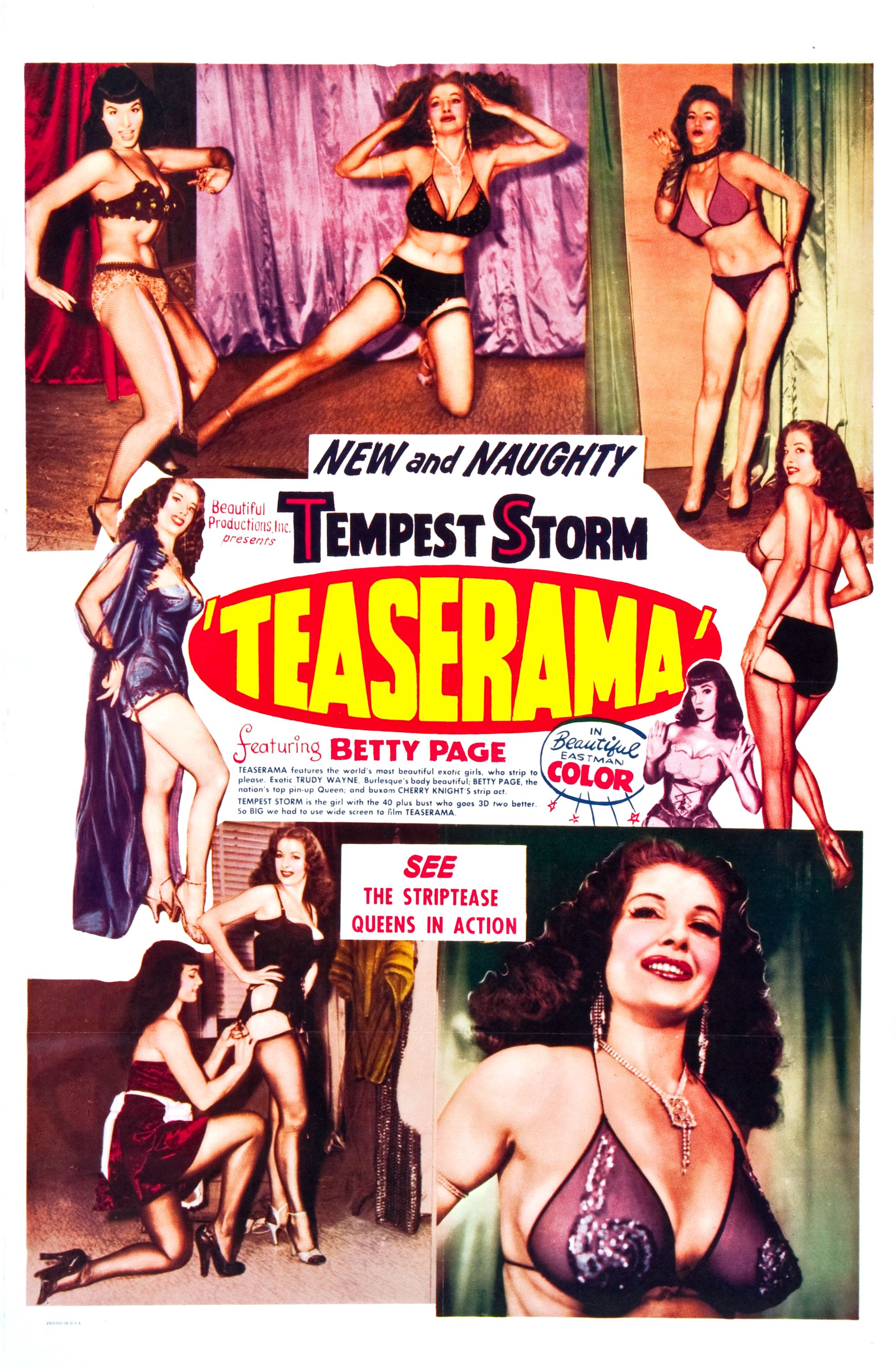
His film work was a commercial collage. Burlesque star Lili St. Cyr later described the method: different models, Bettie Page among them, were shot in separate segments, then cut together into “full pictures” of about fifty minutes. The same footage could be recombined under another title. After the 1953 burlesque revue Striporama sold far better than expected, Klaw directed Varietease (1954) and Teaserama (1955) himself on Eastman color stock. Lili St. Cyr, Tempest Storm, and Bettie Page were in both. Those two features reached DVD in 2000. Buxom Beautease (1956) went out without Page.
On weekends he also shot silent black-and-white loops: striptease, elaborate bondage, cat-fights, and slave-training tableaux. Most of them were made on a sparse set above the shop or in a nearby loft. Some, such as Rumble Seat Bondage, were shot outdoors. The loops and the stills from the same sessions went out in the twice-yearly mail-order catalog Cartoon and Model Parade, to customers who were never going to walk into the store.
In 1956 Abe McGregor Goff, general counsel of the Post Office Department, barred Klaw from the U.S. mails and called him one of the country’s largest dealers in pornographic material. That same year his sister was arrested over an operation in New Jersey. In 1957 the Kefauver Senate subcommittee held hearings under the heading of juvenile delinquency, and the McCarthy-style publicity cast Klaw as a degenerate pornographer. Bettie Page was summoned and never testified. The pressure closed the storefront. An estimated more than 80 percent of the negatives were burned. Paula secretly kept a batch of the better images.
With New York shut down, he moved the business to Jersey City. Nutrix Publishing and Satellite Publications kept selling fetish photos and booklets by mail, including Girl Psycho Handled with Restraint (1960) and Girls Punishment at School of Discipline (1962). The school and sorority settings in that line were adult models playing a part, not children. In 1963 a drive associated with Robert F. Kennedy ended in Klaw’s conviction for conspiracy to send pornographic materials through the mail. The same year, in Florida, he turned to the more ordinary nudie-cutie exploitation film and kept shooting bondage stills in Miami, Maria Stinger among the models.
Irving Klaw died on September 3, 1966, from complications of untreated appendicitis. He was survived by his sons, Arthur and Jeffrey. His nephew Ira Kramer later ran Movie Star News, on 18th Street until 2012 and then in Las Vegas. When Bettie Page’s image came back in the 1980s, London Enterprises, Cult Epics, and Something Weird Video put Klaw’s work into circulation again. In 2012 he was inducted into the Leather Hall of Fame. From Guyette to Willie to Klaw, American underground fetish pictures did not suddenly appear in the 1970s. Merchants had been packing and selling them since mid-century.