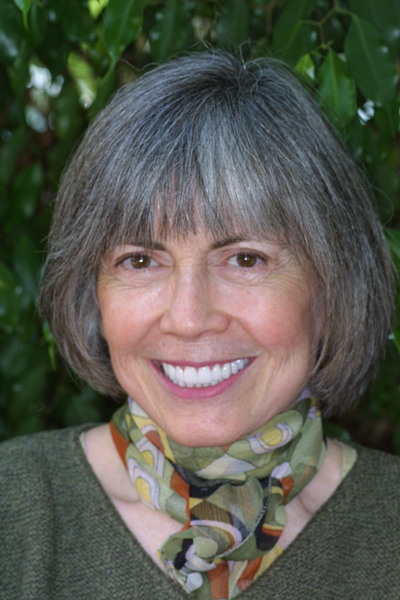
Anne Rice (born Howard Allen Frances O’Brien; 4 October 1941, New Orleans – 11 December 2021) is on this site for a reason that her vampire fame sometimes buries. Under the pen name A. N. Roquelaure she wrote the Sleeping Beauty quartet — The Claiming of Sleeping Beauty, Beauty’s Punishment, Beauty’s Release, and, decades later, Beauty’s Kingdom — one of the most widely read English-language SM romances of the late twentieth century. Under the name Anne Rampling she wrote Exit to Eden, a BDSM love story that Hollywood flattened into a police comedy, and Belinda. The same woman sold more than 100 million books, most of them The Vampire Chronicles, and spent a lifetime arguing with Catholicism, grief, and the idea that desire has to apologize. For kink readers she is not a side note to Lestat. She is the novelist who put a fairy-tale princess on a training leash and made the resulting pornography literate.
Howard Allen Frances O’Brien: Catholic New Orleans
She was the second of four daughters of Irish Catholic parents, Howard O’Brien (1917–1991) and Katherine “Kay” Allen O’Brien (1908–1956). Her father, a World War II naval veteran and lifelong New Orleanian, worked as a personnel executive for the U.S. Postal Service and left one novel, The Impulsive Imp, published after his death. Her older sister, Alice Borchardt, later wrote fantasy and historical romance. The family lived in the rented house of maternal grandmother Alice Allen — “Mamma Allen” — at 2301 St. Charles Avenue in the Irish Channel, a neighborhood Rice later called a “Catholic ghetto.” After Mamma Allen left an alcoholic husband she held the household together as Kay sank into alcoholism. The grandmother died in 1949; the O’Briens stayed in the house until 1956, then moved to 2524 St. Charles Avenue, a former rectory, convent, and school, to be nearer the church and help for Kay’s drinking.
The birth name was Howard Allen because her mother thought giving a daughter the father’s name would be an advantage — “a bit of a Bohemian, a bit of mad woman, a bit of a genius,” Rice said of her. Katherine Ramsland’s authorized biography Prism of the Night puts the choice on the father, who had grown up with a name people associated with girls and perhaps wanted to give it away. On the first day of school a nun asked the child’s name. She said Anne, which she thought pretty. Her mother, standing there, did not correct her. Everyone used Anne after that; the change was legal in 1947. She was confirmed at twelve as Howard Allen Frances Alphonsus Liguori O’Brien, adding a saint and a nun aunt. “It was my burden and joy as a child to have strange names.”
Kay died of alcoholism when Anne was fifteen. The girls were put into St. Joseph Academy, which Rice remembered as “something out of Jane Eyre … a dilapidated, awful, medieval type of place.” She felt betrayed by her father. In November 1957 he married Dorothy Van Bever after a formal lunch invitation Anne hand-delivered, with a pin enclosed for Dorothy to wear if she accepted. In 1958, when Anne was sixteen, the family bought its first house in Richardson, north Texas. At Richardson High School, in a journalism class, she met the poet and painter Stan Rice.
San Francisco, Marriage, Michele and the Decision to Write
She graduated in 1959, lasted a year at Texas Woman’s University in Denton, transferred to North Texas State College, and dropped out when the money ran out. She went to San Francisco, worked as an insurance claims processor, and pulled her TWU roommate Ginny Mathis west. They took an apartment in Haight-Ashbury and night classes at the University of San Francisco, then still a Jesuit men’s school that let women in after dark. A Texas Easter trip rekindled Stan. He proposed by special-delivery letter. They married on 14 October 1961 in Denton, just after her twentieth birthday and weeks before his nineteenth. In 1962 they were back in San Francisco, living through the birth of the hippie years in the Haight, Berkeley, and later the Castro. She told The New York Times she was “a totally conservative person” typing in the middle of Haight-Ashbury while everyone else dropped acid: “I was known as my own square.”
A B.A. in political science from San Francisco State University came in 1964. Daughter Michele — “Mouse” — was born 21 September 1966. Rice started a Ph.D. at Berkeley, hated the criticism-and-languages track (“I wanted to be a writer, not a literature student”), and returned to SFSU for an M.A. in creative writing in 1972. Stan took the same degree, taught there, and later chaired the creative writing department until he retired in 1988. In 1970, while Rice was still in graduate school, Michele was diagnosed with acute granulocytic leukemia. Rice later said she had dreamed, months earlier, that her daughter was dying of “something wrong with her blood.” Michele died in 1972, shortly before she would have turned six. Son Christopher Rice was born in Berkeley in 1978 and became a bestselling novelist in his own right, first book at twenty-two. Anne, who called herself an alcoholic, and Stan quit drinking in mid-1979 so their son would not inherit the childhood she had watched. In 2008 she posted a YouTube video marking twenty-eight years sober.
The writers she named as fuel were Charles Dickens, Virginia Woolf, John Milton, Ernest Hemingway, Shakespeare, the Brontës, Jean-Paul Sartre, Henry James, Arthur Conan Doyle, H. Rider Haggard, and Stephen King. When she stalled she went back to the opening pages of King’s Firestarter.
Interview with the Vampire and The Vampire Chronicles
In 1973, still in the wreckage of Michele’s death, she took an old short story and turned it into Interview with the Vampire. She based the creatures not on a folklore seminar but on Gloria Holden in Dracula’s Daughter: “elegant, tragic, sensitive people.” She did not do a lot of research. Publishers rejected the book; she developed obsessive-compulsive disorder, washing, checking locks, convinced she contaminated everything she touched. After a year of therapy she went to the Squaw Valley Writers Conference at Olympic Valley in August 1974, run by Ray Nelson, and met agent Phyllis Seidel. In October 1974 Seidel sold hardcover rights to Alfred A. Knopf for a $12,000 advance — at a time when new novelists were getting about $2,000. The novel appeared in May 1976.
Critics were mixed. Rice stepped sideways into historical fiction — The Feast of All Saints (1979), about free people of color in antebellum New Orleans, later a 2001 Showtime miniseries; Cry to Heaven (1982) — and, more important for this site, into the erotic books discussed below. She came back to vampires with The Vampire Lestat (1985), first hardcover run 75,000 copies and a warmer reception, and The Queen of the Damned (1988), 405,000-copy first printing, a Literary Guild main selection, number one on the New York Times bestseller list for more than four months. The Chronicles eventually ran to more than a dozen volumes. The ones that matter for a non-completist map are the opening trilogy, The Tale of the Body Thief (1992), Memnoch the Devil (1995), The Vampire Armand (1998), the later Mayfair crossovers, and the late “true sequel” she announced in 2014, Prince Lestat, followed by Prince Lestat and the Realms of Atlantis (2016) and Blood Communion (2018). Side shelves include New Tales of the Vampires (Pandora, Vittorio the Vampire), the Mayfair Witches trilogy beginning with The Witching Hour (1990), and the Ramses books starting with The Mummy, or Ramses the Damned (1989).
Gay readers claimed the vampires as an allegory of isolation and social exile; Rice said she had not set out to write that allegory but lived in the Castro with gay friends and did not argue with the reading. The Boston Globe called the characters “the walking alienated.” Susan Ferraro in The New York Times wrote that Rice turns vampire conventions inside out by identifying with the vampire instead of the victim, so the horror is the monster in the self, and that the undead are “loquacious philosophers” debating good and evil. Ferraro also named the prose: “florid, both lurid and lyrical, and full of sensuous detail.” William Patrick Day found it “long, convoluted, and imprecise.” Michiko Kakutani called it “a Gothic imagination crossed with a campy taste for the decadent and the bizarre.” All of those sentences also describe the Beauty books. The vampire and the slave-princess are the same instrument played in different keys.
Neil Jordan filmed Interview with the Vampire in 1994 from Rice’s own screenplay, with Tom Cruise as Lestat, Brad Pitt as Louis, and Kirsten Dunst as the child vampire Claudia. A 2002 Queen of the Damned, mixing that novel with The Vampire Lestat, starred Stuart Townsend and Aaliyah, cost about $35 million, took about $30 million in the U.S., and was a film Rice said “mutilated” her work. Later rights ping-ponged through Universal, a mother-and-son television development with Christopher, Hulu, and finally AMC, which in 2020 took The Vampire Chronicles and the Mayfair books; the shared “Immortal Universe” began on television after her death. Those deals are a business history. They are not why a BDSM site keeps her on the shelf.
A. N. Roquelaure: The Sleeping Beauty Quartet
The books that earn the category path — BDSM literature, BDSM writers — were published as A. N. Roquelaure while she was still living in California, between the first vampire novel and Lestat’s return. The original trilogy:
- The Claiming of Sleeping Beauty (1983), ISBN 0-452-26656-4
- Beauty’s Punishment (1984), ISBN 0-525-48458-2
- Beauty’s Release (1985), ISBN 0-452-26663-7
Thirty years later she added Beauty’s Kingdom (2015), ISBN 978-0-525-42799-5, turning the set into a quartet. The conceit is a pornographic inversion of the fairy tale. Beauty is not rescued into marriage; she is claimed, stripped of rank, and trained as a sexual slave in a court where princes and princesses alike are sent to learn submission through the body. The erotic engine is classical BDSM: bondage, judicial and erotic spanking, public display, service, the breaking and remaking of pride, the education of a “good” slave. Rice writes it in the same lush, ceremonial English she used for vampires — not as a cheap paperback flogging catalog but as a romance of surrender in which humiliation is the plot. Readers who came to kink in the 1980s and 1990s often found these paperbacks in ordinary bookstores, next to the vampires, which is how a lot of people first met negotiated cruelty on the page.
Beauty’s Kingdom is the late book. Beauty and Laurent return as rulers and try to build a realm in which the old training culture is not only a dungeon for the young but a political order — a fantasy of SM as governance, with all the tenderness and all the coercion that implies. It is the work of a writer who had already gone to Jesus and come back, and who was no longer willing to leave the erotic books in a locked drawer. She told Alice Cooper, late in life, that her faith “blazes” even in the erotica, that sex is “beautiful and good,” and that she wrote about outsiders seeking redemption. The Beauty cycle is that sentence in corset and collar.
Anne Rampling: Exit to Eden and the Film That Gutted It
Under Anne Rampling she published Exit to Eden (1985), ISBN 0-87795-609-X, and Belinda (1986), ISBN 0-87795-826-2. Eden is the one kink readers still argue about. It is a BDSM love story: an isolated resort where trained slaves and paying tops do the work of dominance and submission as a complete social world, and a dominant woman who falls in love across the roles she is supposed to police. The erotic contracts are the subject, not the wallpaper. In 1994 — the same year Cruise and Pitt put her vampires on multiplex screens — the film Exit to Eden arrived starring Rosie O’Donnell and Dan Aykroyd. The adaptation took a BDSM love story and rebuilt it as a police comedy. The island’s leather and latex became a joke set. Reviews were near-universally hostile; the picture is remembered as a box-office failure. For this site that flop is documentary evidence of how mainstream American film in the mid-1990s could not leave a femdom romance alone. It had to cuff it to a buddy-cop plot and laugh. The novel is still the novel. Read the book.
Belinda is the other Rampling: a painter and a young woman, obsession, age, and the ethics of looking. It is erotic, not a dungeon manual, and it belongs with Rice’s long interest in beauty as something that wounds the person who stares.
Homecoming, Coma, Catholicism and Christ the Lord
In June 1988, with Lestat already a success and Queen of the Damned about to land, the Rices bought a second house in New Orleans — the Brevard-Rice House, built in 1857 for Albert Hamilton Brevard. Stan took leave from teaching. Within months they made the city permanent. The Witching Hour was the book she wrote out of the joy of being home; Lasher and Taltos finished the Mayfair trilogy. Violin, a ghost story, came in 1997. She appeared on The Real World: New Orleans in 2000.
She had left the Church at eighteen and lived as an atheist, then an agnostic, for decades. In 1998 she returned to Catholicism. On 14 December 1998 she fell into a coma from diabetic ketoacidosis, nearly died, and was diagnosed with type 1 diabetes. She remained insulin-dependent. The return to the Church did not come with a conversion to the Church’s sexual politics. She stayed a loud supporter of gay and lesbian equality, including marriage, and of abortion rights and birth control. Promoting Christ the Lord: Out of Egypt in October 2005, she told Newsweek she would now use her life and talent to glorify her belief in God — and she did not disown the earlier books, including the erotic ones. In the author’s note to that novel she described daily Mass in a huge decorated church, stained glass, the Latin rite, and the break at eighteen when she wanted to know why so many people she respected had no organized religion and still cared passionately about how they lived. She wrote, she said, many novels without noticing they were a quest for meaning in a world without God.
Christ the Lord: Out of Egypt (2005), ISBN 0-375-41201-8, and Christ the Lord: The Road to Cana (2008), ISBN 067697807X, are fictionalized incidents from the life of Jesus — the major late turn in the career, a public kneeling after the vampires and the slaves. A third volume, Christ the Lord: Kingdom of Heaven, was in progress in November 2008 and did not become the defining book of the sequence. The memoir Called Out of Darkness: A Spiritual Confession (2008) describes the surrender: letting go of the theological and social questions that had kept her from God, including torment over gay friends and over people the Church condemned. The Songs of the Seraphim novels (Angel Time, Of Love and Evil) and later the Wolf Gift books continued the supernatural line without replacing either Lestat or Beauty.
Stan Rice died of brain cancer in 2002 at sixty, after forty-one years of marriage. On his advice she had gastric bypass surgery after his death and lost 103 pounds in 2003. In 2004 an intestinal blockage, a known bypass complication, nearly killed her again. Living alone, with Christopher in California, she announced on 18 January 2004 that she would leave New Orleans, sold the largest of three houses, and moved to a gated community in Kenner. She sold two New York condominiums in 2005. After finishing Out of Egypt she left the city shortly before Hurricane Katrina. None of her former New Orleans properties flooded; she stayed a vocal advocate for the city. She tried La Jolla (“like heaven,” then too cold), bought a six-bedroom house in Rancho Mirage in late 2005, and moved there in 2006 to be near her son. In 2010–2011 she auctioned antique dolls, wardrobe, jewelry, and household objects, and sold a large piece of her library to Powell’s Books.
Walking Away from the Church, Last Books, Death
On 28 July 2010 she posted on Facebook that she had quit being a Christian. She remained “committed to Christ as always” but not to “this quarrelsome, hostile, disputatious, and deservedly infamous group.” She clarified immediately: conversion from pessimistic atheism to belief in a loving God still mattered; following Christ did not mean following his followers. To the Los Angeles Times she said she was “much more morally comfortable walking away from organized religion.” Asked how she followed Christ without a church, she answered: prayer, trust, and the core of Jesus’s teachings. She appeared in the “I Am Second” documentary project that year. On 14 April 2013 she stated she was a secular humanist. A year later she said Christ was still central, but not as churches present him. The Cooper interview is the cleanest late credo: institutional Christianity dropped, devotion to Jesus kept, sex affirmed, outsiders still the subject.
She died of complications of a stroke in a Rancho Mirage hospital on 11 December 2021, aged eighty. Christopher said the family would place her in the family mausoleum at Metairie Cemetery in New Orleans. She was laid to rest in January 2022 beside Stan and Michele. One face of the tomb is stained glass; the other three carry Stan’s poems from False Prophet and Some Lamb. The mausoleum is open to the public in visiting hours.
Reception, Fan Fiction and Why the Erotic Books Survive
Early reviews of Interview were mixed enough to send her into historical novels; by Lestat and Akasha the market had decided. LGBT readers kept her; so did a mainstream audience that wanted Gothic talk more than jump scares. She was, for a long stretch, hostile to fan fiction, especially Vampire Chronicles stories, and in 2000 told FanFiction.Net to pull them on copyright grounds. By 2012 she had softened: she had been afraid it would “block” her; it had been easy not to read any; “live and let live.” Comics and manga adaptations ran from Innovation’s early-1990s Vampire Lestat and Interview through IDW’s Servant of the Bones (2011) and Yen Press’s Claudia’s Story and The Wolf Gift. The Broadway musical Lestat (Elton John and Bernie Taupin, Palace Theatre, 2006) had her approval and almost no one else’s; it closed after 33 previews and 39 performances.
None of that machinery is as durable, for a kink audience, as four Roquelaure novels and one Rampling love story. Rice put SM in print under names she barely hid, in a career that also included Jesus and the most famous American vampires since Lugosi, and she refused, even in her Catholic decade, to throw the erotic books on the fire. The 1994 Eden movie is what happens when a studio is afraid of a dominant woman. The Sleeping Beauty cycle is what happens when the same novelist is not. If you are here for power exchange on the page, start with Beauty’s claiming, stay through the punishment and the release, read the 2015 kingdom as a late, strange treatise on whether a slave-training culture can be a just one, and keep Exit to Eden in the original text, not the O’Donnell cut. The rest of the shelf — Lestat, the Mayfairs, the Christ novels — is how she earned the freedom to publish those books in the middle of a respectable American career and not be erased for it.