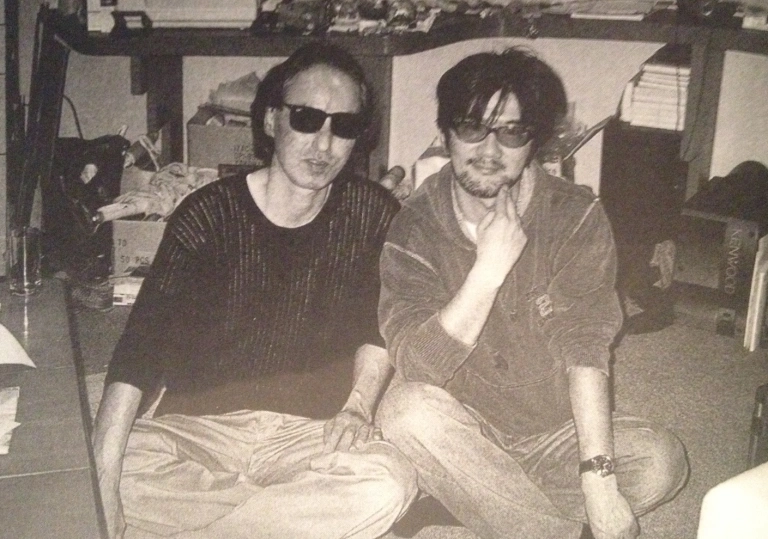
In Speculum No. 8 (1999), Randa Mai’s SM friendship journal Vol. 3 sits down with Denki Akechi, her senior and a heavy figure in the rope world. At the time he was pushing Japanese kinbaku abroad. He walks through a shift in attitude: about fifteen years earlier, during the Phantom Show years, journalists would watch but refuse to write the shows into mainstream magazines, wanting them kept for “our own people,” and Akechi himself thought SM should stay underground forever. Four or five years before the interview, more invitations came; he saw SM shows and so-called shibari that looked twisted or skin-deep, and he started saying out loud that that was not how you tie. Around then he met Randa, who was doing stage shows; they talked and clicked.
Akechi keeps insisting SM is heart, not surface. Finding one submissive woman is a treasure—you listen to what is on her mind and take her whole. That stance shows up in public gigs. At a large cultural conference in Akita, invited by composer Shigeaki Saegusa, actress-turned-politician Mitsuko Ishii walked in mid-performance; Saegusa stepped between them so the kinbaku could continue, actor-director Eiji Okuda spoke to the crowd, and the room gave a big ovation. Media attention often came at the wrong angle, but the show still landed.
Around 29 May 1999 he was headed to Amsterdam for the De Mask annual event: roughly three thousand underground enthusiasts, five performers, and the first formal Oriental invitee. The year before, at Europe’s large SM club Doma, people first treated him as “a weirdo from the East”; after the show the room stood and clapped, and the owner said this too was a form of love. Newspapers and other press followed.
He was also building a huge rope installation for a Taiwanese woman director’s film: two women on a gigantic rope birdcage, a fantasy about sex a hundred years out. On the industry he is blunt—thin invention, poor expression, standardized, like clocking in. Some ropework is so sloppy the chest rope rides up toward the neck and nearly chokes; people mix up musubi (knot) and shibari (bind); they miss that a woman’s pleasure also runs through the mind. To go deep, he says, you need the resolve that if something happens you would cut your belly—that is love—and only an open heart lets you play boldly. Ultimate submission he compares to being a baby again, with the other person handling everything; a man who loves a woman should protect her to the point of taking a mother’s role.
He does not like turning SM into a business that empties the enthusiast’s heart, but stage SM carries professional pride and duty. Asked what SM is to him: rope. He calls himself a nawashi; love exchanged through rope; everything begins and ends with ushirote shibari (hands tied behind the back). He wants to keep challenging himself, tell the world the culture and beauty of Japanese shibari, research kinbaku history, leave footprints, and see juniors catch up and pass him—Randa Mai, he says, might manage it.
Career sketch from the same piece: late 1970s into GSG Planning directing and supervising shibari; projects such as Tokyo SM Project, SM Bomber, SM Aquarium; 1980s video work for Uchuu Kikaku, VIP, Endo Pro, Athena Images and others; July 1987 he opened Studio Phantom as a members gathering, and from September ran experimental theatre twice a month until June 1997; August 1997 Salon Garasha; 1998 Europe including Doma; 1999 first Oriental invite to DeMask.