
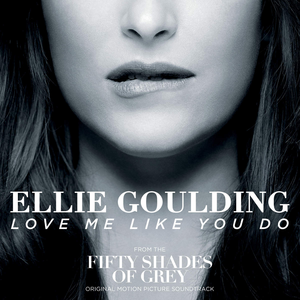
Ellie Goulding’s “Love Me like You Do” is not a dungeon manual. It is a hit that translated BDSM into mass-market pop. As a single from the Fifty Shades of Grey soundtrack, it catches the hunger between Christian Grey and Anastasia Steele: something they talked about, then did not keep talking about. For listeners who know fetish culture, the draw is the lyric’s unnegotiated surrender. The chorus keeps singing “even when it hurts,” and that line sold a bondage-flavored romance to people who have never walked into a leather bar. In the song, pain is romantic weather. It is not a contract term with a limit and a way to stop.
How the track was built
The credits map mid-2010s Swedish pop power. Max Martin and Ali Payami produced it. Ilya Salmanzadeh started the chorus. Savan Kotecha and Tove Lo pushed the lyrics. Recording ran across Los Angeles and Stockholm. Mattias Bylund arranged the strings, which were recorded in Gothenburg. The finish is industrial on purpose: it is meant to sound expensive. Goulding’s voice stays soft and a little lost, with no guttural scream, against Martin’s stadium synths and drums that press in. A whisper over drums that hit that hard makes the song feel like a bedroom, not a sports anthem. The sheet is A-flat major at 95 BPM. Goulding’s line runs from A-flat3 to E-flat5, and the high notes lift rather than climax.
The video and the live standard
Georgia Hudson directed the video. Goulding dances in a gown in a mansion ballroom, cut against footage from the film. She asked to include the waltz. In the clip she is the “safe” body. Dakota Johnson in the Red Room is closer to merchandise being looked at. Together they tell a mainstream audience that BDSM is an elegant game under luxury lighting. Live, the song followed her from the Victoria’s Secret Fashion Show to a BBC concert and became a standard she could not retire. At the 2015 MTV EMAs the performance was sexy and straightforward: a date-night version, a chorus you can sing while sober, with the film’s ambiguity still hanging on it.
Charts, nominations, and the split the lyric leaves
In the UK it spent four weeks at number one, broke the British streaming record of that moment, and became Goulding’s longest-running UK chart-topper. In the United States it peaked at number three on the Billboard Hot 100 and was certified eight-times platinum. It reached number one on more than thirty official charts. Germany certified it Diamond and Poland Double Diamond. It lost at the Grammys and the Golden Globes. It still gave Goulding her first Grammy nomination, for Best Pop Solo Performance, and it was nominated for best original song. A ballad from a bondage movie was in the same awards conversation as civil-rights songs and Bond themes.
The song inherits the ethical split in the Fifty Shades series. It shrinks BDSM to a billionaire’s interior design and a tourist stop, and it models a fantasy, not a template. New listeners often take the pain in the lyric as the rule rather than as something that was negotiated. As pop, it packs “danger” inside a mass-market sense of safety. A rock cover by Circa Waves, and the use of the song in the musical & Juliet, show how far a track written to score a billionaire’s playroom traveled. It left the screen and became ordinary love-song language. When the lights go down, the listener still has to tell “love me like you do” from “here is my list, and this is how we stop.”