
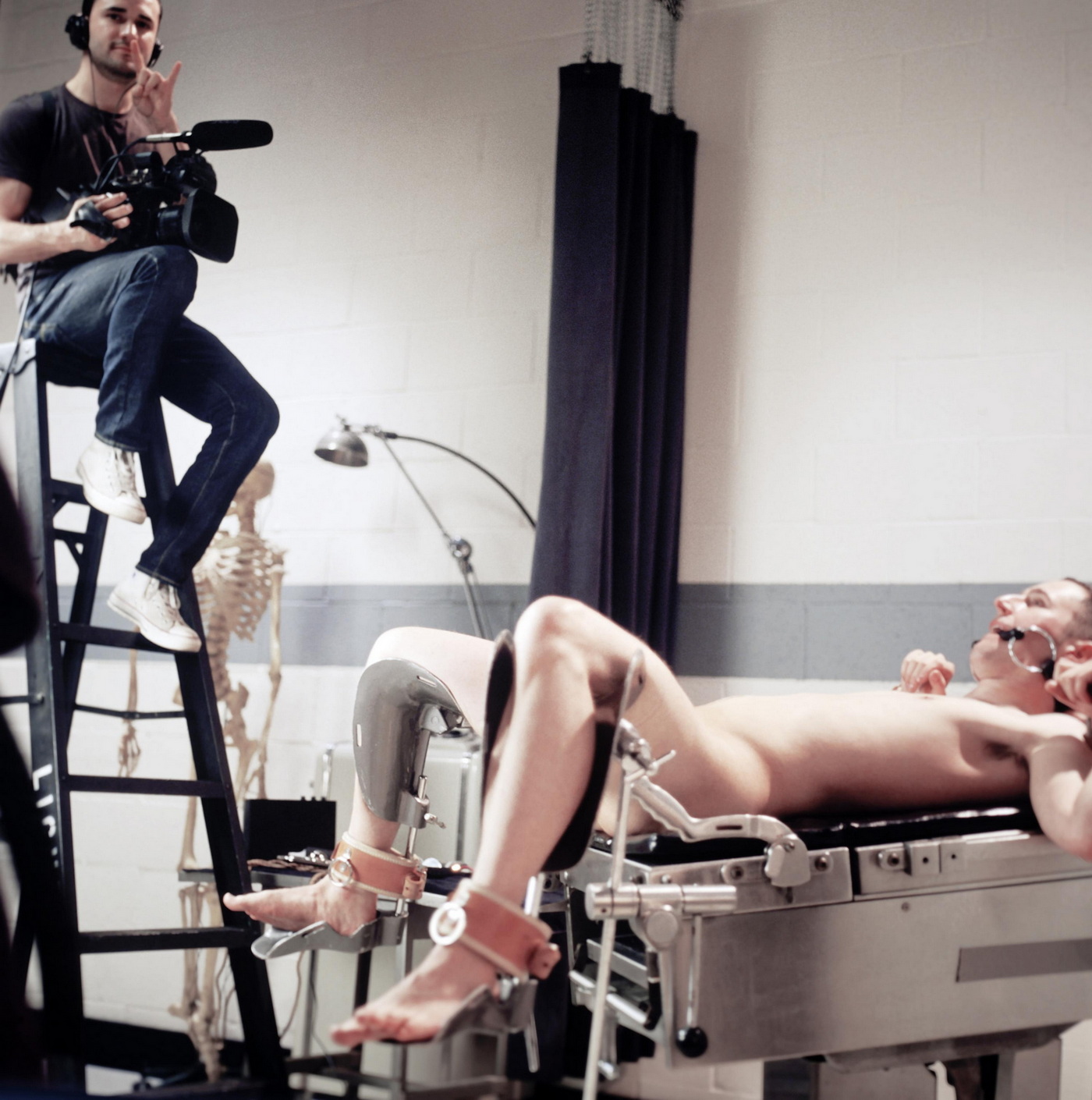
Kink.com is an independent San Francisco bondage and BDSM internet porn company with a large network of fetish subscription sites. Names tied to it include Kink Studios, LLC, Hogtied.com, and Behindkink.com, DBAs of parent company Cybernet Entertainment LLC. Peter Acworth, from the UK, founded it in 1997 while he was a doctoral student in finance at Columbia University. He had read a British tabloid story about a fireman who made £250,000 quickly by launching an internet porn site, and he built his own. A lifelong interest in bondage pushed the brand toward rope and BDSM rather than generic softcore. The first site, Hogtied.com, sold licensed third-party bondage content and soon grossed several thousand dollars a day, enough for him to leave graduate school. In 1998 he moved operations from New York City to San Francisco.
Sales flattened once competitors recycled the same licensed libraries, so Kink started shooting its own material. Acworth was often in front of the camera. Models came through Craigslist or photographer friends. In 2000 the company opened a second site, Fucking Machines, and over the next years launched more than two dozen further subscription channels. After Insex collapsed under government pressure in 2005, several of its directors moved under the Kink umbrella. The company put a louder public stress on consent than Insex’s reputation for extremity alone.
The Armory, then Las Vegas
In late 2006 Kink.com bought the historic San Francisco Armory for $14.5 million and used it as a studio. Neighbors formed the Mission Armory Community Collective and protested in public in February 2007. At one point there were plans to demolish part of the building for condominiums. People who cared about preservation welcomed a buyer who would keep the exterior and bring business back onto the block. Mayor Gavin Newsom scheduled a special San Francisco Planning Commission review. Anti-pornography campaigner Melissa Farley compared Kink imagery to the Abu Ghraib prisoner-abuse photographs. The commission ruled the company was not violating law or zoning. Even so, the neighboring women’s shelter La Casa de las Madres said it would leave because of the media attention. Besides porn shoots, the Armory rented space to independent filmmakers for non-porn narrative work. By 2013 rooms were being turned into rentable webcam studios. In January 2017 Kink announced it would stop filming in the Armory. In 2018 Acworth sold the building for $65 million, which closed the chapter of shooting in that building.
In July 2014 the company opened a Las Vegas office, publicized productions there, and expanded site operations. In 2007 the U.S. Patent and Trademark Office refused to register “Fucking Machines” as a trademark, calling it obscene. That same year Kink pushed live streaming as a defense against piracy. By 2008, Device Bondage was streaming live bondage shows and Ultimate Surrender was streaming competitive erotic wrestling. Per-episode on-demand sales joined the subscriptions, and later shelves included third-party catalogs such as Germany’s Marquis. Also in 2008 the company launched Bound Gods, a gay bondage site directed by Van Darkholme, who is also associated with Naked Kombat, under the gay-focused division KinkMen.com.
In 2014 Kink said it would stop producing the very popular Public Disgrace and Bound in Public, and it retooled Hardcore Gangbangs so the female participant’s fantasy sat more explicitly at the center. Educational programming increased, with talk of demystifying alternative sex and of a lifestyle brand on the Playboy model. As of 2022 the main network listed over ninety channels, twenty-seven of them Kink exclusives from nine studios, one of the largest fetish networks. In October 2022 KinkMen relaunched as its own paysite inside the network, with directors including Dominic Pacifico and Micah Martinez, covering male kink and fetish scenes.
Kink AI, awards, and what the catalog actually sold
Pushed by Acworth, Kink launched Kink AI, a platform for text-based fantasy chat and explicit image generation. Inside the company the chat product is called Kinky Chat and the image tool Kinky Image. Benjamin Pollack, Petru Popa, and Robert Pop were among the product and tech leads. The project started in the third quarter of 2023 as a minimum viable product meant to generate articles for an internal education effort, spent about four months in a free beta, and launched out of beta on September 6, 2024. Marketing has claimed 200-plus AI characters across male, female, transgender, and anime-style personas. Later character counts have not been independently verified.
Industry awards include a 2009 AVN nomination for Best Adult Web Site, a 2009 XBIZ FSC Leadership award, and AVN Best Alternative Web Site wins in 2011, 2013, 2014, 2016, and 2017. The movie Deception: A XXX Thriller won AVN Best BDSM Movie in 2017. The documentary Kink came out in 2013. Regina Lynn’s writing in Wired on “real sex” versus processed porn is one outside reference.
The commercial logic was a deep catalog of narrow tastes. Early Hogtied buyers wanted tight rope and stills. Fucking Machines sold mechanized penetration as its own fetish. Device Bondage packaged restraint furniture and interrogation aesthetics. Public Disgrace and related shows pushed exhibitionist humiliation, then cooled when the brand repositioned. The later Hardcore Gangbangs framing, putting the woman’s fantasy at the center, shows that even inside an extreme gangbang brand the marketing started talking about agency and who authored the fantasy. The Armory went from a fortress-like set to a webcam hub and then to real estate that was sold. In March 2018 former VP of technology Alison Boden became CEO, and Acworth stepped back from day-to-day work toward real-estate development. He returned to the company in 2021. After that the company was managing intellectual property, shoot locations in San Francisco and publicized Las Vegas productions, and the new AI products.
The usable points are concrete. Original production beat recycled licensed stills. A public stress on consent separated the brand from earlier extreme sites. Live streaming plus on-demand fought piracy and kept fans close. Narrow lines — machines, public humiliation, gay bondage — sold desires that mainstream tube sites flatten. Kink.com did not invent BDSM. It industrialized the online image of BDSM for a generation of adult viewers. Performers and buyers in that business are adults. Suspension, breath play, and heavy devices carry real risk. What the company sells is a negotiated scene, not a crime manual.


![JRO-01 Forced Vomiting 1 [Exclusive]](https://bdsmwild.com/wp-content/uploads/2026/10/JRO-01-fuji-0022-Exclusive.jpg)