
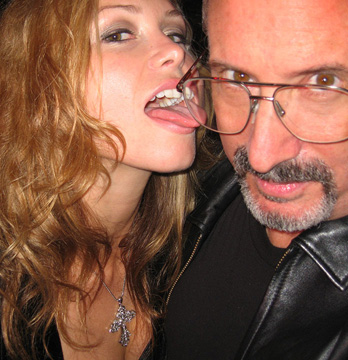
Ken Marcus, born October 2, 1946, is an American photographer with two tracks running at once: glamour for Penthouse and Playboy, and erotic and bondage work that fetish photography already knows. The career has run more than fifty years. He is one of the few widely known glamour shooters who also took restraint, leather, and explicit erotic craft seriously enough to win specialty awards for it.
The training started in landscape. From age twelve he studied for thirteen years with Ansel Adams in Yosemite National Park, and he also worked with Brett Weston, Paul Caponigro, Wynn Bullock, Imogen Cunningham, and Judy Dater. That is where his early sense of light, print quality, and composition came from. He then studied fashion and advertising photography at the ArtCenter College of Design, and later attended the Brooks Institute. At eighteen he opened a studio on Melrose Avenue in Hollywood and worked from that base for fifty-three years. In 2019 he moved operations toward the Las Vegas, Nevada area.
Melrose, Penthouse, and Playboy
The Melrose studio opened in 1965 with product shots, catalogs, corporate jobs, and editorial assignments. In his twenties he shot fashion, architectural interiors, food illustration, and magazine features. Within five years the work was drawing national publicity and Art Directors Club awards. By the early 1970s he was a regular for Max Factor, Frederick’s of Hollywood, and other West Coast fashion clients. He also photographed musicians for album covers, including the inside gatefold of George Harrison’s Living in the Material World.
In 1971 Marcus became the first American photographer for Penthouse. Early pictorials were couples and models shot through heavy soft-focus diffusion, a look popular early in the twentieth century and largely unused in magazines since the 1920s. Commercial diffusion filters were scarce, so he made his own. In 1974 he left Penthouse to become West Coast contributing photographer at Playboy. For eleven years his pictures ran in Playboy’s international editions, and for eight of those years he exclusively photographed the Playboy Calendar. Between 1974 and 1985 he produced forty-one Playmate layouts, more than one hundred calendars, covers, and editorials, and twice received Playboy’s Photographer of the Year Award. He later returned to Penthouse pictorials and centerfolds. Clients then included Jordache, Snap-on Tools, NAPA, and Muscle & Fitness.
Nudes, Yosemite, Monterey, and the bondage award
Serious nude work intensified during the Playboy years. In the early 1980s his nude studies of Los Angeles Ballet dancers were exhibited in Los Angeles. In 1988 he was selected Artist-in-Residence at the Yosemite National Park Museum. Images of nude models in nature were initially banned by park officials and later entered the museum’s permanent collection. He also made black-and-white celebrity portraits, among them Kareem Abdul-Jabbar, Virginia Madsen, Fabio Lanzoni, Vincent Price, Pamela Anderson, and Tom Arnold.
Marcus was one of two official photographers at the 1967 Monterey Pop Festival. Frames of Jimi Hendrix, Janis Joplin, The Who, Simon & Garfunkel, and Brian Jones of the Rolling Stones turned up again in 2005 during a studio remodel. His Hendrix photograph appears on the 2007 album The Jimi Hendrix Experience: Live at Monterey.
He appears in the opening of the television movie Panic at Malibu Pier as a photographer shooting a nude glamour layout on the beach. In Dave Stevens’s comic series Rocketeer he is caricatured as the villain “Marco of Hollywood,” recognizable to readers who knew the photographer’s face.
Book credits include California Club (1996), Two Faces (1996), and Two Knotty Boys: Back on the Ropes (2009), the last a direct step into rope culture, plus contributing photography to Contemporary American Erotic Photography: Volume 1 (1984). Awards include a 1973 Art Directors Club Award of Distinctive Merit, Playboy editorial photography awards in 1980 and 1981, a 1992 Academy of Bodybuilding and Fitness studio photography honor, Adult Stars Magazine’s Publisher’s Choice Award in 2001, and Best Bondage Photographer at The Bondage Awards in 2010. His own erotica and print-sale sites have long sold work that mainstream magazine résumés sometimes soft-pedal. The models and the audience are adults.