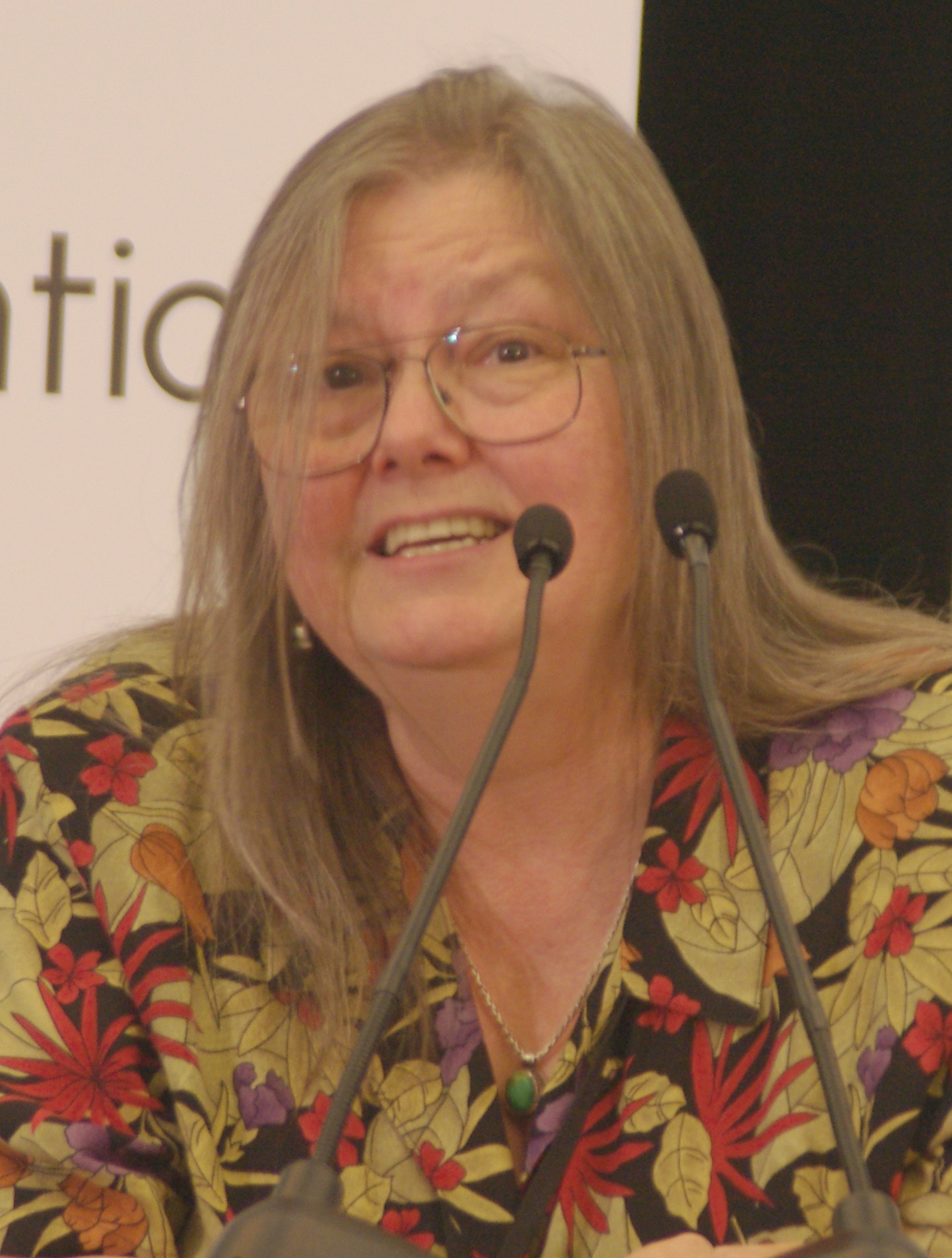
Dorothy Earlene Allison (1949–2024) wrote class, sexual abuse, lesbian life, and feminism into books that refused to be cleaned up for polite readers. Poverty, incest trauma, and desire stay in the work. She cofounded the Lesbian Sex Mafia, long described as the oldest continuously running women’s BDSM support and education group in the United States, and she appears in leather and sex-positive feminist collections. The childhood abuse below is biography, not a sex scene. The kink organizing she did was among adults.
Greenville, then Florida
Allison was born in Greenville, South Carolina, on April 11, 1949. Her mother, Ruth Gibson Allison, was fifteen. Her father died while Dorothy was a baby. Ruth worked as a waitress and a cook, and poverty was the ground of the childhood. Ruth remarried. When Allison was five, her stepfather began sexually abusing her. That abuse lasted seven years. At twelve she told a relative, who told Ruth. Ruth forced her husband to stop, and the family stayed together, but the pause failed and the abuse continued for another five years. Allison was hurt in body and mind. She contracted gonorrhea that went undiagnosed and untreated until her twenties. The damage left her unable to bear children. Around age eleven the family moved to central Florida. School was the refuge. In early adolescence she recognized that she was a lesbian.
She was the first in her family to finish high school. In 1967 a National Merit scholarship took her to Florida Presbyterian College, now Eckerd College. A feminist collective there brought her into the women’s movement. She credited “militant feminists” with pushing her to write. Around then she cut off her family, and the break lasted until 1981. She received a B.A. in anthropology in 1971, then did graduate work at Florida State University, the Sagaris Institute, and the New School for Social Research. In 1981 she earned an M.A. in urban anthropology. She said early feminism was like opening your eyes under water: what had been dark and mysterious became visible, and open to change.
The jobs, then the books
Before the books paid, she edited the feminist magazine Amazing Grace in Tallahassee in 1973 and 1974, founded and managed Herstore Feminist Bookstore there, and worked as a salad girl, a maid, a nanny, a substitute teacher, a child-care worker, a rape-crisis phone worker, and a Social Security clerk. Days she trained and earned. Nights she wrote on yellow legal pads about the stepfather’s abuse, about poverty, and about wanting women. Those pages fed the later books. The Women Who Hate Me, her first poetry collection, came from Long Haul Press in 1983. Trash, the short-story collection, came from Firebrand Books in 1988.
Bastard Out of Carolina, her first novel, appeared in 1992, became a bestseller, and was a National Book Award finalist. Anjelica Huston filmed it for TNT. The picture was graphic enough that it aired on Showtime instead. A Canadian maritime board briefly banned the film; an appeal reversed that. In 1997 the Maine Supreme Judicial Court upheld a ban on the book in public high schools. The fights followed the work because Allison would not sand incest, class, and queer desire into an uplift story. Later books include Skin: Talking About Sex, Class & Literature (1994), Two or Three Things I Know for Sure (1995), and Cavedweller (1998). In 1998 she founded the Independent Spirit Award for writers who keep small presses and independent bookstores alive. The themes stay on class, child abuse and sexual abuse, women, lesbianism, feminism, and family. Writers who mattered to her include Judy Grahn, Flannery O’Connor, James Baldwin, Jewelle Gomez, Toni Morrison, Bertha Harris, and Audre Lorde. Morrison’s The Bluest Eye helped her write incest. In the early 1980s Lorde heard a draft of what became “River of Names” and told her she had to write it. In California, Allison studied early lesbian liberation presses and made a pilgrimage to Judy Grahn.
Lesbian Sex Mafia
Allison argued for safer sex inside feminist and lesbian communities that did not always want SM in the room. In 1981 she and Jo Arnone cofounded the Lesbian Sex Mafia. The feminist sex wars were the setting. Anti-pornography and anti-SM feminists treated power play as violence. LSM and the sex-positive networks around it said women could explore kink, leather, and explicit desire on their own terms. Allison is in Mark Thompson’s Leatherfolk: Radical Sex, People, Politics and Practice (1991) and in other radical-sex anthologies. She said she might never have published the stories if she had not gotten past the prejudice and started talking with her mother and sisters again. Family repair and telling the truth about sex were one project. The scholar Mélanie Grué describes her pushing lesbian desire and pleasure into public, against second-wave rules about a “correct” sexuality.
Prizes, Guerneville, and the record
Bastard Out of Carolina was a 1992 National Book Award finalist, and the Publishing Triangle later listed it among the best novels of the 1990s. Allison was elected to the Fellowship of Southern Writers; award coverage has also mentioned that honor around 2007. She received the Jim Duggins Outstanding Mid-Career Novelists’ Prize at Saints and Sinners, the Robert Penn Warren Award for Fiction, and in 2018 the Golden Crown Literary Society Trailblazer Award. Karin Kallmaker called her “the original firebrand” and said she “didn’t write for approval, she wrote to survive.” In 2019 she received the Alice B Medal, with recognition tied to the Thomas Wolfe Prize. In 2024 the Publishing Triangle gave her the Bill Whitehead Award for Lifetime Achievement, a $3,000 prize, one of the larger cash awards in LGBTQ letters.
She later lived in Guerneville, California, and called herself a happily born-again Californian. She and Alix Layman were partners for more than thirty years. Layman died in 2022. Their household included her son, Wolf Michael. Allison died of cancer at home on November 6, 2024, at seventy-five. The Frances Goldin Literary Agency announced the death. The book list also includes the 1991 expanded edition of The Women Who Hate Me and Conversations with Dorothy Allison (2012). Anthology shelves include Women on Women, High Risk, Leatherfolk, and Growing Up Gay/Growing Up Lesbian, plus southern and queer collections into the 2010s. Film and documentary credits include the 1996 Bastard adaptation, 2 or 3 Things But Nothing for Sure (1997), After Stonewall (1999), and Cavedweller (2004). A stage Cavedweller played at New York Theatre Workshop in 2003. Le Tigre name-checks her in “Hot Topic.” She did not write dungeon manuals. She wrote a classed, hurt, desiring body. LSM, Leatherfolk, and sex-positive feminism are the activist half of the same life.