
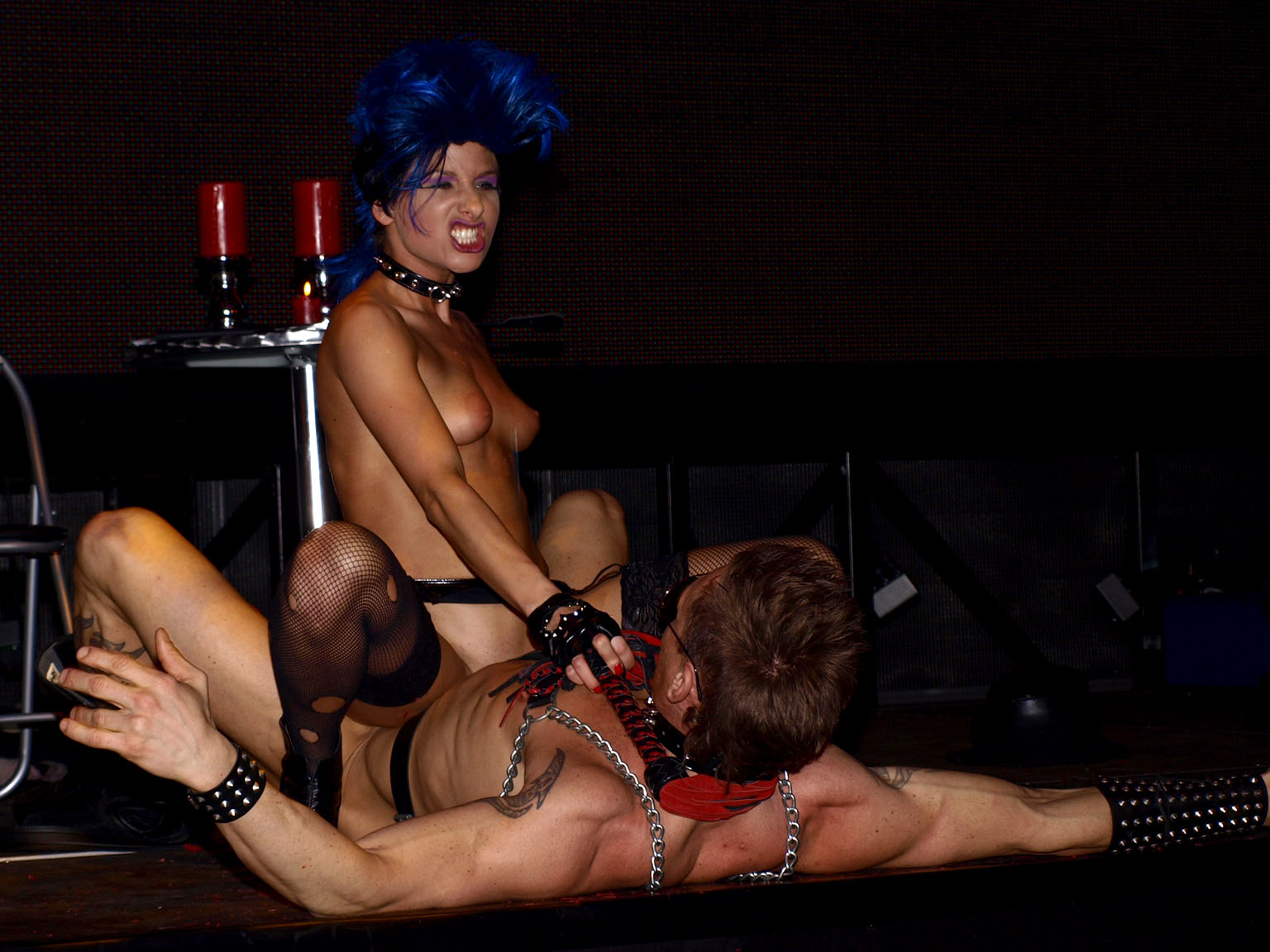
A dominatrix (DOM-in-AY-triks; plural dominatrixes or dominatrices), or domme, is a woman who takes the dominant role in BDSM. The practice is female dominance—femdom. A dominatrix can be any sexual orientation and is not limited to male submissives. Popular culture fixates on physical pain, but many sessions center erotic humiliation, service, and psychological control without heavy impact. The word dominatrix in everyday speech usually means a paid professional (pro-domme); inside non-commercial BDSM scenes women more often say dominant, Domme, or Mistress by local custom. For adult readers this is both a profession with dungeons and rate cards and a lifestyle role with collars and protocols—related, not identical.
Terminology and etymology
Dominatrix is the feminine of Latin dominator (ruler/lord) and appeared in English in non-sexual senses by at least 1561. The modern SM sense is recorded from 1961 in Bruce Rogers’s paperback The Bizarre Lovemakers, describing a woman who provides punishment-for-pay. Myron Kosloff’s title Dominatrix (art by Eric Stanton, 1968) and the 1976 film Dominatrix Without Mercy pushed the word toward mainstream recognition. Domme is a pseudo-French feminine of slang dom. Women choose dominatrix, domme, dom, dominant, or mistress by preference and scene convention. Media love “mistress,” but many community members avoid it because it also means a married man’s illicit lover—awkward in poly-aware cultures that prize ethical non-monogamy. Female dominance (female domination, femdom) simply means the dominant partner is female. Leopold von Sacher-Masoch’s 1870 Venus in Furs remains the classic literary male-submissive/female-dominant template; Krafft-Ebing later coined “masochism” from the author’s name in Psychopathia Sexualis (1886).
Deep history: goddess, Phyllis, birch governesses
Historians of the role sometimes start with Inanna/Ishtar in ancient Mesopotamia—hymns describing a powerful sexual goddess forcing gods and men into submission, with cult cross-dressing and rituals of pain, ecstasy, lament, and altered consciousness (as archaeologist/BDSM historian Anne O. Nomis has argued). Medieval and later Europe recycled the Phyllis and Aristotle tale: Phyllis makes the philosopher kneel as a mount, rides his back, whips and humiliates him—an enduring image of female erotic domination over male intellect. By the 1590s erotic flagellation is documented; British Museum mezzotint “The Cully Flaug’d” (c. 1674–1702) and forbidden-book catalogs record flogging schools. Eighteenth-century “Birch Disciplinarians” advertised in Fashionable Lectures (c. 1761)—fifty-seven women, some actresses and courtesans, rooms with rods and cats-o’-nine-tails, a Guinea per “lecture.”
The nineteenth century was what Nomis calls the “Golden Age of the Governess.” By the 1840s at least twenty London “Houses of Discipline” ran on flagellation alone, distinct from ordinary brothels. Names in the record include Mrs Chalmers, Mrs Noyeau, Mrs Jones of Hertford Street and London Street, Theresa Berkley, Bessy Burgess of York Square, and Mrs Pyree of Burton Crescent. Theresa Berkley of Charlotte Street, Marylebone, is the most famous: whips, canes, birches, the Berkley Horse flogging frame, and pulley suspension for lifting clients—hardware that maps cleanly onto modern pro-domme kit. The leather catsuit, claws, tail whip, and latex “bizarre style” arrived in the twentieth century via commercial fetish photography and then dominatrix fashion. Mid-century pro-dommes worked underground; surviving images are sepia, magazine scans, and rare photos from London, New York, The Hague, and Hamburg’s Herbertstraße. Miss Doreen of London knew John Sutcliffe of AtomAge; clients reputedly included top politicians and businessmen. New York’s Anne Laurence worked the 1950s circle; Monique Von Cleef arrived in the early 1960s, hit headlines after a December 22, 1965 police raid, then opened her “House of Pain” in The Hague—a world capital for dominatrices, reportedly serving lawyers, ambassadors, and diplomats. Domenica Niehoff worked in Hamburg and used German TV from the 1970s to campaign for sex workers’ rights. Mistress Raven of New York’s Pandora’s Box appeared in Nick Broomfield’s 1996 documentary Fetishes.
Professional practice: sessions, dungeons, what is and is not sex work stereotype
An appointment is a “session,” often in a dedicated dungeon with specialist equipment, sometimes by letter, phone, email, chat, or platforms such as OnlyFans. Most clients of female pro-dommes are men; male professional dominants exist, largely for gay male markets. Titles include Mistress, Lady, Madame, Herrin, Goddess. Andrew Wilson’s work on German dominatrices notes name choices that build class, femininity, and mystery. Some set minimum client ages. Popular requests include bondage, spanking, cock-and-ball torture, medical play with hoods and gas masks, urethral sounding, and verbal humiliation (including small-penis humiliation). Some pros allow facesitting, hand jobs, or fellatio; many refuse genital sex, undressing for the client, or being touched—distancing the role from escort “tie and tease” or “happy endings.” Body worship (feet, ass, breasts, pussy), tease and denial, caning, whipping, orgasm denial, face slapping, hair pulling, hot wax, spitting, golden showers, enforced chastity, and genital torture all appear on menus. Canadian dominatrix Terri-Jean Bedford, part of a constitutional challenge to brothel laws, publicly separated dominatrix work from prostitution in media interviews even as many analysts now class pro-dommes as sex workers whose sessions are still sexual for participants.
Backgrounds vary; a 2012 U.S. study found 39% of sampled dominatrices had some graduate training. A 1985 study suggested about 30% of BDSM subculture participants were female; a 1994 report said roughly a quarter of those women worked professionally. In a 1995 study of online messages, only 11% of heterosexual women’s messages preferred the dominant-initiator role versus 71% of heterosexual men’s—reminding readers that paid femdom demand outstrips how often women in surveys claim the dominant pole. Pros advertise online and in fetish contact magazines, concentrated in large cities (Los Angeles has been estimated at up to two hundred working dominatrices). Technical pride covers shibari, head-scissoring, suspension, and complex corporal punishment—skills that must be competent to be safe. Danielle Lindemann has described an “embattled purity regime”: pro-dommes stress specialist knowledge while downplaying pure market success, like avant-garde artists. Financial domination (findom)—arousal from sending money or gifts, sometimes fictional blackmail, often remote only—moved from niche add-on to a large online sector that sometimes involves less dungeon training than traditional pro-domme craft.
Lifestyle vs. professional; notable figures
Unpaid recreational female dominants are sometimes called “lifestyle” dominatrices; the label is contested, and many women who dominate in private relationships simply say Domme or dominant. Some pros are also lifestyle players; some lifestyle Dommes never take money. Nathalie Lugand’s 2023 psychodynamic study of female domination treats hard separation of paid and private as artificial. Catherine Robbe-Grillet (born Paris, September 24, 1930)—writer, actress, widow of Alain Robbe-Grillet—is France’s most famous lifestyle dominatrix who refuses payment: “If someone pays, then they are in charge.” Her companion Beverly Charpentier has described giving herself “body and soul” so that Catherine’s pleasure is also hers. Robbe-Grillet identifies as a pro-sex feminist who supports the right to choose sex work freely even though she herself does not charge.
Imagery: catsuit, boots, corset, props
Twentieth-century dominatrix imagery was shaped by Charles Guyette, Irving Klaw, Eric Stanton, Gene Bilbrew, and magazines such as Exotique. The black leather catsuit entered dominant fetish culture in the 1950s with AtomAge and John Sutcliffe, then mainstreamed via 1960s TV (The Avengers) and comics (Catwoman): full movement plus “look but don’t touch” tease-and-denial. Thigh-high leather or PVC boots, extreme stilettos, fishnets, seamed stockings, garter belts, tight corsets, opera or fingerless gloves, and sometimes neck corsets complete the silhouette. Materials include PVC, latex, and leather-subculture gear; some draw peaked caps and boots from Nazi-chic uniform fetish (controversial even inside BDSM). Props—flogger, whip, riding crop—echo early-twentieth-century Bruno Zach sculptures. Smoking still appears in fantasy media as “bad girl” coding even as real-world smoking declines. Working pros may obey the costume script or invent personal archetypes: goddess, superheroine, femme fatale, priestess, empress, queen, governess, spy.
Literature and screen culture
Hroswitha’s medieval Maria uses Dominatrix for an unattainable woman; later literature from Cervantes to Herrick’s Hesperides to Joyce’s Leopold Bloom fantasies recycles short leashes, discipline longing, and whipping dreams. Film and TV almost always show professionals: Kat Hernandez on Euphoria; Tiffany Chester / “Mistress May” on Bonding (season two hired a fifteen-year veteran consultant after accuracy complaints); Exit to Eden; countless thriller cameos. The stereotype is useful marketing and lazy sociology at once—real femdom includes lesbian D/s, unpaid marital protocol, and online findom with no catsuit in sight.
Safety, ethics, and takeaways for the scene
Pro sessions still need negotiation, safewords or nonverbal signals, dungeon hygiene, and clarity about sexual contact boundaries and money. Lifestyle femdom needs the same SSC/RACK or 4Cs infrastructure as any D/s: consent, aftercare, attention to coercion (including financial). Findom and blackmail roleplay are high-risk for real exploitation if limits and identity protection fail. Historical continuity—from Berkley Horse to Pandora’s Box—shows female professional dominance as a craft older than the word dominatrix. What is modern is visibility, internet advertising, and the fight to be seen as skilled labor rather than punchline. Whether she is Robbe-Grillet refusing pay or a Los Angeles pro running medical play and CBT, the dominatrix role is female authority eroticized—and only ethical when the people under her heel asked to be there.
Session craft: what clients actually book
Behind the catsuit stereotype, session menus are granular. Bondage may mean leather cuffs and a spanking bench or full Japanese-influenced rope with suspension rings and crash planning. Corporal punishment spans hand spanking, tawse, cane, single-tail, and flogger work with warm-up and skin checks. CBT and genital torment require anatomy knowledge and time limits. Medical play—gloves, specula aesthetics, sounding, gas masks—borrows clinical authority as theater and needs sterile discipline if anything penetrates the urethra or breaks skin. Humiliation can be pure language (SPH, status degradation, writing tasks) or task-based (chores, postures, serving drinks). Sensory play, tickling, predicament bondage, and electrical toys appear on advanced menus. Some dominatrices specialize: only findom and text protocols; only sensual femdom without impact; only heavy physical sadism with experienced bottoms. The professional edge is knowing which specialty you actually deliver safely, not advertising every fetish tag on the internet.
Remote sessions—phone, video, chat, clip custom orders, wallet-drain schedules—expanded during platform economies. They remove some physical risk and introduce others: privacy leaks, payment chargebacks, doxxing, and the absence of in-room visual safeword cues. Ethical remote dommes still negotiate limits, refuse illegal acts, and avoid real blackmail material even when “blackmail” is the fantasy frame. In-person houses often use intake forms, deposits, house safewords, and dungeon monitors or assistants for complex scenes. Age minimums, intoxication bans, and STI/barrier policies vary; serious houses publish them.
Pro-domme labor, class, and the “not a prostitute” debate
Many dominatrices emphasize psychological insight and technical skill over sexual contact, partly to claim a craft identity and partly because local law may punish “sexual services” differently from fantasy role-play. Terri-Jean Bedford’s Canadian litigation made that distinction a legal strategy as well as a media talking point. Scholars such as Danielle Lindemann document how pro-dommes police purity narratives—specialist knowledge good, pure commercialism suspect—mirroring how artists talk about selling out. Graduate-education rates in some U.S. samples undercut the dumb stereotype; so do multilingual European houses serving diplomats and executives (the Von Cleef Hague mythos). At the same time, denying sex-work affiliation can orphan dominatrices from labor organizing, safety networks, and decriminalization campaigns that Domenica Niehoff–style activism historically sought. Contemporary consensus among many researchers and workers is pragmatic: sessions are sexualized labor whether or not penile penetration occurs; stigma and policing still land on the worker.
Money complicates consent theater. The client pays, yet the fantasy says the Mistress holds all power. Experienced pros resolve the paradox by separating booking terms (her rules, her rates, her cancellation policy) from scene narrative (his begging, her commands). When those layers blur—especially in findom with real financial harm—the ethical ground gets thin. Lifestyle dynamics reverse the cash flow problem: without a rate card, coercion can hide in love, housing, or shared custody. Paid or unpaid, the same tests apply: Can the bottom stop? Are hard limits real? Is aftercare planned? Is anyone using economic fear as an unnegotiated weapon?
Femdom beyond the professional dungeon
Female dominance in private relationships includes married FLR (female-led relationship) protocols, lesbian D/s couples, switches who top female partners only in scenes, and online long-distance training journals. Not every dominant woman wants the dominatrix costume; some run high protocol in jeans. Conversely, not every woman in latex is dominant off the clock. Media almost always shows the paid pro because the silhouette is legible in two seconds of screen time—Euphoria, Bonding, thrillers with a whip on the wall. Community reality is wider: munches where Dommes talk consent law; rope classes where women teach hardpoints; leather contests with female titleholders; literary femdom from Sacher-Masoch’s Wanda through Robbe-Grillet’s ceremonies. Phyllis riding Aristotle, Berkley’s pulley room, AtomAge catsuits, and Mistress Raven’s Pandora’s Box are chapters of one long argument: female erotic authority is neither new nor only a porn category.
Costume politics and cultural appropriation flashpoints
Fetish fashion borrowed from military, religious, medical, and sometimes fascist uniforms. Peaked caps and SS-adjacent black leather remain explosive even when practitioners claim pure aesthetic intent. Ethical houses increasingly bar hate-symbol play or require closed private consent rather than public dungeon display. Smoking-as-glamour collides with health norms; some clients still request cigarette domination as verbal humiliation. Catsuits and ballet boots communicate “you may look, you may not touch”—the tease-and-denial contract made visible. Corsetry links dominatrix dress to broader fetish fashion history (Yva Richard, Diana Slip, modern latex couture). Choosing goddess, governess, or KGB-agent archetype is character design: it tells the submissive which script of power he is buying for the hour.
Reading list and further practice notes
Historical and practical books often recommended around this topic include Anne O. Nomis’s The History & Arts of the Dominatrix, Danielle Lindemann’s Dominatrix: Gender, Eroticism, and Control in the Dungeon, memoirs such as Melissa Febos’s Whip Smart and Shawna Kenney’s I Was a Teenage Dominatrix, plus older European texts and how-to titles that vary wildly in safety quality. Readers should cross-check any corporal or medical technique against current first-aid and community safety manuals rather than pulp instructions. For scene players, the usable summary is short: femdom is a role and sometimes a job; pain is optional; humiliation and service are central for many; consent and skill are not optional; the catsuit is optional. Honor the history of the governess and the House of Pain, drop the myth that every dominant woman is a paid torturer, and keep the heel only on people who asked for its weight.
How a professional house actually runs
A working dungeon is logistics as much as fantasy. Intake may include ID checks for age, health questionnaires, hard-limit lists, and deposits that reduce no-shows. Rooms are stocked with cleaned implements, barrier supplies, first-aid kits, and sometimes surveillance policies disclosed up front. Time is sold in blocks; overtime is negotiated, not assumed. House safewords override roleplay. Some houses employ switches or submissive assistants for complex bondage; others are strictly one-on-one. Aftercare may be brief (water, wipe-down, return of clothes) or extended depending on brand and client needs. Reputation travels through word of mouth, review boards, and now social platforms—another reason technical competence and consent discipline are business assets, not only ethics.
Advertising language walks a legal line. Words that imply sexual contact can trigger prostitution statutes in some jurisdictions; words that are too vague fail to attract the right clients. Many pros publish clear “no sex / no full nudity / no fluid exchange” policies alongside fetish menus. Others openly offer erotic services where law and personal boundaries allow. Clients who push past posted limits mid-session are ended and often banned. That gatekeeping is part of what distinguishes a craft house from a chaotic booking.
Findom, clip culture, and platform economies
Financial domination matured from a specialty add-on into a full online industry: tribute schedules, wallet drains, gift wishlists, humiliation for unpaid bills, and “goddess” accounts that may never meet clients in person. Platform fees, payment-processor morality clauses, and chargeback fraud shape the labor as much as fantasy does. Inexperienced practitioners sometimes enter findom without dungeon skills or consent education, raising harm rates for both sides—subs who destroy credit, dommes who face stalking when a drain goes wrong. Best practice mirrors offline D/s: negotiate budgets as hard limits, forbid real doxxing material, and keep identity compartmentalized. Clips and custom video extend the same market—scripted femdom sold as downloadable scenes—again without shared physical risk but with piracy and privacy issues.
Lesbian and queer femdom
Although media defaults to a woman dominating a man, female dominants also top women and non-binary partners. Lesbian leather history (Samois, LSM, women’s leather contests) built femdom without the male-client cash nexus. Queer femdom may drop the commercial mistress costume for butch/femme protocol, switchy rope, or high-protocol households. Assuming every dominatrix is a hetero-for-pay service worker erases that archive. Conversely, many pro-dommes are queer women whose paid male clients are only one slice of their erotic lives. Orientation of the dominant does not dictate the gender of every bottom she accepts—another reason the definition leads with role, not marketing niche.
From Inanna to OnlyFans: continuity without myth inflation
Nomis and others read ancient goddess rituals as archetypal ancestors; medieval Phyllis-and-Aristotle images as popular philosophy of female erotic power; eighteenth-century birch governesses and Berkley’s House of Discipline as direct professional ancestors; twentieth-century AtomAge and Stanton art as visual brand; twenty-first-century platforms as distribution revolution. The continuity is real enough to teach: women have sold and performed erotic dominance for centuries. The myth inflation to avoid is claiming every powerful goddess cult was BDSM in modern terms. Use history as depth, not as a costume excuse to skip consent. The modern dominatrix inherits birch rods and catsuits—but also safewords, bleach buckets, and the political fight to be recognized as skilled sexual labor rather than a punchline or a crime scene.