
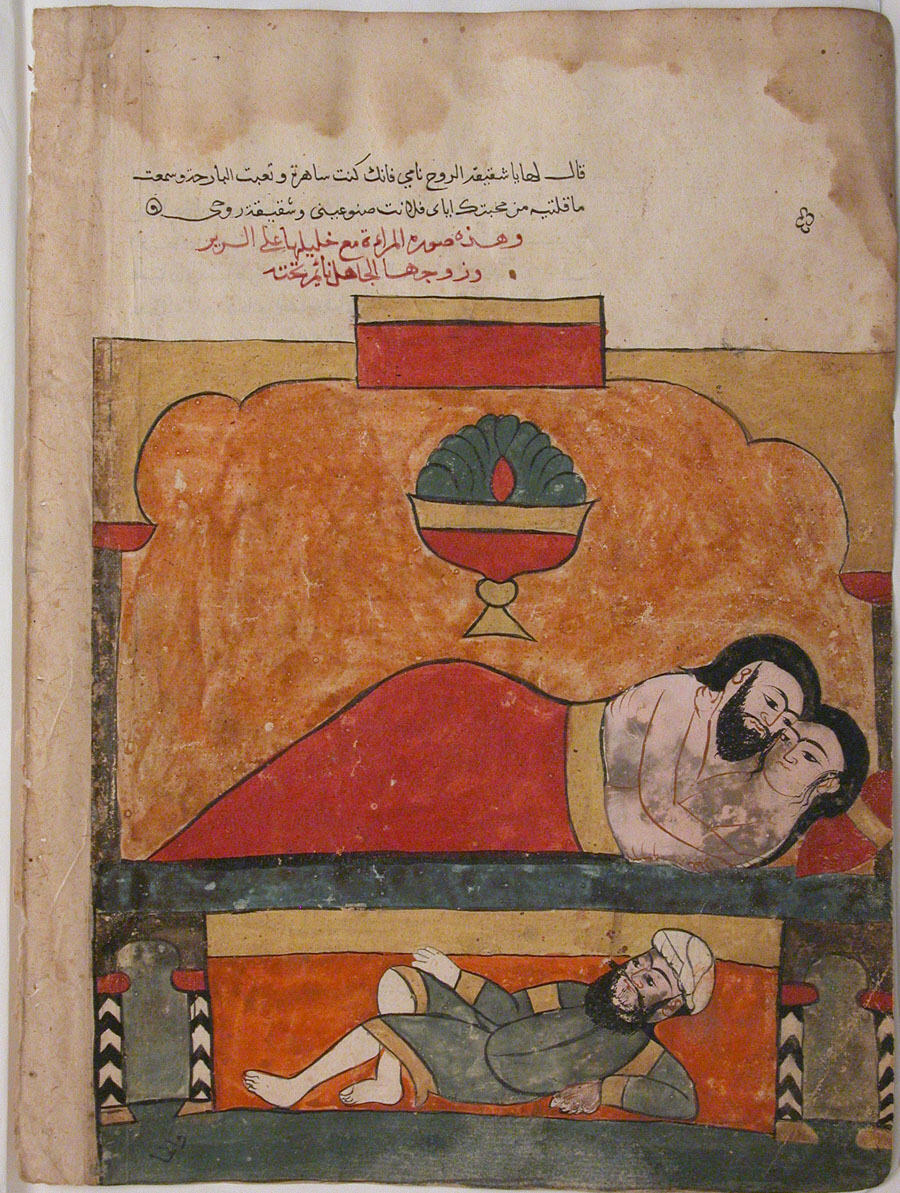
Cuckold comes from the cuckoo, and from brood parasitism: the bird lays its eggs in another bird’s nest and leaves the rearing to someone else. In the old sense, a cuckold is the husband of an adulterous wife. The English word shows up around 1250 in the medieval debate poem The Owl and the Nightingale. Around 1440, John Lydgate’s The Fall of Princes treats it as a blunt word. Through the Middle Ages and the Renaissance it usually meant the husband had been fooled. He was as ignorant as the host bird, and he might not see the mismatch until a child was born or grown. Several of Shakespeare’s characters worry that they have become one. The female counterpart, cuckquean, first appears in the written record in 1562. A man who knows about his wife’s infidelity and tolerates it is a wittol. That word shows up in 1520. It puts “wit,” in the sense of knowing, in place of the front half of the older word. The deceived cuckold and the knowing wittol were not the same man. Modern fetish cuckolding sits closer to the wittol than to the blind fool of medieval satire.
In Western culture the image is horns. A stag that loses a fight loses his mate, so a cuckold is said to wear horns. Italian cornuto, French porter des cornes, and German Hörner tragen all point at that picture. In southern Italy the horns are a serious personal offence. Brazilian and European Portuguese corno means the same horned man, and he is a stock figure in jokes and anecdotes. The Chinese “green hat” comes from sumptuary rules in force from the thirteenth century to the eighteenth: a man in a household with prostitutes had to wrap his head in a green scarf. The Greek hero Actaeon, turned into a stag and therefore horned, is often treated as a mythic stand-in for the cuckold. In Islamic cultures, dayouth names a man seen as cold about unchaste conduct by female relatives, or as lacking a protective stance. Taken together, the symbols are an old language for male sexual shame.
Fetish usage, also called the cuckolding fetish, turns the word. The point is sexual “infidelity” that the cuckold has agreed to. The dominant man who has sex with the partner is the bull. The person pushing the fantasy is almost always the one being humiliated, the cuckold himself. In Masochism and the Self, psychologist Roy Baumeister treats the fetish as a form of masochism. On his self theory, cuckolding is a way of escaping self-awareness when that awareness has become a burden, for instance when someone feels he is not enough. The physical or mental pain of masochism pulls attention off the self. In guilt, anxiety, or insecurity, that shift is what he wants. In the power exchange, the bull is both a status threat and an erotic instrument. The cuckold’s arousal is tied to being left out, ordered to watch, or used as witness and cleaner. If the man is the more submissive partner, the wife who enjoys cuckolding him is the cuckoldress. The word is hers, not his.
What separates the fetish from ordinary adultery is informed consent and an agreed power exchange. An ambush is adultery. A negotiated cuckold scene is one of the clearer status kinks in the BDSM toolkit. The players are adults. If the person on the receiving end does not want the humiliation, the fantasy does not work. People who actually do it need limits: pregnancy risk, safer sex, what the cuckold may watch or hear, whether orgasm is denied, whether the bull is a one-night guest or an ongoing partner, and care afterward when jealousy stops being hot. Done as a surprise, it is cheating. Done by agreement, it is a status game: who gets fucked, who watches, who wears the horns, who says thank you. All of that has to be negotiated. The clipped insult “cuck” is a different use. The alt-right throws it at an opponent’s masculinity. The rhetoric comes from the sexual insult. The speaker may never have been near a hotwife scene. The shame still works as an attack outside the bedroom.