
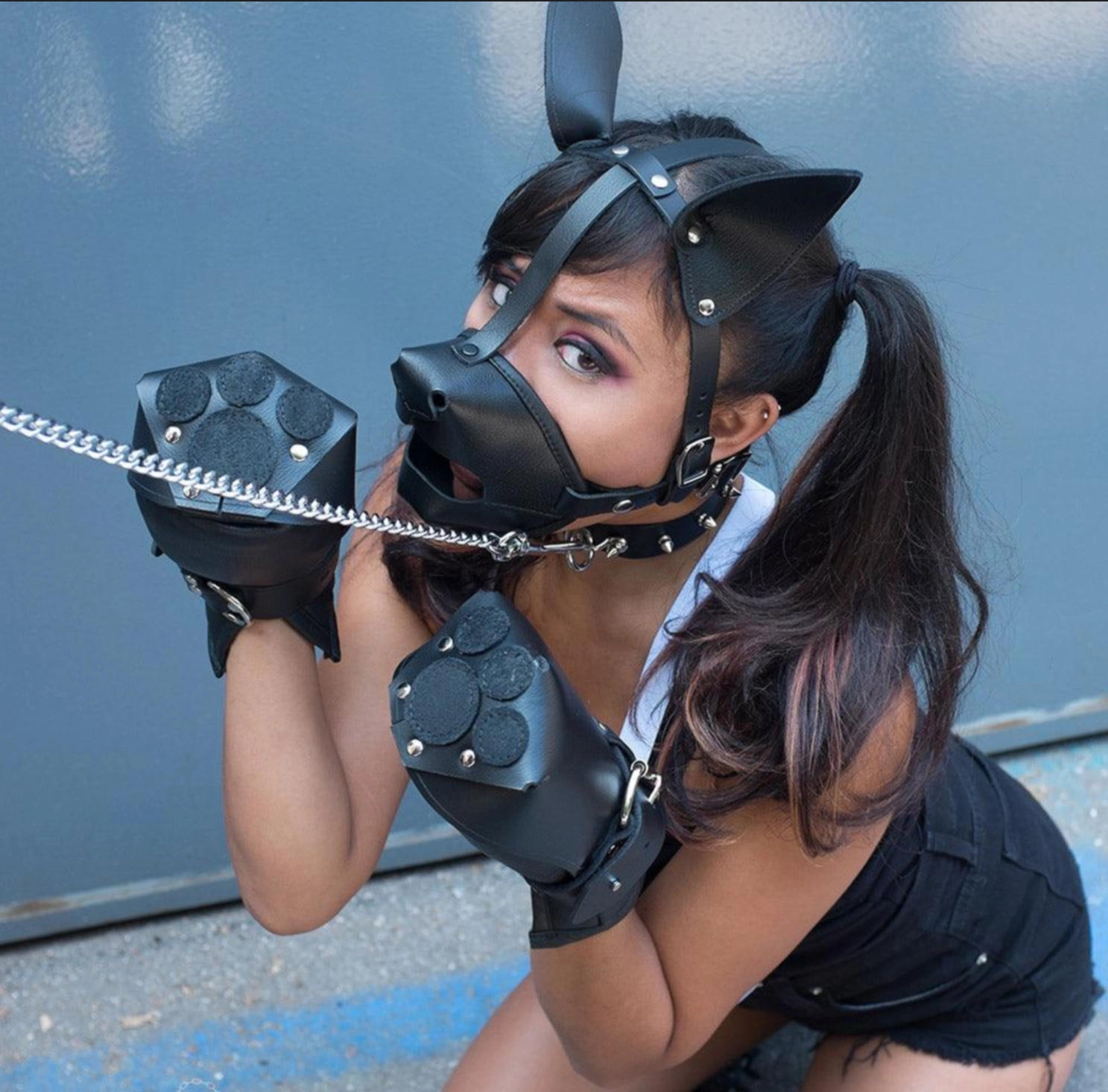
Animal roleplay means at least one person plays a non-human animal through behavior, gear, or headspace. In BDSM it often sits under petplay, but the labels do not fully overlap: not every animal scene is pet/owner play, and not every petplay scene is about “being an animal”—some lean closer to primal play. Origins are mixed: costume, fiction, myth, roleplay, psychodrama. Early published animal-play images, especially pony play, show up in John Willie’s work in Bizarre magazine from 1946 to 1959.
Outside sex, animal roleplay has ritual and cultural roots. Tribal ceremonies had people embody revered or hunted animals; in 1911 Julia Tuell photographed the Northern Cheyenne’s last Animal Dance (Massaum). PE classes sometimes use animal imitation to push unusual movement. Pop culture loads animal traits onto heroes and villains—Wildcat, Catwoman, Tigra. Peter Shaffer’s 1973 play Equus, Andrew Lloyd Webber’s 1981 Cats, and 2007’s War Horse share animal themes without being BDSM petplay.
Erotic scenes run from soft to heavy: whinnying, barking, panting, kitten nuzzling; crawling to be hand-fed or petted; full pony kit with modified tack, masks, prosthetics, and temporary bondage that binds forearms to upper arms or calves to thighs. In public it can look like ordinary neck-stroking, or a collar and leash. Motives include dropping into another persona, quiet non-verbal cuddling, totem closeness, therianthropy-style identity, a power-exchange frame people can live with, or transformation fantasy. It is often filed under BDSM and sometimes overlaps furry scenes, but for most players it has nothing to do with bestiality, which BDSM circles usually treat as edge and contested.
Types skew differently. Pony play trains walk and canter adapted to human limbs; documentaries include De Ferre’s 2003 Pony Passion and 2005’s Born in a Barn. It is sometimes nicknamed the Aristotelian Perversion after the Phyllis-and-Aristotle riding legend. Common gear: leash, chain, bit gag, collar, harness, catsuit, butt plug, muzzle, ballet boots. Kitten play keeps more independence and may push back against training—fetch toys, beg, walk; an unowned uncollared kitten can be called a stray. Pup play centers on dog headspace and is especially visible in gay communities. HuCow focuses on cow roleplay and lactation fetish. The “pet” is not automatically the passive or submissive partner. Safe, sane, and consensual still applies.
In BDSM, animal roleplay can feel like letting instinct out. A few people live their chosen animal 24/7; others switch “hybrid” animals by context. Pup and kitten play especially aim at the emotional bond people have with pets: the dominant may demand unconditional love and obedience, and may also train the pet toward sharper empathy so the submissive side feels secure. Among adults who negotiate it, the draw is gear, type, power, and headspace—not sex with real animals.