
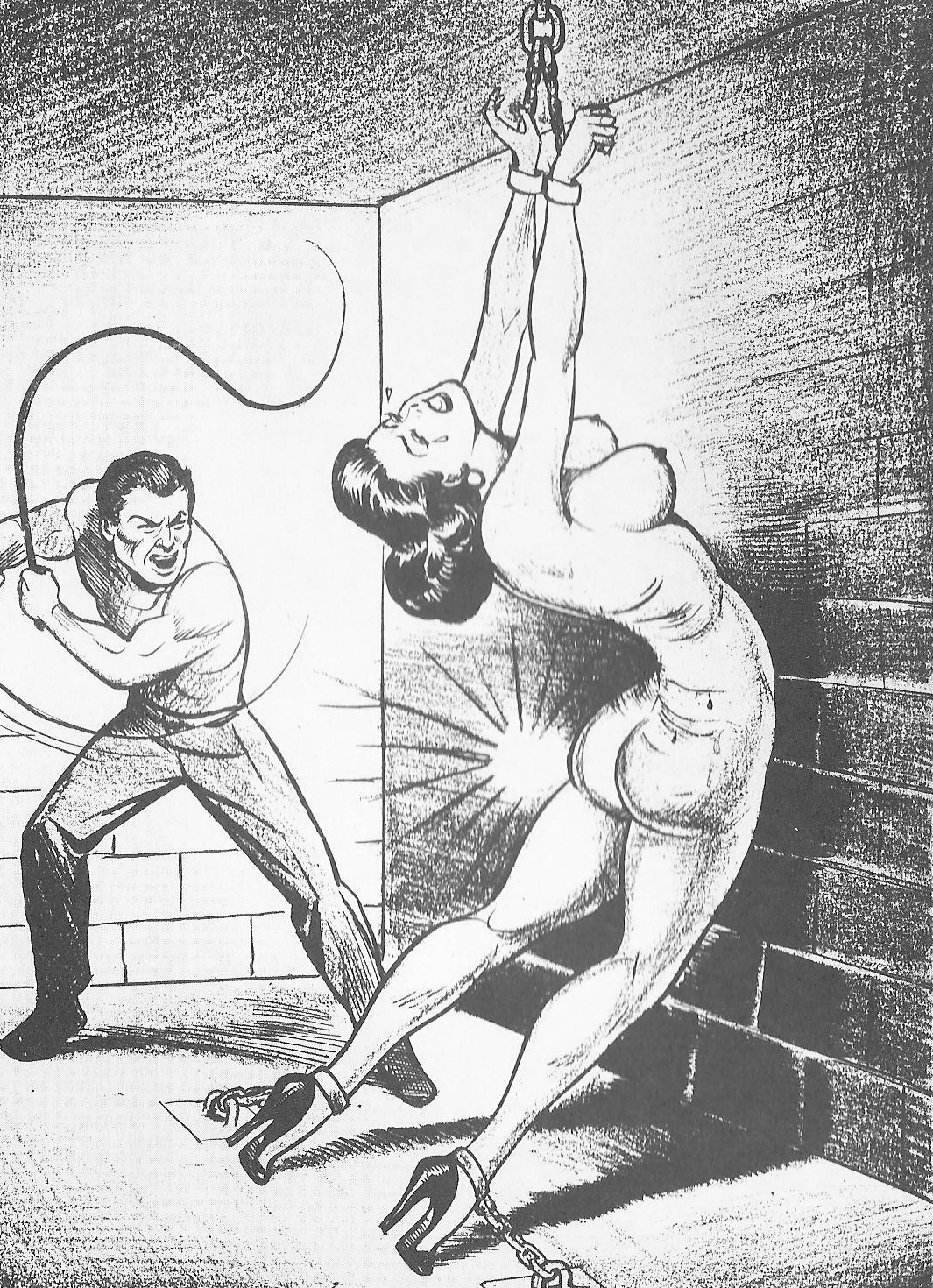
Sadism and masochism—together sadomasochism or S&M—describe getting sexual pleasure from giving or receiving pain and humiliation. The words track two writers. Marquis de Sade (1740–1814) filled his books with violent sex, rape, torture, and murder; his characters often get off on inflicting pain, and Sade himself was jailed more than once for sexual crimes while practicing both sides of pain in sex. Leopold von Sacher-Masoch (1836–1895) wrote fantasies of receiving pain and degradation, especially in Venus im Pelz (Venus in Furs). In 1890 the German psychiatrist Richard von Krafft-Ebing put sadism and masochism into clinical language in Neue Forschungen auf dem Gebiet der Psychopathia sexualis, using them to label behavior and “pathology.” His 1886 Psychopathia Sexualis casebook did not treat pain and violence as the core of masochism; he defined it more through control. In 1905 Sigmund Freud, in Drei Abhandlungen zur Sexualtheorie, tied both to aberrant early development. The compound Sado-Masochism appeared in 1913 in Isidor Isaak Sadger’s Über den sado-masochistischen Komplex.
Freud fused the pair into one dichotomous entity. He split primary masochism (linked to the death drive and total rejection) from secondary masochism (lighter, more feigned rejection and punishment). Male sadism was cast as a distortion of the aggressive part of male sexual instinct; male masochism looked like a bigger “aberration,” and Freud doubted it was ever primary—maybe only transformed sadism. Women’s S&M got little discussion; early theory treated masochism as so built into female sexuality that it was hard to isolate. Havelock Ellis, in Studies in the Psychology of Sex, refused a clean split: sadism and masochism can be complementary moods. He cared about pain tied to sexual pleasure, not cruelty in Freud’s sense, and held that pain and violence belong in love rather than abuse, with mutual pleasure mattering for both. Jean-Paul Sartre read the sadist’s appraisal of the masochist through the Look of the Other: masochism as the For-itself trying to sink into objecthood; sadism as the effort to wipe out the victim’s subjectivity.
In 1967 Gilles Deleuze’s Coldness and Cruelty rejected sadomasochism as an artificial compound and called Freud’s merger careless reasoning. For Deleuze, masochism grows from desire intensified by delayed gratification; taken far enough, endless delay becomes punitive coldness. The masochist’s pleasure sits in the Contract—controlling another person into coldness. The sadist’s pleasure sits in the Law—power that ranks one person under another. The impulses differ, so the fused word misleads. At the end of Venus in Furs, Severin turns bitter on his masochistic experiment and argues for dominating women instead. René Girard, in Things Hidden Since the Foundation of the World (1978), folded masochism into mimetic desire: violence as rivalry around the real love-object, with a reread of Freud’s primary/secondary split.
Depathologizing and Contemporary Practice
Late twentieth-century BDSM activists pushed back on psychiatric framing built from Freud and Krafft-Ebing’s asylum observations. Older DSM sexual-pathology labels were criticized as thin on science. DSM-5 softened paraphilia language so healthy, consenting adult expression would not automatically demand treatment. On 18 June 2018 the WHO’s ICD-11 removed sadomasochism, fetishism, and fetishistic transvestism as psychiatric diagnoses, treating discrimination against fetish and BDSM people as inconsistent with human-rights principles. ICD-11 cleanly separates consensual S&M (BDSM) without inherent harm from coercive sexual sadism disorder against non-consenting people—further than DSM-5, which still muddies consent lines inside sexual sadism disorder even while keeping consensual, non-distressing BDSM out of disorder status. Denmark stripped S&M from its national disease classification in 1995, first in the EU; Sweden (2009), Norway (2010), Finland (2011), and Iceland (2015) followed.
Why it feels good depends on the person. A masochist may use compliance or helplessness to escape stress, responsibility, or guilt; may feel childhood-like safety under a strong controller; or may chase approval from that figure. A sadist may enjoy authority, or take pleasure through the masochist’s suffering. Interest can show before puberty or only in adulthood. A 1985 study found most male sadomasochists (53%) developed the interest before age 15, while most females (78%) developed it afterward. Population prevalence is unknown; some surveys find comparable sadistic fantasy rates across sexes. Romana Byrne’s “aesthetic sexuality” treats some practice as deliberate style, pleasure, and identity work rather than a buried impulse—closer to making art. Surveys in the 2000s put pain- or D/s-related sexual behavior somewhere around 5–25% of the population, with related fantasy larger still. Interest in the 2020s is thought to have risen with easier hardcore porn and weaker taboo.
Forensic Classes, Hanky Code, and Consent
Anil Aggrawal’s forensic ladder ranks masochists Class I–IV (fantasy only; mixed sadistic/masochistic; prefer pain or humiliation but can orgasm without it; exclusive—need pain or humiliation to orgasm and struggle with ordinary romance) and sadists Class I–IV (fantasy only; act with consenting partners; act on non-consenting victims without serious injury or killing; only non-consenting victims and will seriously injure or kill). Consent is the line between I–II and III–IV. Inside BDSM, S&M is a subset; it is not diagnosed as a paraphilia unless it causes clinically significant distress or impairment. Informed mutual consent separates play from sexual violence. People may identify as sadistic, masochistic, or switch.
English law has sometimes chased the violence and ignored consensual practice—fifteen men were tried on S&M-related offences in one well-known case. Larry Townsend’s 1983 The Leatherman’s Handbook II lists a black handkerchief for sadomasochism in hanky code: left for top/dominant/active, right for bottom/submissive/passive, common in gay male and BDSM scenes across the US, Canada, Australia, and Europe. Still negotiate. Some people wear a color because the hankie itself turns them on, or because they do not know what it means.