
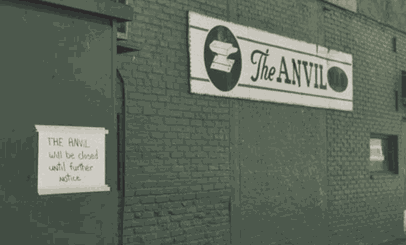
The Anvil was a landmark of gay BDSM nightlife in New York. The after-hours sex club stood at 500 West 14th Street in Manhattan. It opened in the fall of 1974 and ran until 1985. Before AIDS-era crackdowns broke up West Side nightlife, it sat with the Mineshaft and other clubs on the map of leather and hardcore gay culture. Dancing, porn, drag, rope suspension, and anonymous sex shared one roof, until the place quietly shut in 1985.
The building is its own compressed history of male erotic rooms. It goes back to 1908, when it was The Strand Hotel: a ground-floor saloon and men-only lodging that catered especially to sailors. By the 1970s the same building was the Liberty Inn, a pay-by-the-hour hotel. Sailors’ hotel, hourly sex hotel, then The Anvil. The address watched male erotic space change shape.
Inside, the club was painted black. The main floor had a dance floor, a rectangular bar, and a performance area, all in the dark. Downstairs a smaller bar faced a large screen showing the gay male porn of the time. Behind the screen was a deep back room, the main sex area. Accounts of that room include mock crucifixions, golden showers, and a lot of anonymous sex. The door took some drag queens and did not take women. This was a gay male and drag-adjacent hardcore circuit, not a mixed-gender fetish night.
Upstairs, the shows ran from drag to men suspended on ropes over the bar. Suspension there was a high-risk performance. The crowd was looking at real bodily risk, not decoration. Between sets the disco was hard enough that people described the dancing as fierce as a bottle of fresh poppers. Writers from the period said the spectators were the performers. The bodies and the risk in the room were part of the show, alongside whoever was booked.
Famous people came through. Lou Reed was in occasionally. Freddie Mercury came often while he lived in New York from 1980 to 1982. Director William Friedkin shot scenes for the 1980 film Cruising inside The Anvil, folding the real after-hours geography into one of Hollywood’s most contested gay-SM crime pictures. The club stayed in leather-bar lore and in film-history footnotes.
The Anvil closed quietly in 1985. In the same climate the city shut the Mineshaft, under AIDS panic and health-code enforcement. The building later went back to love-hotel use. Guided tours of New York’s sexual history still stop at the old Anvil site, next to other well-known addresses on the pre-AIDS leather map, including the Continental Baths and the Mineshaft. Kat Long’s The Forbidden Apple: A Century of Sex & Sin in New York City puts rooms like this into a longer city story of forbidden nights.