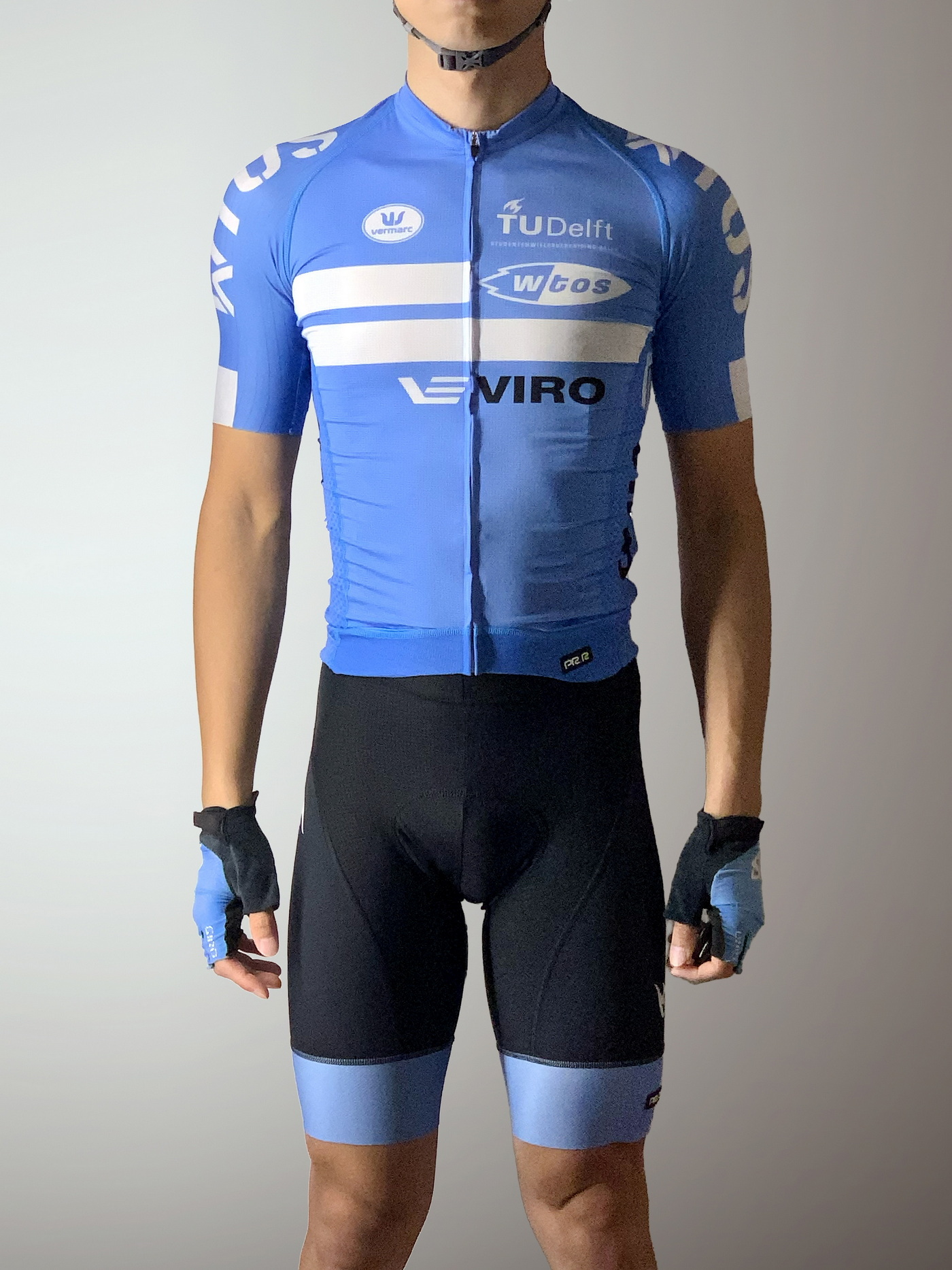
A skin-tight garment clings by elastic tension, usually because the cloth stretches. Commercial elastomers such as spandex, also called elastane, reached the market in 1962 and rewired several clothing trades. Stockings, bodystockings, swimsuits, bras, dancewear, sports skins, and the fetish “second skin” all depend on that cling. For BDSM and fetish readers, skin-tight dress is not a footnote to rope and impact. A latex catsuit, a spandex zentai, shiny club leggings, and compression gear are erotic objects on their own. The feeling is naked and clothed at once, sealed, displayed, or made anonymous by fabric. The people wearing them are adults.
The leotard, as a name, dates to 1886, after the French acrobat Jules Léotard. The one-piece that covers torso and crotch and leaves arms and legs free had already been in his act decades earlier. In the early twentieth century it stayed mostly in circus and acrobatic shows, and in professional dance. Broadway showgirls often paired it with stockings or tights. By the 1950s the same silhouette was in schools and fitness rooms: simple, usually black, worn with thick tights. In the 1970s color and fashion energy arrived, especially in ballet and aerobics. From the circus leotard to the gym uniform to a fashion body, stretch cloth keeps moving among sport, stage, and sex.
Swimsuit design absorbed the leotard’s logic in the 1920s and 1930s. A modern women’s one-piece, the maillot or the tank, still reads as a sleeveless leotard or a bodysuit. Early modesty skirts and micro-shorts faded through the 1940s. Competitive swimming later produced the bodyskin, close to a unitard or a wetsuit, covering torso, arms, and legs to cut drag, not to hide the body. That full-body stretch shape shows up again in fetish wetsuits and in rubber play.
A bodystocking is a one-piece skin-tight garment over the torso and legs, sometimes the arms, usually in sheer stocking fabric, fishnet, lace, or opaque knit. It is not a unitard, which is worn as outer clothing, and it is not a leotard, which is a practice or performance base for acrobats and gymnasts. A bodystocking is meant to be seen as lingerie or stage costume without full nudity. Stage use goes back at least to the 1860s. In 1861 the American actress Adah Isaacs Menken wore a flesh-colored bodystocking to simulate nude while staying inside obscenity law. Belly dancers and strippers still use the garment to photograph as exposure.
A unitard joins leotard and tights. The legs are covered, the arms are optional, and it runs from neckline to ankles in one piece. It can be dancewear, costume, or street outerwear, or the layer under fetish gear. A bodysuit covers torso and crotch, and sometimes legs, hands, or feet. The basic cut resembles a one-piece swimsuit or a leotard, but it usually has crotch snaps, hooks, or velcro so the wearer can use the toilet. Straps, collar, and sleeve length vary. Fabrics run from cotton and lace to nylon blended with spandex. Under trousers or a skirt it stays tucked and smooth. Women also wear it as underwear, activewear, or shapewear. Unlike a leotard, it is not primarily competition wear. The snap crotch is practical access, not a racing rule.
Modern sheer stockings rose with 1920s hemlines: first silk or rayon, called artificial silk, then nylon after 1940. Nylon was cheap, durable, and sheer, and demand was huge. Part of that demand later moved to tights and pantyhose. 1960s manufacturing plus spandex made pantyhose more comfortable. Miniskirts made them wardrobe infrastructure for many women through the 1970s and 1980s. U.S. pantyhose sales fell after 1995 and, around 2006, leveled at less than half their historic peak. Sheer legs never left fetish or formal dress. In kink, stockings and pantyhose are still a classic object fetish: garter geometry, a reinforced heel, a laddered run, the smell and texture of nylon under a palm or against the face.
Stretch fabric simplified cutting. After swimsuits and bras, fashion designers were working elastics by the mid-1980s. Mainstream sportswear absorbed them in the early 1990s. Skin suits are used to reduce injury, block scrapes, support muscle, cut muscle vibration, and lower wind or water drag, in swimming, cycling, skating, skiing, and running. They stop some cuts, stings, abrasion, and UV. That technical second skin is cousin to fetish zentai and latex. The compression logic is the same. The social script is not. Athletes count watts. Rubberists count headspace and shine.
Fetish culture treats skin-tight dress as erotic technology. Latex and spandex catsuits, hoods, and gloves amplify what the skin feels, and they offer the paradox of total cover that feels more nude than street clothes. Rubber and Lycra fetishes often turn on exactly that sealed sensitivity and the shift in identity. Fringe notes in the same literature: a North Korean soldier seen in a skintight blue suit at a display, purpose unclear; and research concepts for skin-tight mechanical counter-pressure spacesuits that hold the body and spine under even surface pressure for long flights. People keep inventing a full-body stretch shell for sport, survival, fashion, and sex.
The line runs from Menken’s flesh bodystocking, through Lycra’s industrial debut in 1962, to the latex balls of the Skin Two era. Second skin is a silhouette that public culture and private kink share. In play, non-breathable rubber overheats. Powder and careful dressing prevent tears. Zippers and crotch openings need the same care as a sleepsack closure. Long compression affects circulation and temperature. Agree beforehand whether the suit is costume, a restraint aid, or the scene itself.
In practice the garments sort into uses. Full-body spandex or zentai gives anonymity and a muffled touch, identity dropped without rope skill. An open-crotch or zippered catsuit turns the garment into access control: the top decides which panel opens. A sheer bodystocking under a leather harness stacks soft display on hard hardware. Sports compression shorts and singlets cross into gear fetish and wrestler looks, common in session wrestling and in circles adjacent to gay leather. Latex and Lycra do not share logistics. Talc or lube is how latex goes on. Watch nails and jewelry, watch heat, and clean in a way that protects the polymer. Spandex forgives more. Rubber punishes haste. Collectors and makers treat a second-skin wardrobe as seriously as floggers: custom measurements, thickness, color fetish, and the slow work of a decent rear zip. For long wear, start with breathable stretch. Save non-porous rubber for when heat and sweat are the headspace you want. Talk about the bathroom, about overheating, and about how a “stuck in the suit” fantasy meets real panic. Skin-tight clothing does not replace bondage technique. It is still one of the most common ways into a fetish identity, and an old technology for making a body look and feel held by what covers it.