Rope bondage is also called rope play, kinbaku, shibari, or, in German, Fesselspiele. It is BDSM restraint that uses rope to wrap, immobilize, display, or suspend an adult. The person in the rope is an adult who has agreed. The tension and the look both sit on that agreement.
Japanese rope is the tradition most people recognize in public. Holding someone still is only part of it. Process, pattern, and the look of the tie matter as much as whether the bottom can walk away. Western bondage, set next to it, leans functional: a secure hold, furniture put to use, control as fast as it can be got. Decoration is not the first job. A smaller practice, string bondage or “constrictions,” wraps rows of string around part of the body for a tight local sensation, not for the architecture of a whole scene.
Modern erotic Japanese rope, shibari and kinbaku, comes out of hojōjutsu, historical martial and policing restraint. It is no longer practiced as a military craft. It is a body art now. A rope dress is a decorative body harness. It does not by itself fully immobilize someone. It can be worn as adornment, or built into a stricter tie. Western scenes have historically used furniture, longer ropes, and a wider menu of materials. Japanese traditionalists have favored natural fiber and formalized patterns.
Fiber changes the experience. Classic Japanese practice uses natural fibers such as hemp and jute, often cut near 25 feet, about 7.6 meters. Western kits more often use nylon, cotton, and other synthetics or blends, plus whatever solid furniture in the room can serve as a hard point. Grip, burn, stretch, how well a knot holds, and how hard the rope is to clean after oil or sweat all change with the material.
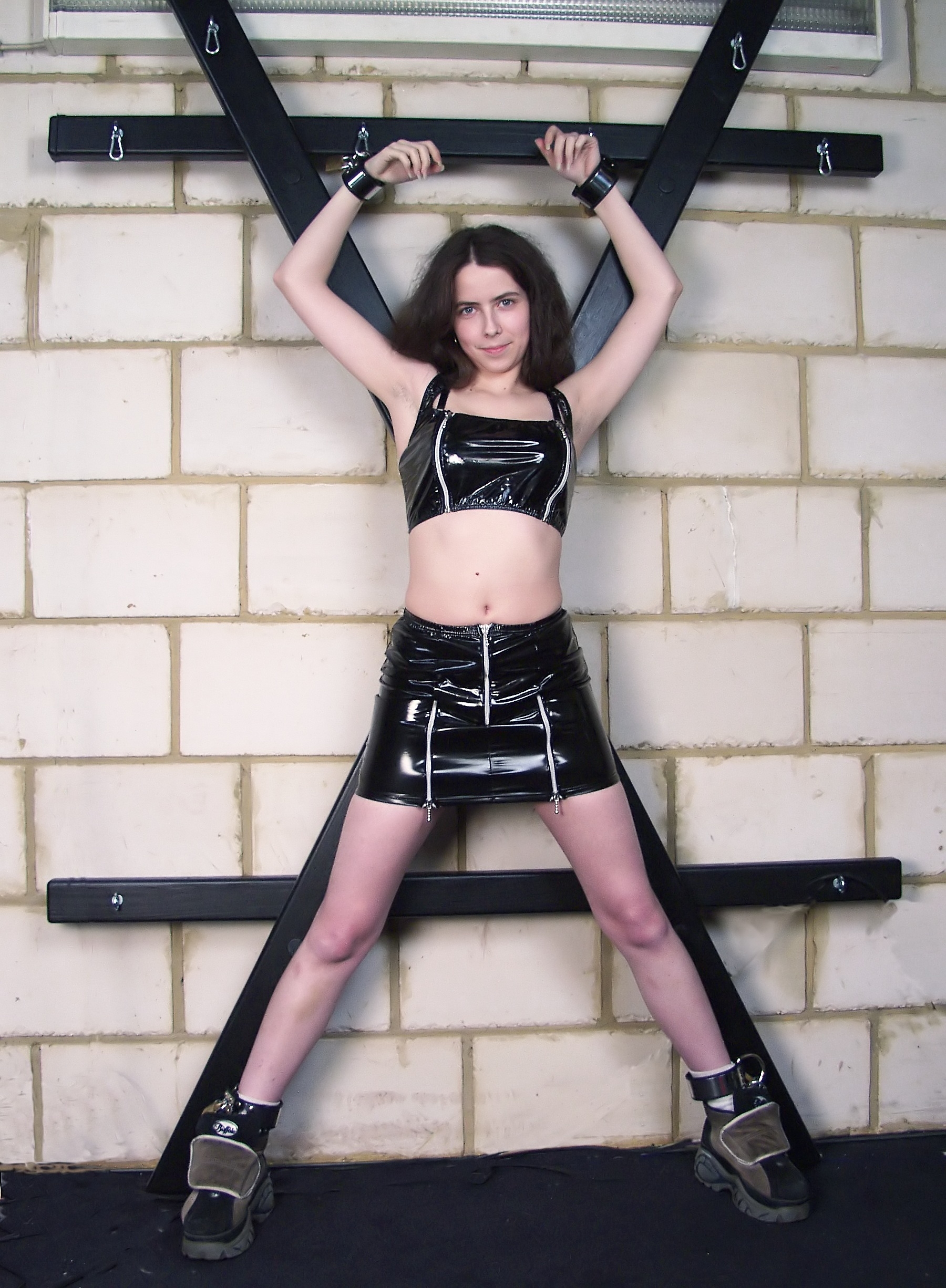
These are shapes, not knot-by-knot instructions. A spreadeagle on a four-poster ties wrists and ankles to the bedposts so the limbs are pulled outward and the torso is exposed. An X-cross, a St. Andrew’s cross frame, anchors each limb to a point of the X. A chair tie seats the person with wrists to the armrests or behind the back, ankles to the chair legs, and extra rope for security. Suspension is sometimes added. A hogtie draws wrists and ankles together, usually with the person on their stomach, sometimes on their back, so the body is compact and exposed. Suspension takes part or all of the body weight on the rope and on an overhead point. The skill is high and the risk is high. It is not a beginner stunt.
Rope compresses nerves and blood vessels. Suspension adds fall and asphyxia. Any tie that loads the neck or blocks breathing is edge territory. Negotiation has to cover circulation checks, numbness, what happens in a panic, where the cutting tool is, and who is watching the bottom. Japanese rope brings pattern. Western rope brings control engineering. Ethically the tie is only as sound as the consent on the other end of the rope.