Robert Mapplethorpe (1946–1989) was an American photographer known for black-and-white pictures that can make a calla lily, a celebrity, or a man with a bullwhip in his anus look like marble. The range runs from formal portraits and still lifes to male and female nudes and self-portraits. The pictures that still set off culture-war arguments documented the gay male BDSM and leather subculture of New York in the late 1960s and 1970s. He was a participant-observer, not a tourist with a long lens. In 1989 the traveling exhibition The Perfect Moment became a national argument about public money, the word “obscenity,” and the First Amendment. For viewers who know BDSM, he is the photographer who put leather sex into museum light at museum print quality. He died of AIDS. He was already gone while the Cincinnati jury and the National Endowment for the Arts fight were still using his name. He was also, stubbornly, a flower photographer. The same studio that made the sex pictures made orchids and lilies clean enough to hang in collections that would never hang a fisting picture. The sex and the botanical perfection are not a contradiction he had to solve. Classical composition, platinum and gelatin-silver craft, and erotic heat share one eye.
Catholic Queens, Pratt, and the early work
He was born in Floral Park, Queens, New York City, into a Catholic family. His mother was Joan Dorothy (née Maxey). His father, Harry Irving Mapplethorpe, was an electrical engineer. He was of English, Irish, and German descent, grew up in Our Lady of the Snows parish, and graduated from Martin Van Buren High School in 1963. He had three brothers and two sisters. His brother Edward later worked as his assistant and became a photographer. Mapplethorpe entered the Pratt Institute in Brooklyn as a graphic-arts student and left in 1969 without the degree. The Catholic visual training did not leave the pictures. Later portraits and nudes borrow altarpiece symmetry, martyr poses, and the light on ritual objects. Critics who only see “shock” miss how often an SM picture of his is composed like a saint. He is said to have taken a cue from George Dureau, a New Orleans photographer ten years older, who made black-and-white studies of fully nude African American and disabled men.
Patti Smith, patrons, and the loft
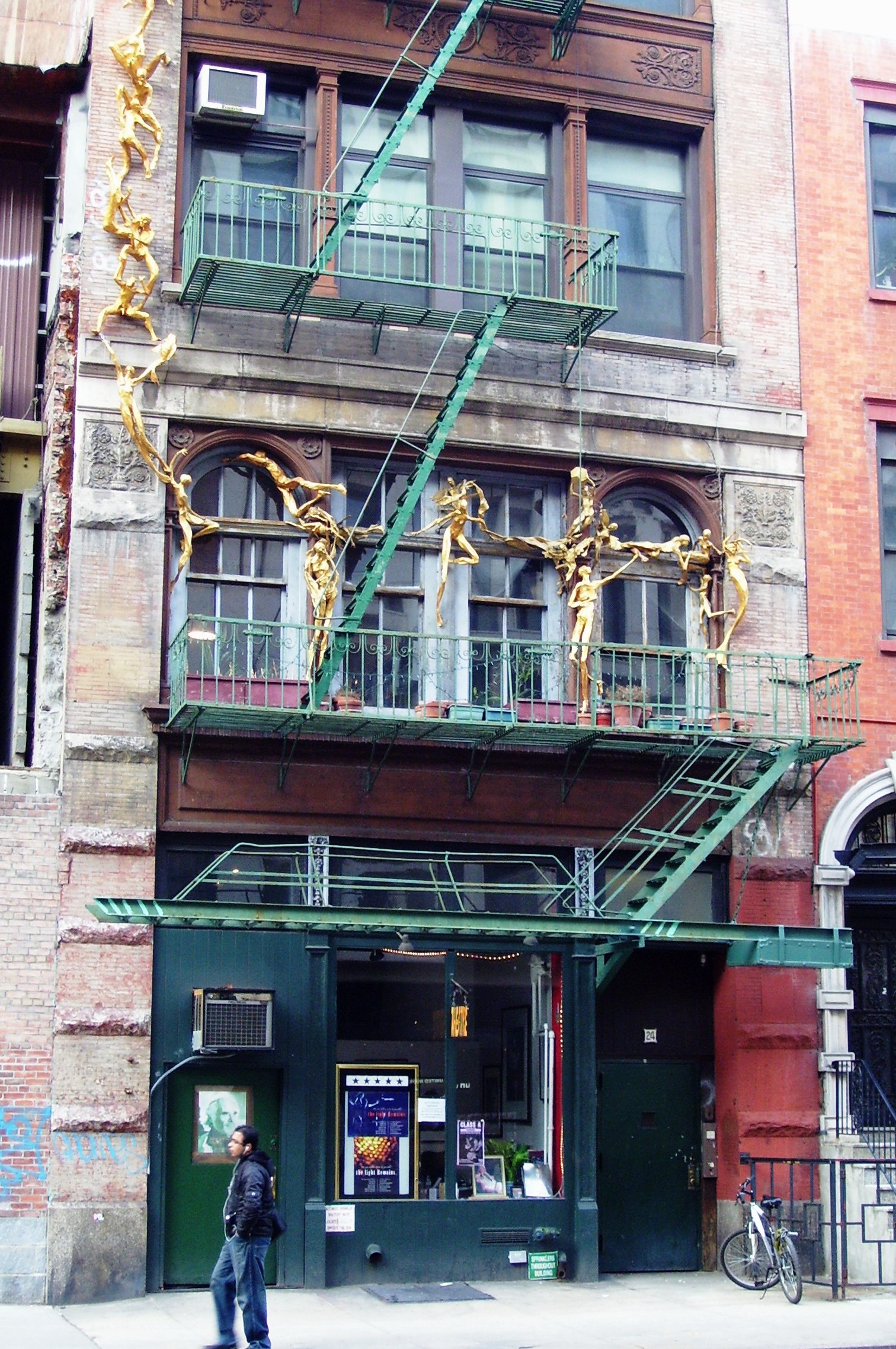
In 1967 he began living with the artist and musician Patti Smith. The romance ended in 1970. They stayed close. Smith’s memoir Just Kids is the widely read account of that Chelsea Hotel period. In the late 1960s and early 1970s he designed and sold handmade jewelry, starting with found scraps and later adding beads, dice, feathers, rabbits’ feet, silver skulls, and crosses: a Baroque junk-shop Catholicism. His boyfriend David Croland introduced him to John McKendry, a curator at the Metropolitan Museum of Art. McKendry gave him a Polaroid camera and helped him get support from Polaroid’s Artist Support Program. In 1972 Croland introduced him to the curator Sam Wagstaff. Wagstaff became mentor, patron, and lover, and put up $15,000 so Mapplethorpe could buy a loft at 24 Bond Street to live in. In 1973 Mapplethorpe had his first solo show at the Light Gallery in New York. Wagstaff then gave him a Hasselblad medium-format camera, and he began photographing artists, composers, and socialites. At Wagstaff’s urging, gallerist Holly Solomon agreed to represent him. In February 1977 the Holly Solomon Gallery showed the portraits, and the erotic pictures hung at The Kitchen, the SoHo nonprofit. That split hanging previewed the later museum fights.
Mineshaft, Milton Moore, and the last years
From 1977 to 1980 Mapplethorpe was the lover of the writer and Drummer editor Jack Fritscher. Fritscher took him to the Mineshaft, the members-only gay leather bar and sex club in Manhattan. Mapplethorpe was at one point the club’s official photographer and shot it extensively. In 1980, at the West Village bar Sneakers, he met Milton Moore, then AWOL from the U.S. Navy. Moore became his muse. In 1981 they lived together at 88 Bleecker Street. Mapplethorpe supported him financially and encouraged him to study photography. The best-known picture of Moore is Man in Polyester Suit (1980): a three-piece suit, the penis exposed, a joke and a monument at once. Mapplethorpe then began a relationship with Jack Walls, a clerk-typist from Chicago. He and Wagstaff stayed friends after the romance ended. Wagstaff gave him $500,000 to buy a top-floor loft at 35 West 23rd Street as home and studio. In 1986 Mapplethorpe was diagnosed with AIDS and worked harder as his health dropped. Wagstaff died in 1987. Mapplethorpe was the principal heir and the executor. In 1988 the Whitney Museum of American Art gave him his first major American museum retrospective. On 9 March 1989 he died in Boston of complications from HIV/AIDS. He was forty-two.
Flowers and the X pictures
He worked mainly in the studio and almost only in black and white. A large share of the catalogue is erotic. He wanted the pictures to arouse, and he insisted they could also be looked at as high art. The erotic work covers the 1970s New York BDSM subculture, Black male nudes, and classical nudes of female bodybuilders. He often photographed as a participant, including having sex with models, so the X pictures do not look like police evidence or an anthropologist’s field trip. They look like the work of someone who knew how the leather felt. Patti Smith was a frequent subject. A stark Mapplethorpe photograph became the cover of her first album, Horses. He made more than 150 photographs of the bodybuilder Lisa Lyon, collected in the 1983 book Lady, Lisa Lyon. The orchids and calla lilies are not a “safe” sideline. They use the same light, the same close crop people associate with genitals, and the same fetish of surface. A lily is as sexual as a cock. A cock is as formal as a lily.
The Perfect Moment, Cincinnati, and The Black Book
In the summer of 1989 The Perfect Moment pulled national attention onto public arts funding and censorship. The Corcoran Gallery of Art in Washington had agreed to host the show, then cancelled under political pressure and ended its contract with the Institute of Contemporary Art in Philadelphia. Janet Kardon of the ICA curated. The ICA’s NEA grant was to support the Corcoran presentation. The ICA did not take the tour over. The backers later showed every image at the Washington Project for the Arts, from 21 July to 13 August 1989. Conservative groups including the American Family Association attacked the exhibition as nothing more than the sensational presentation of potentially obscene material. In 1990 the Contemporary Arts Center in Cincinnati and its director, Dennis Barrie, were charged with obscenity for showing it. A jury found them not guilty. The trial put a question in the middle of the American culture war: once pictures of consensual adult fetish are printed to a museum standard, can they hang in a civic building without becoming a crime? A different fight followed the 1986 exhibition Black Males and the book The Black Book. Critics called the erotic depictions of Black men exploitative. The photographs are largely centered on the penis, isolating body parts and treating them as sculpture. The conceptual artist Glenn Ligon and the poet Essex Hemphill both answered those pictures. Hemphill granted the talent, and argued that the work showed little concern for gay Black men except as sexual subjects.
The estate, the prices, and what leather viewers can use
Before he died he founded the Robert Mapplethorpe Foundation to protect the work and to support medical research on AIDS. The foundation has promoted the pictures worldwide and has given millions of dollars to the fight against AIDS. In 2011 it gave the archive to the Getty Research Institute. Scandal has held the prices up. Man in Polyester Suit sold for $9,000 in 1992 and for $355,600 in 2023. In 2006 a 1986 photograph of Andy Warhol sold for $643,200, then the most expensive Mapplethorpe photograph. His ashes are at his mother’s grave in St. John’s Cemetery, Queens. The myth keeps moving, from the 1992 novel Boys of Life to the 2018 feature film Mapplethorpe and other pop tributes. For adult BDSM readers the usable lesson is specific. Craft, consenting adult subjects, and formal intelligence can make SM visible at the highest institutional level. That visibility can still be prosecuted, defunded, and sold for half a million dollars in the same decade.