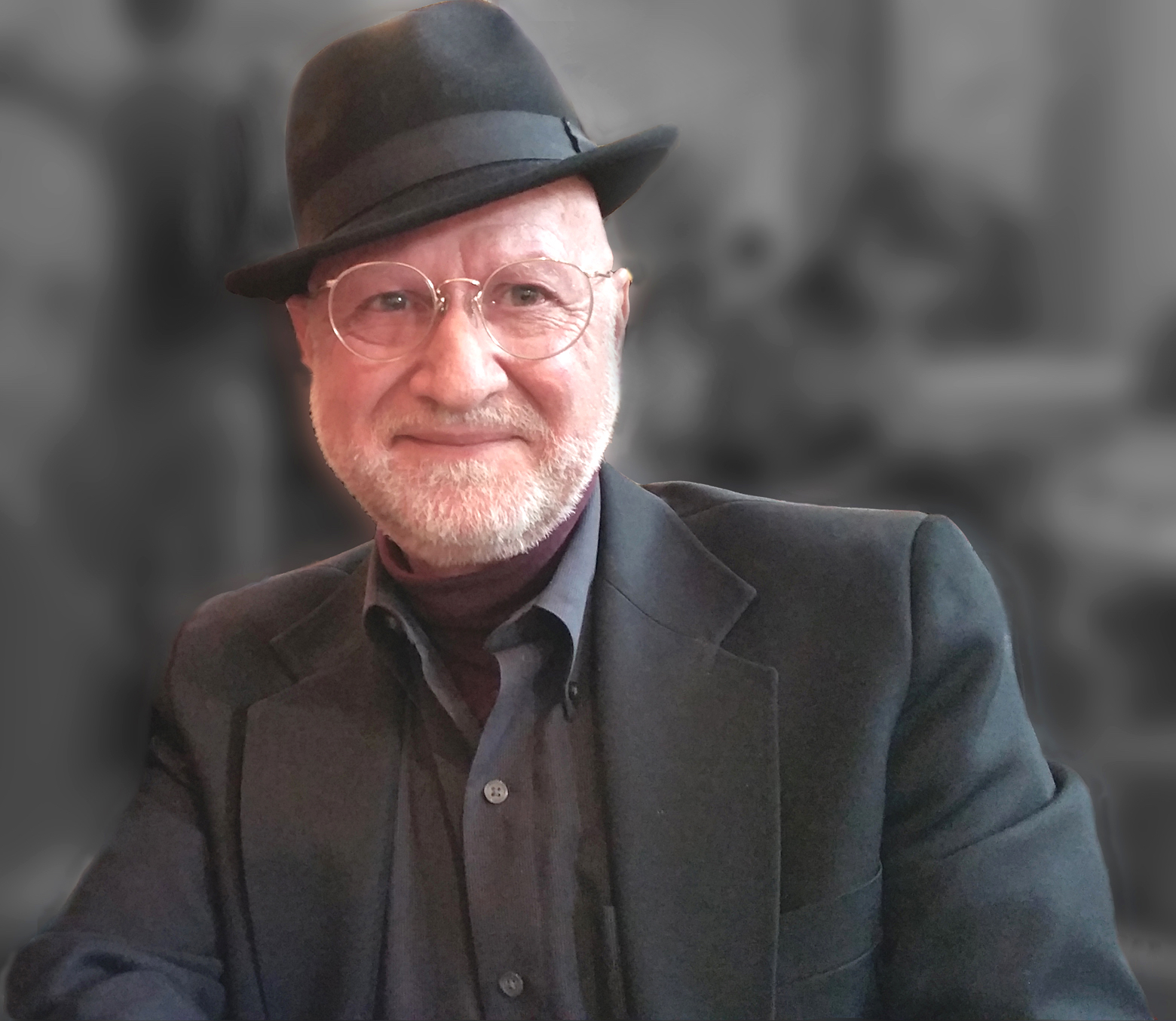
Robert J. Rubel (born Robert Jack Rubel II, 5 October 1944), known throughout leather and power-exchange circles as Dr. Bob, is an American author and educational sociologist who built a second public career teaching Master/slave relationships, total power exchange, dungeon protocol, and alternative sexuality. Before he wrote about authority transfer he wrote about school crime. That first doctorate still shows in the voice: definitions, process guides, “solutions 402,” impact evaluation language applied to how a Dominant and a slave actually live. Leather communities have recognized the work since 2001. In 2008 he received the Pantheon of Leather XVIII Community Choice – Man award. He still co-hosts a monthly Zoom room on M/s theory and practice. Since 2014 he has been the lead author on books aimed at communication and Total Power Exchange rather than one-night scene tricks.
For readers of this site he is infrastructure, not a lifestyle influencer. He issues ISBNs, edits magazines, judges title contests, films fire-safety modules, and keeps a seminar running after the conference hotel empties. The usable map of his shelf is simple: early Nazca Plains handbooks on fire, impact, squirting, protocol, and M/s theory; mid-period Power Exchange anthologies and magazine specials; later Red Eight Ball Press mastery titles on relationships, protocols, and talk. The man with the Ph.D. in Education and a criminology minor turned the same systematic mind on consensual adult power exchange. That is why dungeon people still find him when they search TPE, authority transfer, female-slave protocol, or party etiquette.
School Superintendent Track, Then School Crime
Rubel finished an undergraduate degree at Colorado State University in 1966 and taught English for three years in the Los Angeles Public School System. Teaching sent him back to school. In 1970 he took a master’s degree at Boston University. He was then accepted into a Ford Foundation–sponsored program at the University of Wisconsin’s School of Education—one of sixteen graduate students trained to become urban school superintendents. In 1977 he received a doctorate in Education with a minor in Criminology. In 1976, while that degree was still in motion, the National Institute of Justice gave him a visiting fellowship to document the literature and history of school-based crime and violence. That fellowship is the scholarly spine of everything that followed in his first career: not a memoir of “kids these days,” but a compiler’s job—surveys, bibliographies, process guides, federal policy briefs.
The superintendent-training cohort matters more than it looks. Sixteen people being taught to run city school systems is a program about institutions: policy, incident patterns, how a building fails. Rubel never became a famous urban superintendent. He became the person who tried to give districts a method for seeing unwanted behavior as data rather than as a moral fog. When, a quarter-century later, he started writing M/s handbooks, the same method returned. Authority transfer, in his books, is something you can name, protocol, evaluate, and repair. The dungeon is not a school. The writer still thinks like someone who once audited one.
National Alliance for Safe Schools
In 1977 Rubel and Peter Blauvelt founded the National Alliance for Safe Schools. NASS did two practical things. First, it helped district administrators identify patterns of unwanted behavior in secondary schools. Second, it helped individual schools or entire districts change policy and practice to address those patterns. The output was not a single manifesto. It was instruments: survey packets for measuring student, teacher, and school victimization; example safety plans and key directives; process guides for analyzing incidents; handbooks for program-level impact evaluation of school security. Titles from the mid-1980s Austin office include Compendium of Survey Instruments for Evaluating Student, Teacher, and School Victimization by Crime (1985), Guide for Creating School Safety Plans (1985), Analyzing School Incidents: A Process Guide (1984), and Handbook for Developing Program-Level Impact Evaluations of School Security Programs (1983). A 1985 piece in American School and University urged administrators to “enter the security audit.”
The journal and chapter trail from the late 1970s through 1990 is long and technical. Rubel wrote or edited The Unruly School: Disorders, Disruptions, and Crimes (D.C. Heath, 1977) and, with K. Baker, Violence and Crime in the Schools (Lexington / D.C. Heath). He published on HEW’s Safe School Study in the Bulletin of the National Association of Secondary School Principals, the Journal of Crime and Delinquency, and American Educator. He wrote on student fear of crime in Urban Review, on vandalism for NASSP, on victimization and fear in Victimology, on the relationship between student courtroom victories and school violence in Contemporary Education, and on campus security history with L. Burgan. Campus newsletters such as Campus Strife carried pieces on whether to “discipline or prosecute,” on student apprehension, and—with T. Halatyn—on whether programs that claimed to attack the causes of school crime were effect or fallacy. A 1990 SUNY Press chapter covered cooperative school-system and police responses to high-risk and disruptive youth. A 1987 article in Violence, Aggression and Terrorism argued for a systematic approach to serious misbehavior. For readers who will never open those journals, the point is density: this was a working specialist, not a hobbyist with one book.
Federal and state reports sit beside the commercial titles. For the U.S. Department of Justice and the National Institute of Justice he produced, among other documents, “Reducing school crime and student misbehavior: a problem solving strategy” (with N. Ames, 1986), “Crime analysis for schools and school districts: a process guide” (1983), and a policy brief on reducing crime in schools through accountability programs for disruptive youth (1982). With Halatyn he assessed existing research on juvenile crime causes in public schools for the California Commission on Crime Control and Violence Prevention (1981). He was senior compiler of a selected bibliography on school crime and disruption for the National Criminal Justice Reference Service (1979) and authored a summary volume on theoretical perspectives on school crime and poverty for NTIS. A 1978 historical article in Criminal Justice Abstracts surveyed student violence and crime in secondary schools from 1950 to 1975. Assumptions underlying violence-prevention programs appeared in a National Technical Information Service theoretical volume the same year. That is the first Dr. Bob: a man who could live inside a government bibliography and still want a usable field guide.
From 1986 to 1988 he served as Administrator for the American Association of Woodturners—an administrative interlude with no kink content and a reminder that his midlife was not a straight line from NIJ fellow to dungeon lecturer. The woodturners job is the kind of résumé oddity biographers skip. It belongs here because it shows the same skill the later conference circuit used: run an association, keep members, handle the unglamorous work of a specialty community.
Into Alternative Sexuality, Authority Transfer, and the Lecture Circuit
In 2001 Rubel began systematic research in alternative sexuality and what he called “authority transfer” dynamics. The phrase is more precise than “kink.” Authority transfer is the claim that some adults want to hand over decision rights—not only for a scene, but as a relationship structure—and that the handoff can be studied, taught, and practiced without pretending it is a crime or a joke. Book series followed. In 2007 he joined the North American and international lecture circuit on alternative sexuality. From 2007 to 2008 he edited the Power Exchange Books Resource Series and the associated Power Exchange Magazine. Mainstream crossover arrived in 2009 when Squirms, Screams, and Squirts: Handbook for going from great sex to extraordinary sex was named Playboy Online’s number-one Valentine gift-book recommendation; Penthouse Forum flagged the same title for its 2009 Valentine issue. Explicit skill-building SM sex writing rarely gets that kind of mass-media shelf talk. The book is about going from “great” to “extraordinary,” which is marketing language, but the placement still mattered: Dr. Bob’s name sat next to champagne and lingerie in a holiday gift roundup.
He has judged leather contests and been listed as an expert on AllExperts. Peer maps of English-language BDSM educators often put him near Guy Baldwin, Hardy Haberman, Jack McGeorge, Jay Wiseman, Lee Harrington, and Midori—the late-twentieth and early-twenty-first-century professionalization of SM teaching. Those names are not interchangeable. Wiseman is risk and technique. Baldwin is psychology and leather history. Harrington is rope, spirit, and body. McGeorge is institutional education. Haberman is Texas leather teaching. Midori is sensual education and performance. Rubel is the syllabus writer for M/s protocol, female-slave household and dungeon service, communication courses numbered like a university catalog, party and scene basics, and multi-author resource editing. If you want a fire-play handbook or an erectile-dysfunction sex guide written from inside the scene, he is also on that shelf.
Nazca Plains Handbooks: Mechanics, Protocol, and the Photographic Triptych
The mid-2000s Nazca Plains titles are vocational. Master/slave Relations: Handbook of Theory and Practice (2006) is the core theory/practice volume. Flames of Passion: Handbook of Erotic Fire Play (with David Walker, 2006) treats fire as a skill track with a safety spine, not as a music-video flourish. Squirms, Screams, and Squirts (2007) is the sex-technique handbook that Playboy later boosted; a 2010 workbook extended it. Screams of Pleasure (2009) addresses extraordinary sex for people with erectile dysfunction—an unusually practical subject in a literature that often pretends every cock behaves like a porn set. Protocols: Handbook for the female slave appeared in a 2007 second edition, aimed at service, household, and dungeon protocol from the slave side. Two 2007 “course” books pushed the university metaphor openly: Master/slave Relations: Communications 401 – The Advanced Course and Master/slave Relations: Solutions 402 – Living in Harmony. The numbers are branding, but they also tell you how Rubel wants the work to be used: as homework, not as a one-sitting memoir.
The same year he published three volumes of erotic photographic art under his own name and doctorate: Parts, Wholes, and Holes (2006). The titles are a joke and a program. Cropped bodies, whole figures, orifices. Dr. Bob thinking in studio composition, not only in bullet-point protocol. The photographs do not replace the handbooks. They remind readers that the educator also looks—and that the look is body-focused, explicit, and signed with the Ph.D. rather than hidden behind a scene name.
In 2012 Nazca Plains issued two training packages that combined video and print: Fire Play: A Safety Training Course (a 70-minute DVD plus a 64-page book) and Impact Play 101: Building Your Skills (a 70-minute DVD plus a 48-page book). Fire and impact are two of the dungeon skills people most often want to see demonstrated rather than only read about. The packages are not a substitute for in-person mentoring. They are what a prolific educator does when the conference circuit cannot reach every living room: ship a module.
Power Exchange Books and Power Exchange Magazine
As editor-organizer, Rubel shaped a Resource Series in which the first four books collected nine or ten invited articles of about 3,500 words each; the fifth, by Lee Harrington, ran longer. The volumes are Playing with Disabilities (with A. Stassinopoulas, 2007), Protocols, a Variety of Views (with L. Morgan, 2008), The Art of Slavery (with S. Laura, 2008), Age Play (with Colin, 2008), and Ropes, Bondage, and Power (with Lee Harrington, 2009). The model treats leather education as a guest-faculty ecology rather than a single guru. Disability play, protocol disagreement, slavery as art, age play, and rope-and-power are not one man’s obsessions forced into one voice. They are special issues. Harrington on rope is the standout longer book—an honest admission that some subjects need more than a magazine-length essay.
From 2007 to 2008 Rubel was managing editor of Power Exchange Magazine. The publisher, Herbert Moseley, used the author pseudonym “Robert Steele.” Nine volumes appeared: Master/slave Relations, male Master (2006); Master/slave Relations, female Master (2007); Bootblacking (2007); FemDomme (2007); Pony Play (2007); Polyamory (2007); Daddy/boy (2007); Leather Spirituality (2007); and Pup/Trainer (2007). Read as a set, they are a late-2000s snapshot of which identities and skills the leather market wanted bound as special issues. Male Master and female Master get equal billing as relationship structures. Bootblacking, pony, pup, and daddy/boy mark the micro-identities that conference vendor halls already knew. FemDomme, polyamory, and leather spirituality fill the rest of the newsstand. Together with the Resource Series, the magazine is Rubel’s editorial career: he is not only an author, he is a compiler—the same job he once did for school-crime bibliographies, now done for kink.
Red Eight Ball Press: Mastery, Communication, Dungeon “Magic”
Since 2014 Rubel has been lead author on books about communication or Total Power Exchange, mostly from Red Eight Ball Press in Austin, often with M. Fairfield. The 2014 cluster is a curriculum reset. BDSM Mastery – Basics (Rubel et al.) is a guide to play, parties, and scene protocols. BDSM Mastery – Relationships (with Fairfield) is a guide for creating mindful relationships for dominants and submissives. Master/slave Mastery: Updated handbook of concepts, approaches, and practices (with Fairfield) revisits the 2006 theory/practice core for a later decade. In 2015 came Master/slave Mastery – Advanced: Refining the fire: ideas that matter. In 2016, Master/slave Mastery – Protocols: Focusing the intent of your relationship. The sequence is deliberate: basics of how you behave at a party, then how you build a relationship, then the updated M/s handbook, then advanced ideas, then protocols as focused intent. This is not the 2006 “here is fire play and here is how a female slave keeps house” stack. It is late-career relational mastery—how TPE survives after the honeymoon power exchange.
The 2020 pair makes the talk-skill turn explicit. Safe, Sexy and Consensual: Creating Magic in the Dungeon (with Indigo the Goddess) puts SSC language on a dungeon-magic frame. In One Ear and Out the Other: Essential guide for effective communication (with Veronica Petterson) is the least glamorous and most useful kind of kink book: how people fail to hear each other. Authority transfer dies in bad talk more often than it dies in a dropped flogger. Rubel’s late titles admit that. He also contributed to Raven Kaldera’s 2014 Paradigms of Power: Styles of Master/Slave Relationships (Alfred Press)—another multi-author map of how different households actually run M/s, not a single orthodox protocol.
Awards, Zoom, and the Conference Map
The 2008 Pantheon of Leather Community Choice – Man award is peer recognition inside leather-nation structures, not a university prize and not a porn statuette. Combined with contest judging and the AllExperts listing, it marks Rubel as a community educator rather than only a mail-order author. In recent years the monthly M/s Zoom room has been the continuing classroom: theory and practice for people who already know the difference between a scene and a household.
The presenter trail is a geography of North American leather education in the 2010s. He appears on programs and marketplace lists for Leather in the Pines; Leather Reign (including a Dr. Bob and Jen listing); Great Lakes Leather; Sin in the City 2013; Rocky Mountain Rebellion 2016; The M/s Gathering; New England Leather Alliance’s Fetish Fair Fleamarket (program book for FFF 38); the Master/slave Conference bookstore; and Sinsations in Leather. A 2010 Leatherati “gear up for the weekend” note and a 2012 Colonial Kink review place him in the ordinary weekend circuit, not only at flagship title contests. That circuit is how M/s pedagogy actually moves: hotel ballrooms, vendor alleys, and ninety-minute slots on protocols or communication. The books are the homework. The weekends are the lab.
Audio and video extend the same classroom. He appeared on the Erotic Awakening podcast for an episode on Squirms, Screams, and Squirts. An NLP Training Quest testimonial page carries an endorsement in his name. Creative Sexuality webinars sit on a YouTube channel associated with the later teaching period. None of this is celebrity. It is the unglamorous afterlife of a prolific educator: podcasts, webinars, Zoom, and another conference badge.
Photography, Webinars, and the Unsexy Afterlife of a Teacher
The 2006 photographic trio is easy to skip in a literature survey and should not be skipped. Parts, Wholes, and Holes put the same doctorate on a studio credit line that later appears on fire-play and impact DVDs. They are not a side hobby. They are the claim that an M/s educator is allowed to look at bodies as composition, not only as protocol objects. A reader who only knows the Red Eight Ball relationship titles will miss that Dr. Bob also thought in crops and orifices. A reader who only knows the photographs will miss that the same man once compiled school-victimization survey instruments for NASS. The whole career is compilation: of incidents, of guest essays, of magazine identities, of bodies.
The Erotic Awakening episode on Squirms, Screams, and Squirts is the mass-kink-podcast version of the 2009 Playboy gift mention: take the sex-technique book to a room that already speaks SM. The NLP Training Quest endorsement and the Creative Sexuality webinars are smaller rooms. Together they show how late-career leather education actually travels when hotel weekends are not enough—audio, a testimonial page, a YouTube channel, a monthly Zoom. None of it is glamorous. All of it is how a syllabus stays alive after Nazca Plains and after the last special issue of Power Exchange Magazine shipped.
Compare that afterlife to the first career’s afterlife. The school-crime books did not become a Zoom. They became citations in other people’s safety plans, NIJ process guides, and a 1990 SUNY chapter. The kink books became ISBNs you can still order and a room you can still join. That is the difference between a closed federal bibliography and a living scene pedagogy. Rubel worked both sides. The method is the same. The audience changed.
How to Read the Shelf from a Dungeon, Not a Library Catalog
Read as a curriculum rather than a random stack, Rubel’s books track a progressive syllabus. Early Nazca titles emphasize scene mechanics—fire-play safety, impact skill ladders, squirting and multi-orgasm technique, erectile-dysfunction workarounds, and protocol handbooks aimed at female slaves learning household and dungeon service. Mid-period “Master/slave Relations” volumes borrow university course numbering to signal that authority transfer is a teachable discipline: negotiation scripts, conflict repair, cohabitation logistics. Resource-series anthologies and magazine specials expand the classroom to guest faculty and to identities (bootblack, pony, pup, daddy/boy, femdomme, poly, leather spirit) that one man’s protocol book cannot cover. Red Eight Ball mastery titles then refine the fire: party etiquette, mindful D/s relationships, updated M/s concepts, advanced ideas that matter after the first year, protocols as intent, SSC “magic” in the dungeon, and everyday communication. The photographic triptych and the 2012 DVDs sit beside the prose as other media for the same job: show the body, show the strike, show the flame.
The school-crime bibliography is not trivia and not a “gotcha.” It explains the tone. A man who spent the 1970s and 1980s writing incident-analysis process guides and criticizing HEW’s Safe School Study will write M/s books that sound like evaluations. That can feel cold to readers who want leather memoir, spiritual heat, or Tom of Finland swagger. It is exactly what other readers want when a household is failing because nobody defined a protocol or because a scene went badly and there is no language for repair. TPE, in this literature, is not a mood. It is a relationship technology. Whether a given household should use that technology is a separate question. Rubel’s claim is that if you use it, you can study it.
He does not replace Wiseman on risk, Baldwin on the inner life of leather, or Harrington on rope. He occupies the M/s-and-protocol lane of English-language BDSM education with unusual completeness: female-slave protocol, male and female Master special issues, party and scene basics, ED-aware sex technique, fire and impact modules, communication as a 2020 headline, and a monthly video room still talking through how Masters and slaves actually live. Search paths that land here include Total Power Exchange, authority transfer, dungeon party protocol, communication in D/s, Pantheon of Leather, Nazca Plains, Red Eight Ball Press, and the cluster of educators named above. For adult students of structured power exchange, Dr. Bob remains a primary English-language shelf: a doctorate, a magazine, a mail-order DVD rack, a photographic joke about holes, and a Zoom link that outlasted the hotel ballroom.