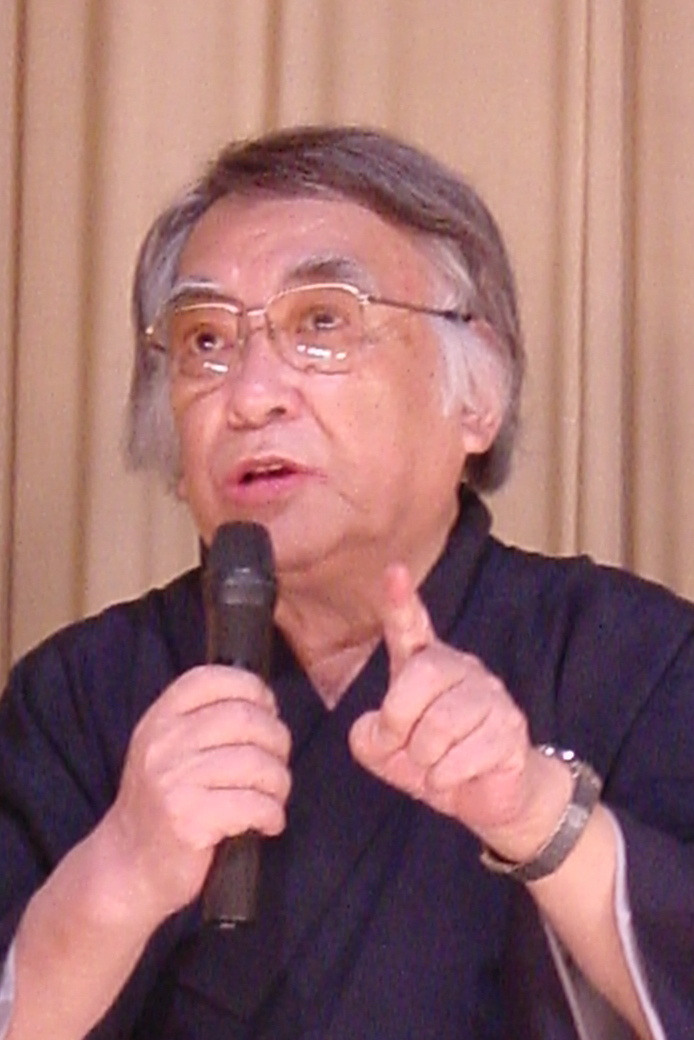
Oniroku Dan (団 鬼六, Dan Oniroku; 16 April 1931 – 6 May 2011) is the name most people mean when they say Japanese SM literature went industrial. He has been called the most celebrated writer of popular SM novels in Japan. His stories did not stay on the magazine page. Nikkatsu filmed them, Naomi Tani embodied them, and a house style of humiliation, rope, and “beauty under shame” became the studio’s long-running S/M Roman Porno line. Soft pornography, not high-brow fiction, is the usual verdict. The industrial fact is harder to dismiss: Dan’s formula trained a decade of directors, a succession of SM queens, and a reading public that already knew Kitan Club before the majors would admit the genre on a proper budget.
He died on 6 May 2011. By then the 1974 Flower and Snake cycle had been remade, excerpted, and exported, and an English collection had finally put four of his late stories in front of Western readers. For anyone mapping kinbaku cinema, pink film, or the difference between punishment porn and Japanese humiliation SM, he is not a colorful extra. He is the novelist the studio had to buy.
Yukihiko Kuroiwa: A Movie House, a Law Degree, a Kindergarten Fantasy
Dan was born Yukihiko Kuroiwa (黒岩 幸彦) in Shiga Prefecture on 16 April 1931. His father, Nobuyuki Kuroiwa, had once aimed to be a screenwriter. His mother, Yukie Katori, had been a movie actress and a student of the novelist who published as Sanjugo Naoki. It was her second marriage. In 1944 the father was posted to Osaka and the family moved into the Kansai region. Dan went through Kwansei Gakuin Middle School and High School and took a law degree from Kwansei Gakuin University. In 1955, just after graduation, he moved to Tokyo.
The parents owned a movie theater. That is not color. It is how a boy in wartime and occupation Japan sat inside commercial narrative every week and later treated sex cinema as a trade rather than a slum. He also claimed the SM interest arrived almost as early as school: “I even liked this kind of thing in kindergarten. I remember we had a lovely young teacher in her early twenties. More than anything in the world, I wanted to tie her up.” The line is famous because it is blunt. It is also the whole later aesthetic in miniature: not a dungeon of invented monsters, but a beautiful ordinary woman put under rope by a male gaze that calls itself love.
Growing up during the war, he learned English from American prisoners of war. In the 1950s he translated English-language television, including Alfred Hitchcock Presents. In the 1960s he taught English at a junior high school and, while still in the classroom, began writing pink-film scripts for small independent studios under the name Matsugoro Kuroiwa. That is when the long professional bond with Naomi Tani started—years before Nikkatsu would make either of them a brand. The secret teacher writing bondage scripts is not a cute origin myth. It is the pipeline that later let a major studio hire a novelist who already knew how Tani looked in rope.
Rookie Prizes, Then Flower and Snake
Respectable literary Japan noticed him before the SM magazines owned him. In 1956, as Matsujiro Kuroiwa (黒岩松次郎), he took an honorable mention for “Death in Naniwa” in the All Rookie Cup run by Bungeishunju’s Ooru Yomimono. In 1957 “Oyakodon” was runner-up in the eleventh All Rookie Cup from the same magazine. Those prizes sit in the biography like a road not taken. The work that made the name Oniroku Dan was the SM novel Flower and Snake (Hana to hebi), first serialized in the SM magazine Kitan Club under yet another early pen name, Kyotaro Hanamaki (花巻京太郎).
Serialization is how Japanese popular SM actually circulated: not a single hardcover event, but monthly pages in specialty books that already assumed the reader wanted capture, rope, and eroticized disgrace. Flower and Snake became a 1974 feature, then a run of nine related books, then a later Nikkatsu Roman Porno series released between 1985 and 1987. The title is still the one Western box-set buyers recognize. Inside Japan it is closer to a franchise: a novelist’s plot that a studio could remake whenever it needed an SM Queen and a literary alibi.
Dan’s magazine footprint was not one title. Stories ran in Kitan Club, Fuzoku Club, Uramado, and Abu Hunter, which is how a large public met Japanese sadomasochism as fiction rather than as rumor. In 1972 he founded another SM magazine, SM King, which lasted until 1974. That two-year imprint matters because it shows the novelist as an editor-publisher inside the subculture, not only as a supplier of plots to directors. Later writers who took up sadomasochism—Murakami Ryu is the name usually cited—worked in a field Dan had already made commercially visible. Soft porn, yes. Also a distribution system.
Nikkatsu, Tani, and the Fight Over the First Script
Nikkatsu spent years trying to recruit Tani into Roman Porno. She said yes only if her first film were based on Dan’s Flower and Snake. The studio agreed. Masaru Konuma directed; Yozo Tanaka wrote the shooting script. Dan and Tani both objected to the departures from the novel. The film still became a major hit. It is credited with launching the S/M genre inside Nikkatsu’s Roman Porno line and with making Tani the third of the studio’s Roman Porno Queens and the first “S/M Queen.” The literary complaint and the box-office result sat side by side. The novelist wanted his story. The studio wanted a movie that printed money. Both things happened.
Still angry about the changes, Dan refused to take part in the follow-up, Wife to Be Sacrificed (1974). In later interviews he said the second film was based on a story he had written and that he had insisted his name come off the credits. Konuma’s version is different: an original story by Tanaka. The dispute is not trivia for film nerds. It is the first crack in the “Dan wrote everything Tani suffered on screen” legend. Wife to Be Sacrificed was an even bigger hit than Flower and Snake, one of the titles that later traveled to American cult calendars. Whether or not the plot began on Dan’s desk, the public read it as the same world: Tani, rope, Konuma, Nikkatsu SM.
They settled. Dan later gave the studio exclusive rights to his novels. Many were filmed with Tani. The association lasted more than ten years, past her 1979 retirement. Critics called the pictures predictable. That was the point. The formulaic structure he built for most of the film scripts became the model for Nikkatsu’s long-lived S/M Roman Porno series. A major studio does not keep a novelist on exclusive terms because he is surprising. It keeps him because the audience already knows how the humiliation will be framed and still buys the ticket.
Humiliation, Not Punishment: The “Oniroku Dan Way”
Nicholas Bornoff, in Pink Samurai, described the married father of children as a man with “a genuine aura of rather tweedy, comfortable professorship.” Asked whether he ever acted on bondage fantasies with his wife, Dan said, “No way! She would beat my ass.” The joke is useful. The work is male fantasy sold as literature and cinema; the household was not a dungeon. Konuma called his own early S/M films “European-type S/M” and said later Japanese S/M developed “in a very Japanese fashion. The Oniroku Dan way.”
Dan named three purposes of S/M: punishment, confinement, and a sense of shame. He disliked S/M as punishment. “This type of story is out of my realm. It just gives me the creeps.” Editors, he complained, confused S/M with cruelty and wanted “punishment tales.” His own concept was “distorted sexual desire” or extreme disorientation—a male fantasy derived from love, from watching a beauty suffer through shame. “Therefore, my style contains a romantic, aesthetic, and sometimes decadent fragrance.” Konuma put the female characters more bluntly: Dan searches for the beauty of women, invents an ideal, and sells an S/M fantasy to readers. That is not consent culture as a 2020s workshop would write it. It is mid-century Japanese popular SM: the woman’s suffering is the artwork, and the man watching is supposed to call it love.
Tani, who knew the novels from the inside of the rope, listed Dan’s perfect film actress: she must look good in a kimono; she needs long jet-black hair; she must have enough body fat for the bondage rope to leave a clear impression on the skin; she has to be graceful under torture, with strong facial expressions. Dan said Tani met every condition and that he used her as the model for several women in the books. When she retired at the height of her popularity in 1979, he said he went into shock. “It was the end of the Golden Duo. I almost decided to quit writing.” The quote is sentimental and accurate. The Nikkatsu SM line survived her. The pairing that made the line possible did not.
Bornoff’s summary was that Dan had “the knack of making sadism respectable.” As the Roman Porno titles found a cult audience in the United States, Dan acknowledged the cultural gap and still wanted the credit: some aspects of pink film would not be acceptable in America, but if American viewers recognized “the special quality of Oniroku Dan’s world through his sex films,” he would be more than happy. Respectability here does not mean clean. It means a novelist’s alibi, a studio logo, and a theory of shame that let audiences treat rope cinema as style instead of as a snuff daydream.
Queens After Tani: How a Novelist Became a Credit Block
After 1979 the films still carried his name in the title the way a brand sits on a bottle. Junko Mabuki inherited the rope in White Uniform in Rope Hell (1980), Blazing Bondage Lady (1980), Secretary Rope Discipline (1981), Office Lady Rope Slave (1981), Female Teacher in Rope Hell (1981), and Female Beautician Rope Discipline (1982). Izumi Shima took Blue Woman (1982), Dark Hair Velvet Soul (1982), and Snake Hole (1983). Miki Takakura became the 1983–85 face in Beauty in Rope Hell, Beauty Rope Cosmetology, Rope Torture, and Double Rope Torture. Ran Masaki later headlined Beautiful Teacher in Torture Hell (1986) and Snake and Whip (1986). The job titles in those names—office lady, teacher, beautician, secretary, nurse-adjacent white uniform—are the Dan-Nikkatsu trick in four words: take a respectable Japanese feminine role and put it in rope until shame becomes the plot.
The Tani-era features remain the core for anyone actually watching rather than collecting boxes. Besides Flower and Snake: Oryu’s Passion: Bondage Skin (1975), Lady Moonflower (1976), Fairy in a Cage (1977), Fascination: Portrait of a Lady (1977), Skin of Roses (1978), Rope Hell (1978), Rope Cosmetology (1978), Lady Black Rose (1978), and the 1979 farewell Rope and Skin. Directors rotate—Konuma, Katsuhiko Fujii, Kōyū Ohara, Shōgorō Nishimura—but the novelist’s credit is the constant. Image of a Bound Girl (1980) put Konuma back on a Dan title without Tani. Bridal Doll (1979) used Asako Kurayoshi. The later 1980s kept the machine running: Wife to Be Molested (1987), Sisters to Be Sacrificed (1987), Exotic Mask in Hell (1988). The Best of S&M (1984) even billed him as presenter of Nikkatsu’s SM highlights. By then “Dan Oniroku” on a poster was a genre tag, the way a Western box might say “From the author of.”
The afterlife is thinner but real. Kyōko Aizome starred in The Slave Ship (Dorei-sen, 2010), directed by Satoshi Kaneda, a late feature still carrying the literary name. Flower and Snake: Zero arrived in 2014, after his death, proof that the title had outlived the man. English-language readers got a different remnant in 2010, when Vertical, Inc. published Season of Infidelity, four stories first issued in Japanese in 1997, translated by Chris Violet. The last story, “Bewitching Bloom,” is Dan’s account of the Tani partnership, with notes on the three subsequent Nikkatsu Queens: Mabuki, Shima, Takakura. That is the succession as he wanted it filed: one novelist, four studio faces, a single SM house style.
A few 1980s titles still get pulled as the formula at its most specific. Fumihiko Kato’s Girl and the Wooden Horse Torture (1982), with Serina Nishikawa, puts the Dan credit on a mokuba scene—the wooden horse as furniture, not a metaphor. Satoru Kobayashi’s Female Bondage Torture (1984), also released as Hanging Lust, starred Yui Maisaka. Hidehiro Ito directed two of the Mabuki discipline pictures, Secretary Rope Discipline and Female Beautician Rope Discipline. Genji Nakamura shot Takakura in Beauty in Rope Hell (1983); Ikuo Sekimoto did Rope Torture and Double Rope Torture. Mamoru Watanabe, one of the old Pillars of Pink, directed Shima in Dark Hair Velvet Soul. Shuji Kataoka’s Wife to Be Molested (1987) and Nishimura’s Sisters to Be Sacrificed (1987) show the late-franchise reflex: take a domestic or sibling premise and run it through the same shame engine. You do not need every one of those prints. You need to see that “Dan Oniroku” on the title card had become a production instruction.
Retirement, a Failed Business, a Crimson Comeback
By the early 1990s he had written more than two hundred S/M novels and stopped. He tried a business venture that failed. After a break of nearly ten years he returned with an autobiography, The Flower Must Be Crimson: The World of Oniroku Dan. The comeback was not a polite memoir tour. Demand put him on eight serialized magazine novels at once plus another book. Popular SM in Japan still wanted the voice that had trained it to read shame as erotic structure. The ten-year silence is useful to remember when people talk as if he only existed inside 1970s Nikkatsu. The novels kept being the product. The films were the loud export.
The paper around him is thicker than most pink-adjacent writers get. Bornoff’s 1991/1994 Pink Samurai chapter “The Cruel World” is the English-language character sketch. Konuma’s 6 November 1998 Tokyo interview with Thomas and Yuko Mihara Weisser, published in Asian Cult Cinema no. 22, is where “European-type” versus “Oniroku Dan way” enters the record. Chieko Nakamura’s 2002 interview, later archived from slowtrain.org, and Maki Hamamoto’s fifteen-minute talk with Dan at a Naomi Tani party (Asian Cult Cinema no. 23, 1999) catch him after the Golden Duo and before the English book. Tani’s own January 1998 Kyushu interview with Hamamoto (Asian Cult Cinema no. 19) is the actress’s matching file. The Weissers’ Japanese Cinema Encyclopedia: The Sex Films (1998) remains the title-by-title map. IMDb and the Complete Index to World Film keep the credits. A 2007 Hankook Ilbo piece on Roman Porno still used him as the SM focus, which is how far the name traveled in East Asian popular press.
What BDSM Readers Should Actually Take from Dan
If you come from contemporary kinbaku performance, Western rope porn, or negotiated power exchange, Dan’s world will feel both ancestral and wrong. The ancestral part is real: kimono, black hair, rope marks on a body with enough flesh to show them, public shame, confinement, a novelist’s insistence that the charge is humiliation rather than beating someone until the page goes numb. Japanese SM cinema’s studio era has a literary engine because of him. Tani has a reason Nikkatsu had to start with Flower and Snake because of him. Later queens inherited a credit block that already taught audiences how to watch.
The wrong part is also real and should not be sanded off for SEO comfort. These stories are male fantasies about women suffering beautifully. Consent as a modern scene-negotiation practice is not the organizing principle. Dan said the fantasy came from love. Tani said the actress must look graceful under torture. Konuma said the novelist sold an ideal woman. Adult readers can hold all three sentences without pretending the novels were SSC primers. They were popular SM: serialized, filmed, branded, and, in Bornoff’s phrase, made respectable enough for a major studio to run them for a decade.
Watch the Tani pictures first if you want the collaboration at full strength. Read Season of Infidelity if you want the late prose and the Tani memoir-story without learning Japanese. Treat the 1980s office-lady-in-rope titles as industrial continuation, not as a second Golden Duo. Remember the Tanaka/Konuma fight over Wife to Be Sacrificed so you do not credit Dan with every frame that has a whip in it. And keep the kindergarten quote next to the tweed-professor description. The man who wanted to tie his teacher and the man who would not bring S/M home to his wife are the same writer. The films are what happened when Nikkatsu decided that contradiction was a genre.
Two more facts belong on the card. First, the early literary prizes under Kuroiwa names prove he could have stayed in the Ooru Yomimono lane; he chose the SM magazines instead, then let a major studio industrialize the choice. Second, SM King (1972–74) and the Kitan Club serialization of Flower and Snake as Kyotaro Hanamaki mean the audience existed before Nikkatsu got brave. The studio did not invent Japanese SM fiction. It bought the writer who had already trained the readers. When American cult calendars later booked the Tani pictures, Dan’s hope was not that the West would adopt his bedroom. It was that they would recognize “Oniroku Dan’s world” as a style: romantic, aesthetic, decadent, and organized around shame rather than around a beating. That is still the useful distinction if you watch pink SM next to European punishment porn and wonder why the Japanese pictures keep stopping to look at a face in a kimono.
)