
 English
 日本語
日本語 简体中文
简体中文 繁體中文
繁體中文
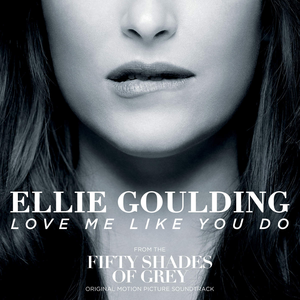
“Love Me like You Do” is Ellie Goulding’s mid-tempo electropop power ballad for the Fifty Shades of Grey (2015) soundtrack: the song that turned Christian Grey and Anastasia Steele’s negotiated-then-not-so-negotiated hunger into a radio chorus. Savan Kotecha, Ilya Salmanzadeh, Tove Lo, Max Martin, and Ali Payami wrote it; Martin and Payami produced. Goulding sang it. Republic issued it on 7 January 2015 as the soundtrack’s second single. It later sat on her third album, Delirium (2015), and a slightly reworked cut returned on Fifty Shades Freed (2018). For a BDSM-aware listener it is not a dungeon how-to. It is the mass-market sound of being undone by a touch you asked for and still fear—the “even when it hurts” line that made a bondage romance sell to people who would never set foot in a leather bar.
Critics called it sultry and grandiose. It gave Goulding her first Grammy nomination (Best Pop Solo Performance). The writers went up for Best Song Written for Visual Media, a Golden Globe for Best Original Song, and a Critics’ Choice Best Song nod. It spent four weeks at UK number one, broke the British streaming record of its moment, topped more than thirty official charts, and became her biggest global single. The United States certified it eight-times platinum; Germany gave it Diamond; Poland Double Diamond. The video mixed mansion ballroom dancing with film clips, took a VMA Best Female Video nomination, and later passed one billion and then two billion YouTube views. This is the Fifty Shades song that actually won the week, not the one that only won the think piece.
How a Max Martin Worktape Became a Dungeon Ballad
Republic’s Tom Mackay was building a soundtrack that would feel like the movie’s temperature. He called Max Martin’s camp. Ilya started a chorus; Payami and Martin built the track; Martin tweaked; Kotecha and Tove Lo pushed lyrics. Kotecha has said he and Martin were already developing the song and that he had considered Demi Lovato. Then Martin sat through a film scene in a soundtrack meeting, decided this ballad could carry it, and they rewrote toward the movie. Director Sam Taylor-Johnson asked Goulding to sing. Goulding had already done Twilight: Breaking Dawn – Part 2, Catching Fire, and Divergent and wanted to protect time for album three. She met the filmmakers, heard the demo, and reversed: “This is a pretty awesome song.” She did not predict the scale.
That origin story matters for kink-pop history. Fifty Shades was already the decade’s mainstream translator of BDSM—contracts, Red Room, “laters, baby,” and a lot of arguments about consent that the books only half earned. The soundtrack needed a song that could play under expensive cinematography without sounding like a novelty single called “Whip.” Martin’s team delivered addiction-and-surrender language over stadium synths. Goulding’s soft, slightly lost soprano did the rest: danger without a guttural scream, which is exactly how the films sell power exchange to date-night crowds.
Recording split between MXM in Los Angeles and Stockholm and Wolf Cousins in Stockholm. Mattias Bylund arranged strings; Mattias Johansson played violin; David Bukovinsky played cello (strings taped at The RedRoom, Gothenburg). Peter Carlsson edited vocals. Background vocals stacked Martin, Payami, Ilya, Kotecha, Oscar Holter, Robin Fredriksson, Mattias Larsson, Oscar Görres, and Ludvig Söderberg—the Swedish hit factory singing behind the British guest. Mix: MixStar, Virginia Beach. Master: Bernie Grundman, Hollywood. Sheet music: A-flat major, about 95 BPM, Goulding from A-flat3 to E-flat5. Instrumentation is huge synths and crushing drums under that small voice. The opening bargain is the whole kink read: “You’re the cure / you’re the pain / you’re the only thing I want to touch.”
Lyrics: Hurt as Romance, Not as Aftercare
Adam R. Holz at Plugged In heard “innocent romantic longing” welded to “brooding, addictive, pain-laced sensuality” and said it mirrors Steele and Grey in both novel and film: a woman seduced by a touch that leaves her begging, especially when it hurts. That is the franchise’s erotic thesis and its ethical problem. In real BDSM, pain is negotiated, limited, and stoppable. In the song, pain is weather. There is no safeword in the chorus. There is only “love me like you do,” repeated until it functions like a mantra or a plea.
For this site that double use is the point. Playlists for rope nights and hotel-dom weekends still reach for this track because the production feels expensive and the vocal sounds like subspace from the outside. It is also a useful teaching contrast: this is how Hollywood hears SM—overwhelming, cinematic, slightly dangerous, always romantic. It is not how a well-run scene hears SM. Use it as atmosphere. Do not use it as a contract.
A reworked version on the Freed soundtrack bookended the trilogy. By 2018 the song was already inescapable; putting it back in the third film was brand hygiene as much as storytelling. Goulding’s Delirium track list then claimed it as her own catalog, not only a work-for-hire.
What Critics Heard
The notices were unusually kind for a tie-in. Time’s Samantha Grossman and MTV’s Christina Garibaldi both reached for “sultry”; Garibaldi pictured it under a steamy scene. Rolling Stone’s Ryan Reed called the result grandiose given the film’s subject. Jim Farber (New York Daily News) heard a little-girl-lost voice that stayed sweet while courting danger, and compared the gloss to a Phil Collins ’80s ballad—echoed drums, dense synths. Idolator’s Robbie Daw tagged a sweeping power ballad, understated vocal, Martin’s swelling bed of synths. AXS’s Lucas Villa said she treaded delicacy and power; Newsday’s Glenn Gamboa called it near-perfect rom-com fare. Music Times praised the crawl and the breathy atmosphere. Esquire’s Dave Holmes, reviewing the whole soundtrack, called it the closest thing to a real single: longing, a bit of beat, “the sound of heavy petting.” The Los Angeles Times’s Mikael Wood heard tender sensuality even while Martin jacked a stadium-rave beat. AllMusic’s Stephen Thomas Erlewine filed it as background romance on an album also stuffed with on-the-nose oldies.
The dissent was about cliché, not craft. Billboard’s Jason Lipshutz gave two and a half stars: distinct voice, colossal chorus, tired words. That is fair. “You’re the fear / I don’t care” is not Audre Lorde. It is a very expensive way to say the red room works.
Awards season treated it like a real song, which soundtrack singles rarely earn. It lost Teen Choice (Song from a Movie or TV Show) to Wiz Khalifa and Charlie Puth’s “See You Again,” lost MTV EMA Best Song to Taylor Swift’s “Bad Blood,” lost BBC Music Awards Song of the Year to Hozier’s “Take Me to Church,” and lost People’s Choice Favorite Song to Justin Bieber’s “What Do You Mean?” It won Best International Song at Los Premios 40 Principales. At the 58th Grammys Goulding lost Best Pop Solo Performance to Ed Sheeran’s “Thinking Out Loud”; the writers lost Best Song Written for Visual Media to “Glory” from Selma. The 73rd Golden Globes put it in Best Original Song; Sam Smith’s “Writing’s on the Wall” from Spectre won. First Grammy nominations still count. They moved a bondage-movie ballad onto the same ballot as civil-rights and Bond songs.
How Big It Actually Was (Without the Weekly Spreadsheet)
United Kingdom: it entered at number one with 172,368 first-week units, Goulding’s second UK chart-topper after “Burn” (2013). Week two: 118,225 sales plus 2.25 million streams. Week three: another 118,000 sales and a then-record 2.58 million UK streams in seven days, passing Mark Ronson’s “Uptown Funk.” Global streams that week were about 15.5 million. Four weeks at number one—her longest UK reign. That is the story. You do not need every mid-table descent.
Europe: number one in Austria, Bulgaria, the Czech Republic, Denmark, Finland, Germany, Greece, Hungary, Ireland, Italy, Luxembourg, Norway, Poland, Portugal, Slovakia, Slovenia, Spain, Sweden, and Switzerland. France peaked at five (her best there, second French top ten). The Netherlands gave her a first solo top ten, peaking at two on the Dutch Top 40. It was Slovenia’s bestselling song of 2015.
United States: Hot 100 debut at 45 (24 January 2015 chart) on 79,000 first-week sales, then 36, 20, 14, a first top ten at nine, and a peak of three in week seven—her highest since “Lights” hit two in July 2012. It was her second Pop Songs number one and her first Adult Top 40 number one. Canada: debut 38, peak three. Australia and New Zealand: debut eight and three, both number one by week four, her first chart-topper in either country.
Certifications (the durable numbers): multi-platinum in fifteen countries; RIAA 8× Platinum (8 million units); BVMI Diamond (1 million); ZPAV 2× Diamond (500,000); FIMI 5× Platinum; IFPI Norway 6× Platinum; SNEP Gold. Those plaques are why the song still pays for someone, somewhere, every time a streaming playlist called “Sensual” autoplays a Grey-adjacent mix.
Fifty Shades as the Delivery System
E. L. James’s novels had already done the translation work: BDSM as billionaire interior design, a contract as plot device, a Red Room as tourist attraction. Sam Taylor-Johnson’s first film needed songs that would not scare the date-night ticket while still winking at handcuffs. The soundtrack mixed oldies (the on-the-nose needle-drops Erlewine grumbled about) with new commissions. “Love Me like You Do” is the commission that escaped the CD and became a civilian hit. The Beyoncé and the Weeknd cuts from the same campaign stayed more tied to the brand. Goulding’s ballad could play in a mall and still smell like the movie.
That is a mixed blessing for anyone who actually plays. The franchise taught millions of readers the words dominant, submissive, and hard limit, then modeled a relationship that kink educators spent years unpacking as fantasy, not template. The song inherits the same split. It is musically excellent adult-contemporary. It is lyrically a surrender without a negotiation. When a top puts it on, the room gets prettier. When a new bottom thinks the lyric is the rulebook, you have a teaching problem. Name that problem in the same paragraph as the Grammy nomination and you have an honest encyclopedia entry instead of a streaming-era press release.
Goulding’s own catalog is not a fetish catalog. Lights, Halcyon, and Delirium are big-pop and electronic records with the occasional cinematic guest slot. This single is the guest slot that ate the host. Putting it on Delirium was smart ownership: the song would have followed her anyway. Keeping it in the Freed endgame was brand glue. By then the trilogy’s cultural moment was already cooling; the song was not. That inversion—tie-in outliving the thing it was tied to—is why it still needs a full article on a BDSM media site.
The Video: Ballroom, Film Clips, French Blur
Georgia Hudson directed. The clip premiered 22 January 2015. Goulding and on-screen partner Charlie Harding dance in a mansion; intercut Fifty Shades footage does the bondage advertising. Goulding had become obsessed with ballroom and asked to dance on camera. She called it one of her favorite videos: sensual partner work in a beautiful house. MTV nominated it for Best Female Video. It was the 21st YouTube video to hit one billion views (late February 2016) and later crossed two billion. In France some channels ran it with a “not advised for kids under 10” warning and blurred film scenes—the usual Continental panic about a movie that is, in kink terms, fairly soft.
What the video understands, even when the film is clumsy, is that Fifty Shades sells looking: contracts as props, suites as dungeons, waltz as power. Goulding in a gown is the “safe” body; Dakota Johnson in the Red Room is the merchandise. Together they tell a mainstream audience that SM is luxury lighting. Scene people can laugh and still steal the song.
Live, Covers, and the Jukebox Afterlife
Goulding sang it at a Nike app launch (March 2015); as Taylor Swift’s surprise guest on the 1989 Tour (17 October 2015); at the 2015 MTV EMAs (Billboard: “sexy,” “straightforward”); at the NRJ Music Awards; in Scarlett Johansson’s American Express Unstaged; on Idol Sweden; in a Late Late Show genre pile-up with James Corden (rock, hip hop, country, rave, reggae, folk, gospel); at the Victoria’s Secret Fashion Show (aired 8 December 2015); at Capital’s Jingle Bell Ball; and with the BBC Concert Orchestra at the 2015 BBC Music Awards. On 18 April 2020 she did an acoustic take for One World: Together at Home. On 13 October 2023 she sang Yoshiki’s orchestral arrangement at the Royal Albert Hall. The song is now a standard she cannot retire.
Covers arrived immediately: Circa Waves (rock, Radio 1 Live Lounge, March 2015); James Arthur for MTV the same month; Ella Henderson acoustic at Spin 1038 in May; Rhodes back at the Live Lounge in September. Max Martin’s jukebox musical & Juliet (2019) gives it to Romeo; Jordan Luke Gage recorded the West End cast version. That last transplant is almost too neat: a song written to score a billionaire’s playroom becomes a Shakespeare-fanfic love song. The hurt/cure couplet works anywhere someone wants to sound overwhelmed.
Personnel, Mix, and Why the Voice Sounds Small
The credit block is a map of mid-2010s Swedish pop power. Martin and Payami program, play drums, percussion, keys, and bass. The background-vocal crowd is a who’s-who of the same Stockholm rooms that built a decade of choruses. Carlsson’s vocal edit is why Goulding sounds both intimate and huge: the lead stays close-miked and breathy while the track detonates under it. That contrast is the erotic trick. A belt would have made the song a sports anthem. A whisper over crushing drums makes it a bedroom. MixStar’s polish is the same sheen that makes other Martin records feel expensive in a car. None of this is accidental “indie.” It is industrial craft pointed at a bondage movie’s softer scenes.
Goulding’s range on the sheet (A-flat3 to E-flat5) is not a scream showcase. The high notes are lifts, not climaxes. Farber’s “little-girl-lost” description is uncomfortable and accurate about the persona: the singer sounds younger than the lyric’s pain-play. Fifty Shades has the same age-power unease in its casting and its contract scenes. The record does not resolve that unease. It bottles it. If you are using the song in a room with a real age or experience gap, notice what the vocal is selling before you hit play.
Why It Still Sits on Kink Playlists
“Love Me like You Do” is the polite face of 2010s BDSM-in-pop. Rihanna’s “S&M” grinned and asked to be chained. Madonna’s “Justify My Love” whispered in a hotel corridor. Goulding’s hit is the date-night version: same franchise that put handcuffs on supermarket paperbacks, same Martin sheen that makes surrender sound like a chorus you can sing sober. It topped real charts, not only fetish blogs. It made a British singer with an art-pop reputation into the voice of a bondage movie without requiring her to hold a whip on the album cover.
If you are building a site like this one, keep the facts and drop the week-by-week Hot 100 crawl. Four weeks at UK number one. Peak US three. Thirty-plus number ones. Eight-times platinum at home in America. A video that outlived the movies’ prestige. Writers who almost took a Globe. A lyric that confuses pain with romance in a way ethical players have to unpack. That is the complete article. The rest was spreadsheet.
Play it when you want the room to feel expensive. Talk, after, about the difference between “love me like you do” and “here is my list, here is my word, here is how we stop.” Fifty Shades got the lighting. The scene still has to do the work.







![[不二企画] FUJI-0333 強烈猿轡 乳汁愛虐縛り 望月麻子 -濡木痴夢男- (Duga Full Version)](https://bdsmwild.com/wp-content/uploads/2024/08/02153-FUJI-0333-bdsmwild【Exclusive】不二企画-FUJI-0333-強烈猿轡-乳汁愛虐縛り-望月麻子-濡木痴夢男-Duga-Full-Version.webp)


