The Leather Archives & Museum (LA&M) sits in Chicago’s Rogers Park neighborhood. It is an archive, a library, and a museum for the history of leather, kink, BDSM, and fetish. Chuck Renslow and Tony DeBlase founded it in 1991. The job they gave it was to make that culture something you can actually reach, through research, preservation, and education. It is a 501(c)(3) nonprofit, a member of the Reciprocal Organization of Associated Museums (ROAM), and open only to people 18 and over. For BDSM and leather readers, the holdings are jackets, drawings, oral histories, and club papers — the things families or landlords would have tossed. Folsom, International Mr. Leather, Drummer, bootblack stands, and the red heart on black and blue are treated here as culture. They are not leftover costume.
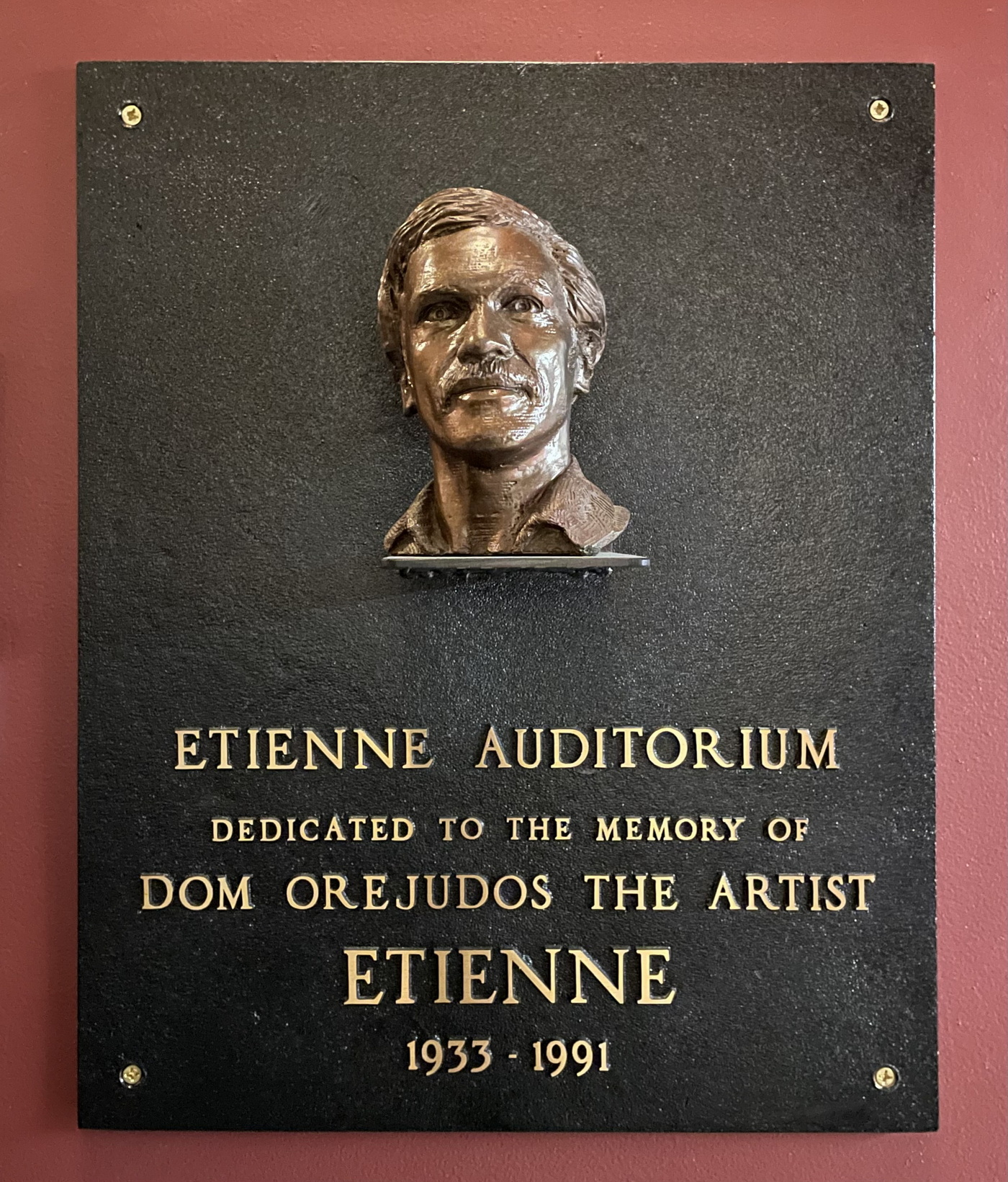
The museum started from urgency. In 1991, in the middle of the AIDS epidemic, Dom Orejudos died of it. He had been Chuck Renslow’s partner for forty years. His art name was Etienne, and that is the name most people use. While Orejudos was ill, Renslow sold some work to pay for care. After the death he insisted on keeping the whole artistic legacy. Mainstream museums would take a few chosen pieces and not the rest. Renslow asked his friend Tony DeBlase — already an important leather publisher, and later the designer of the leather pride flag — and the two of them set out to build a place that could hold all of Orejudos and still leave room for other leather artists and trailblazers. Renslow later said they were at the center of the epidemic, and that with each death, families and friends were unknowingly throwing that history into dumpsters. Former president Jon Krongaard has said some families wiped the legacy because they found leather and fetish “sick or perverse.” The virus, plus that shame, is the founding injury. LA&M was incorporated in Illinois in 1991. The ribbon-cutting and first public gallery show were on 4 November 1995.
The first storefront was at 5013 N. Clark Street, next to the Man’s Country bathhouse, which was already part of Renslow’s Chicago leather map. Art and objects came in faster than the room could hold. Renslow and DeBlase picked a former synagogue on Greenview Avenue as a permanent home. The down payment was $60,000. They had $3,000. They asked people at International Mr. Leather for help and raised $58,000 in a single night. LA&M moved into the Greenview building in 1999 and is still there. The community paid off the mortgage over the next five years. DeBlase was vice president of the board from 1992 to 2000. In May 2006 executive director Rick Storer joined a panel on censorship and sexually explicit materials at the LGBTQ Archives, Libraries, Museums and Special Collections (ALMS) conference. From 2009, International Mr. Leather proceeds went into a trust for the museum. Cleveland’s Annual Leather Weekend (CLAW), Mid-Atlantic Leather in Washington, and other gatherings put money into that budget too. The 25th-anniversary weekend in 2016 brought in Gayle Rubin and Guy Baldwin. In 2024 the museum announced a renovation campaign: dedicated research space, flexible event space, and accessibility.
On the art side, LA&M holds the largest body of original Dom Orejudos (Etienne) work in the world: murals, drawings, and commercial art that once set the look of bars such as the Gold Coast. In 2019 Bill Schmeling (the Hun) gave the museum his entire personal collection of artwork and notes. The holdings also include work by Chuck Arnett, Giacomo “Jack” Bozzi (Adam), David Grieger, Beau Lee James, Charles Kerbs (MATT), Michael Kirwan, John Klamik (Sean), Touko Valio Laaksonen (Tom of Finland), Donald Merrick (Domino), Mike Miksche (Steve Masters), Olaf Odegaard, Jacki Randall, Rex, Al Shapiro (A. Jay), Joe T, Dennis Walsh, and Bill Ward, among others. One of the large paintings is Steven Brown’s The Last Supper In a Gay Leather Bar With Judas Giving Christ the Finger, from the painter’s attempt to put faith and sexual desire in the same picture. Among the textiles, one of the three original leather pride flags Tony DeBlase assembled in 1989 is on public display, with his papers beside it. People treat that cloth as a relic.
Photography, video, and oral history are the other pillar. Kris Studios, the male physique studio founded by Renslow and Orejudos, took part of its name as a tribute to transgender pioneer Christine Jorgensen. The photo holdings also include Kenneth Anger, George Dureau, Efrain J. Gonzalez, Adam Kozik, Lochai, and Robert Mapplethorpe, from mid-century physique marketing shots to art-world leather portraits. Photos, video, and oral histories of International Mr. Leather and International Ms. Leather went into Christina Court’s 2015 documentary High Shine: 15 Years of International Ms Bootblack. Hundreds of recordings and transcripts keep voices such as Joe Laiacona (Jack Rinella) and Larry Townsend.
The library has complete original runs of Drummer and Bound & Gagged. In 2009 the museum bought Robert Davolt’s 25 boxes of papers. Davolt was a writer, he organized the leather contingent in San Francisco Pride, and he edited Bound & Gagged. Organizational records cover the Chicago Hellfire Club, Conversio Virium, International Mr. Leather, the Mineshaft, MIR (formerly Mr. International Rubber), the National Leather Association, the Society of Janus, and DeBlase’s own files.
The object collection runs to vests, patches, and pins from motorcycle and leather clubs worldwide, including the Centurions of Columbus, Crucible MC, Empire City MC, Rochester Rams MC, Stallions MC, and Wheels MC. Relics from famous rooms include a glory hole from Chicago’s Man’s Country and a dress-code sign from New York’s Mineshaft. Bootblack history is unusually deep here: kits and chairs from International Mr. Bootblack winners, among them William Shields, Jr. in 1994 and David Hawk in 2000, and a chair used by Harry Shattuck and “Daddy” William Shields, Jr. in bars in Chicago, Boston, Providence, and New York through the 1990s and 2000s. Body-modification holdings include Cliff Raven tattoo memorabilia, Samuel Steward’s stories, art, and stencils, Fakir Musafar’s publications, and photographs of Sailor Sid Diller.
The Etienne Auditorium has 164 seats and is named for Orejudos’s art alias. The walls carry original Etienne work from the Gold Coast, Man’s Country, and elsewhere. It is used for lectures, community meetings, leather events, and the annual Fetish Film Forum. Small nonprofit community groups can use it free. Everyone else rents it. The Teri Rose Memorial Library opened in 2005. Nothing circulates. Reading on site is free. It holds more than 5,000 books, 11,000 magazines (including Honcho, Mandate, and Mattachine Review), and about 100 journals. The physical shop and the online shop sell vintage erotic print, clothes, and goods printed with images by Etienne and the Hun.
The honors are municipal as well as scene awards. On 18 September 2016 the Chicago City Council passed resolution R2016-704 and named that day LEATHER ARCHIVES & MUSEUM DAY, for the museum’s 25th anniversary. LA&M entered the Chicago LGBT Hall of Fame in 2017 and the Leather Hall of Fame in 2019. Pantheon of Leather named it Large Nonprofit Organization of the Year four times: 1997, 2001, 2006, and 2011. International Deaf Leather gave it a Recognition Award in 2011. Chuck Renslow died in 2017 and remains chairman in memoriam. The museum gives a Chuck Renslow President’s Award to major supporters. Executive director Joseph Bean received Pantheon Man of the Year in 1998 and 2000, and the NLA’s Steve Maidhof Award in 1998. While Rick Storer was executive director he received the Pantheon President’s Award (2005), Man of the Year (2008), the Mr. Marcus Hernandez Lifetime Achievement Award (2012), and the NLA Lifetime Achievement Award (2015).
Shows have included Fakir Musafar (2016); A Room of Her Own (2016), a women’s leather history exhibition whose curator, Alex Warner, borrowed a Virginia Woolf title and, in the literal sense and the figurative one, made room for leatherwomen; Excavating Experience: The Presence of LGBTQ People of Color in Cook County, IL (2019); Verboten: Works by Rex (2021); The Golden Era: Leather, Levi and Motorcycle Clubs (2021); and Gabriel Martinez’s Sparks in a Dark Room (2023–2024). LA&M is often named in the same research circuit as the Gerber/Hart Library and Archives, the ONE National Gay & Lesbian Archives, and the Tom of Finland Foundation. Its own claim is that BDSM and fetish deserve the same archival dignity as any other culture. Visitors have to be adults.