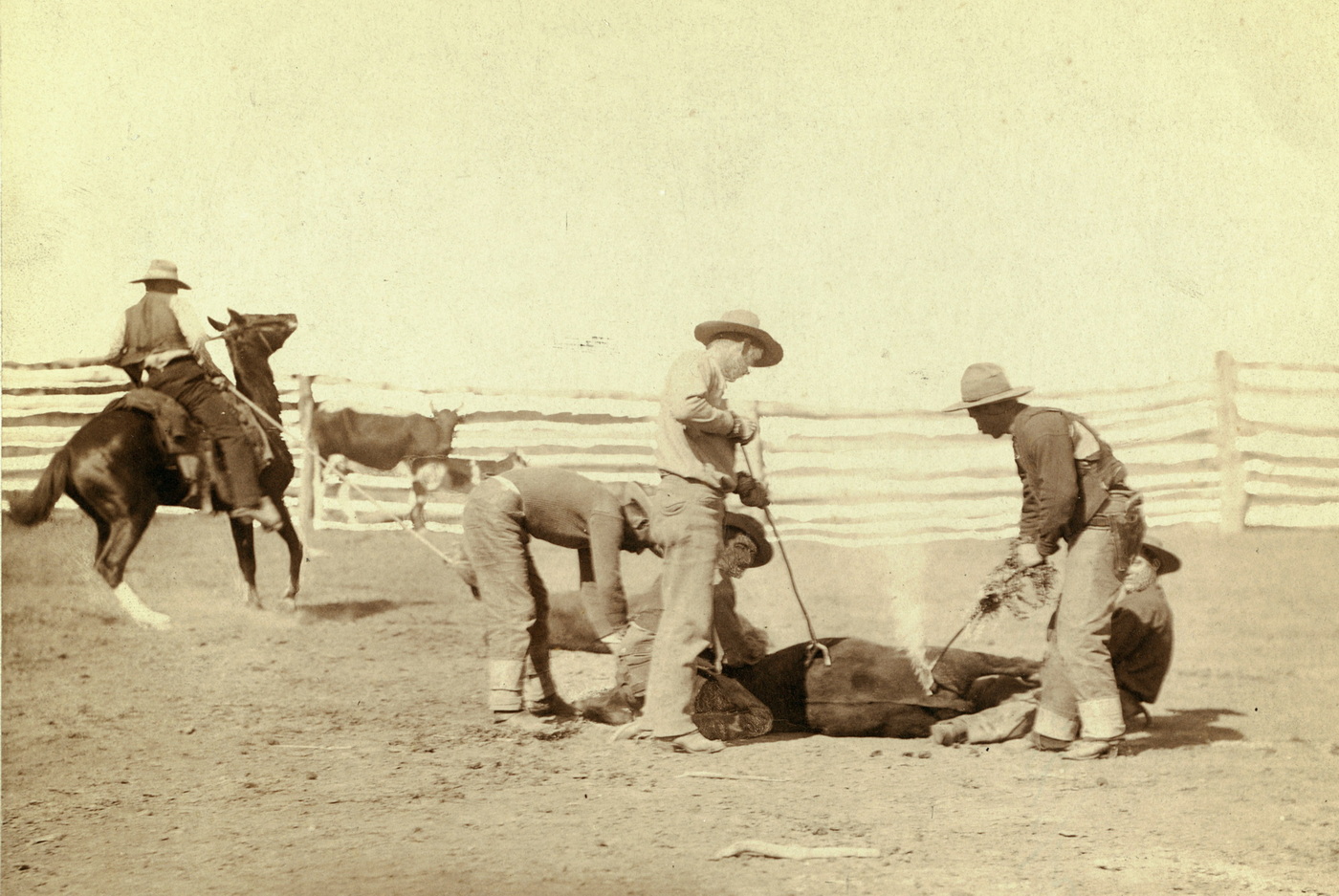
A hogtie is a classic full-body restraint. The limbs are bound behind the body, hands linked to feet, until the person cannot move or put force into a limb. The name comes from the farm. It was first used on young pigs and other four-legged animals. On a pig or a cow, the usual pattern joins three of the four legs. Tying all four together is difficult and easy to injure the animal, so the three-limb version became the farm standard. The word later moved into human restraint, and then into the vocabulary of erotic rope.
In BDSM, the tie puts the arms and the legs behind the body. The hands are cuffed behind the back, and the feet are drawn back until they can be linked to the hands. A typical setup uses legcuffs on the ankles, locks the wrists behind the back, then pulls the feet back until they meet the hands. The head and neck stay free. The body is prone: face down, on the stomach. That makes it harder to kick a person or an object nearby, and harder to slam the head into a hard surface, which is why the same idea showed up in custody. In erotic play the person is an adult who has already talked it through. The point is a voluntary exchange of power, not a restraint forced on someone who did not agree.
Prone looks stable, and it carries a specific risk: positional restraint asphyxia. In this position, breathing often gets harder, especially right after violent resistance or hard effort. Factors named in sudden deaths include cuffs that limit how the chest can expand, drugs, existing illness such as obesity or chronic obstructive pulmonary disease, and the body weight of officers or medical staff pressing on the chest and abdomen while the restraints go on. After deaths and safety research, many U.S. police departments dropped the hogtie as a standard custody technique. Used in real confinement without consent, the position is widely called inhumane.
In kink, what people want from a hogtie is a high degree of helplessness and total control: the exposure, the look of struggle, the fact that the bound person cannot get out. That is not custody. The breathing problem that comes with lying prone does not disappear because the scene was negotiated. Someone has to keep watching breathing, circulation, and nerve pressure, with a way to get the tie off quickly and a clear safeword. If prone compression makes breathing fail, stop. The pose also still carries the silhouette of calf roping from livestock sport. That rough image sits next to the ethic erotic rope actually uses: the tie is voluntary.