
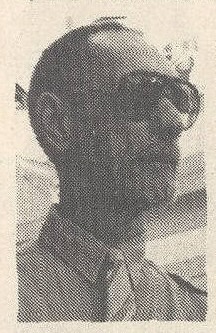
Charles “Chuck” Arnett (1928–1988) sits in a strange place in American art. He was born in Bogalusa, Louisiana, grew up in New Orleans, and died in San Francisco. He was a dancer. He spent a stretch with the National Ballet of Canada, the only full-time permanent job he ever held. That classical training shows in the work: the bodies are not porn doodles. They have weight, line, and presence. He turned that reading of the body into a visual foundation for leather culture in San Francisco’s South of Market.
The turn in his working life came in late 1962, when he moved to San Francisco and started painting murals at the Tool Box. The bar, at 339 4th Street, was among the first in the city built for the leather community and for gay motorcycle clubs. Arnett painted a series of life-size murals there, a wide cross-section of gay society at the time. Boots, leather jackets, the heat of the bar. The subjects across his career run wide: bar scenes, fisting, astrology. The pictures were painted for the adults who lived in that room. Copies then carried the room to people who had never walked into a leather bar.
The murals went national in the June 1964 Life article “Homosexuality In America.” It was the first feature on gay issues in a national magazine. It opened with a two-page spread of one of Arnett’s murals and labeled San Francisco the gay capital of America. That spread put Arnett in public view and pulled a lot of gay leathermen toward the city. He also assisted Dom Orejudos on murals in Chicago, and he was involved for a time with Orejudos’s partner, Chuck Renslow.
The Tool Box was not the only wall. He made art for other San Francisco spots, including Ambush, the Balcony, and the Red Star Saloon, and he painted a psychedelic black-light mural for The Stud. The work moves around, from bar scenes to bodies. It showed up often in Drummer and was exhibited at Fey-Way Studios. Samuel Steward tattooed him in the 1960s. One busy night Rudolf Nureyev walked into the Tool Box. Under a lot of eyes he took off his outer coat, showed a leather jacket, and got applause. Arnett poured him cognac in the best glass in the house. When Nureyev left, Arnett kept the glass.
Arnett died of AIDS on March 2, 1988. The pictures stayed in the city’s layout. Along Ringold Alley, the South of Market Leather History Alley includes work in his honor: a black granite stone etched with a narrative by Gayle Rubin, and a reproduction of the Tool Box mural. Bronze bootprints along the curb honor twenty-eight people important to San Francisco leather, Arnett among them. In 2006 historian Jack Fritscher wrote that if there were a gay Mount Rushmore, the four pioneer pop artists would be Chuck Arnett, Etienne, A. Jay, and Tom of Finland. Papers and artwork are held at the Leather Archives & Museum and the GLBT Historical Society. In 2012 the Yerba Buena Center for the Arts exhibited a recreation of the Tool Box mural.
![[Art Video] 1587 Kamakura Big Tits Exposure Training Enema Boxed Maso Beautiful Slave Tamari Naruse [Exclusive]](https://bdsmwild.com/wp-content/uploads/2026/09/Art-Video-1587-Exclusive.jpg)