Bootblacks care for the boots and leather kit of Leatherpeople and the wider BDSM community—jackets, vests, chaps, harnesses, and the rest of the gear. Once local, regional, and international bootblack contests took hold in the 1990s and early 2000s, bootblacks stopped looking like a service footnote and became a visible subculture of their own. Today a bootblack stand and a class on the craft are standard furniture at events, contests, conferences, and parties. The work is not only polish. Many of the pieces on the stand were gifted, earned, or inherited. While the leather is under the brush, bootblacks collect the wearer’s stories. That makes them a central oral-history role in the leather scene. Outsiders often assume bootblacking equals service-oriented submission. In practice a bootblack can hold any role in a BDSM dynamic.
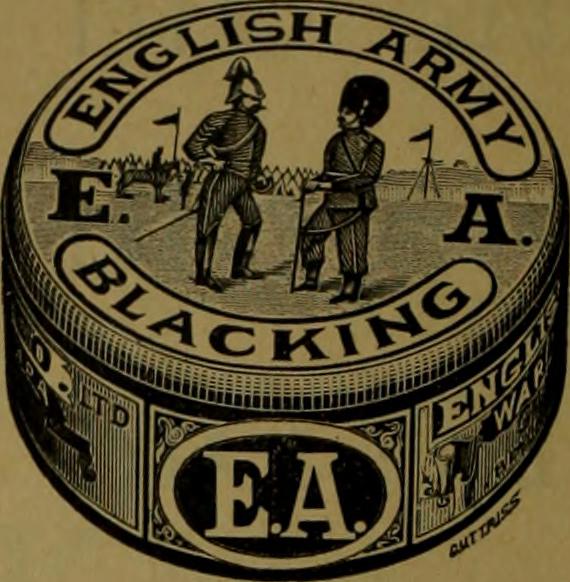
Merriam-Webster dates the word “bootblack”—someone who shines shoes—to 1817. It likely comes from “blacking,” an ancestor of modern shoe polish that used lampblack on English soldiers’ boots in the eighteenth and nineteenth centuries. Shoe-shining as a trade is at least as old as the Industrial Revolution. How it entered leather culture is less clear. The first well-documented fetish use sits in the diaries of Hannah Cullwick (1833–1909). She kept monthly and yearly tallies of the boots she cleaned. On Tuesday, July 31, 1860, she wrote that it was the last day of July and she had cleaned 83 pairs. She did hundreds a year, sometimes by licking them. She once told her lover Arthur Munby she could tell where he had been by the taste of his boots.
From leather bars to international titles
Bootblack stands and bootblacks working leather bars are documented in the United States from the 1970s, including the Gold Coast in Chicago and the Ramrod in New York City. Later houses picked up the custom—among them the AA Meat Market, the Eagle in Chicago, and the D.C. Eagle. Chicago’s Eagle mattered for the contest circuit: several future producers and titleholders bootblacked there, including Harry Shattuck, International Mr. Bootblack 1994 William Shields Jr., and International Ms. Bootblack 1999 Leslie Anderson. Stands have also been part of large leather events such as Folsom Street Fair.
Identity and subculture hardened in the 1990s when Shattuck founded the first International Bootblack competition at International Mr. Leather in 1993. Popular enough to continue through 1998, the contest split in 1999 into International Mr. Bootblack (IMrBB) at IML and International Ms. Bootblack (IMsBB) at International Ms. Leather. Most regional bootblack titles arrived later, in the 2000s and 2010s. Europe’s first regional contest, European Bootblack, was held in Antwerp, Belgium, in 2019. Since the mid-2010s a newer wave of events has centered bootblacks themselves and the sharing of skill rather than only serving title contestants.
The stand, spit shine, and the pride flag
The work can happen privately at home. Many bootblacks still prefer the public stand in a leather bar or at an event, conference, social, or contest. A booth usually has one or more raised seats so a customer can sit while boots are cleaned, buffed, and polished—the same basic architecture as a professional shoeshine stand. Depending on who is there and what they want, the hour can feel like a pampering chat—closer to a barber’s chair—or tilt into sensual or erotic play, including boot worship. As the kink scene diversified, so did the materials: not only various leathers but vegan leather, rubber, neoprene, and other synthetics. On an average shift, leather boots are still the main event. Many bootblacks take particular pride in mirror shine—also called spit shine—which leaves the toe cap with a glasslike high gloss through multiple layers of wax and water or saliva, then precise buffing with a cotton cloth or a nylon stocking.
Jesse “Spanky” Penley designed the Bootblack Pride Flag in 2005. It was shown publicly at the International LeatherSir / International Leatherboy weekend in Atlanta, Georgia, on October 6, 2005. It uses Leather Pride colors, but diagonal stripes set it apart: only three stripes—two blue, one white—whose width is meant to mark the wide range of people who are bootblacks or who value the work. A unisex boot stands for the fact that bootblacking is not gender-specific. A large red heart sits behind the boot for the heart a bootblack puts behind the shine. The Leather Archives & Museum holds multiple bootblack objects: IMBB 2000 David Hawk’s chair; IMBB 1994 William Shields Jr.’s kit; and a chair Shields—”Daddy” William Shields Jr.—used in gay bars in Chicago, Boston, Providence, and New York from the 1990s into the 2000s, on permanent exhibit since 2014.
Contests, books, and the craft as infrastructure
The best-known titles are International Mr. Bootblack (IMrBB), International Ms. Bootblack (IMsBB), and International Community Bootblack (ICBB). The rules of the first IML contest were simple: each IML package held a ticket for a bootblack session, and the bootblack who collected the most tickets over the weekend won. David Morgan, sponsored by the D.C. Eagle, became the first International Mr. Bootblack. Before the split, men, women, and gender-nonconforming people all entered the gender-neutral competition. At least one woman competed in 1993; more followed. Titleholders were exclusively male through 1998—a function of the ticket-count format and a male-dominated house. In 1999 the first International Ms. Bootblack ran at International Ms. Leather; Leslie Anderson became the first woman to hold an international bootblack title. IMBB 2000 David Hawk, who produced IMrBB from 2001 to 2011, added the First Shine, travel-fund pins, and the IMrBB party with a silent auction, all aimed at raising money.
U.S. leather pageants mostly date from the 1970s through the 1990s; most bootblack titles are newer, from the 2000s and 2010s. Contests now run internationally, including in Europe, Australia, and South Africa. Books that treat the craft include Linda A. Dominguez’s The Passion of Bootblacking (Agar, 2021); Vincent Andrews’s The leatherboy Handbook III; Cherielle RS’s Tales from the Chair (2013); Daddy Wendell’s Beyond Bootblacking (2012); and Andrew McDiarmid’s Bootblacking 101 (2007). Christina K. Court’s 2015 documentary High Shine: 15 Years of International Ms Bootblack covers the women’s title. For adult readers, bootblacking is leather infrastructure: Cullwick counting licked boots in 1860, Gold Coast and Ramrod stands in the 1970s, Shattuck forcing a contest onto IML in 1993, Anderson taking IMsBB in 1999, Hawk’s chair in the Leather Archives, and a public shine that can be conversation, conservation, or boot worship depending on who sits in the elevated seat—not a single prescribed role on either end of a D/s pairing.