
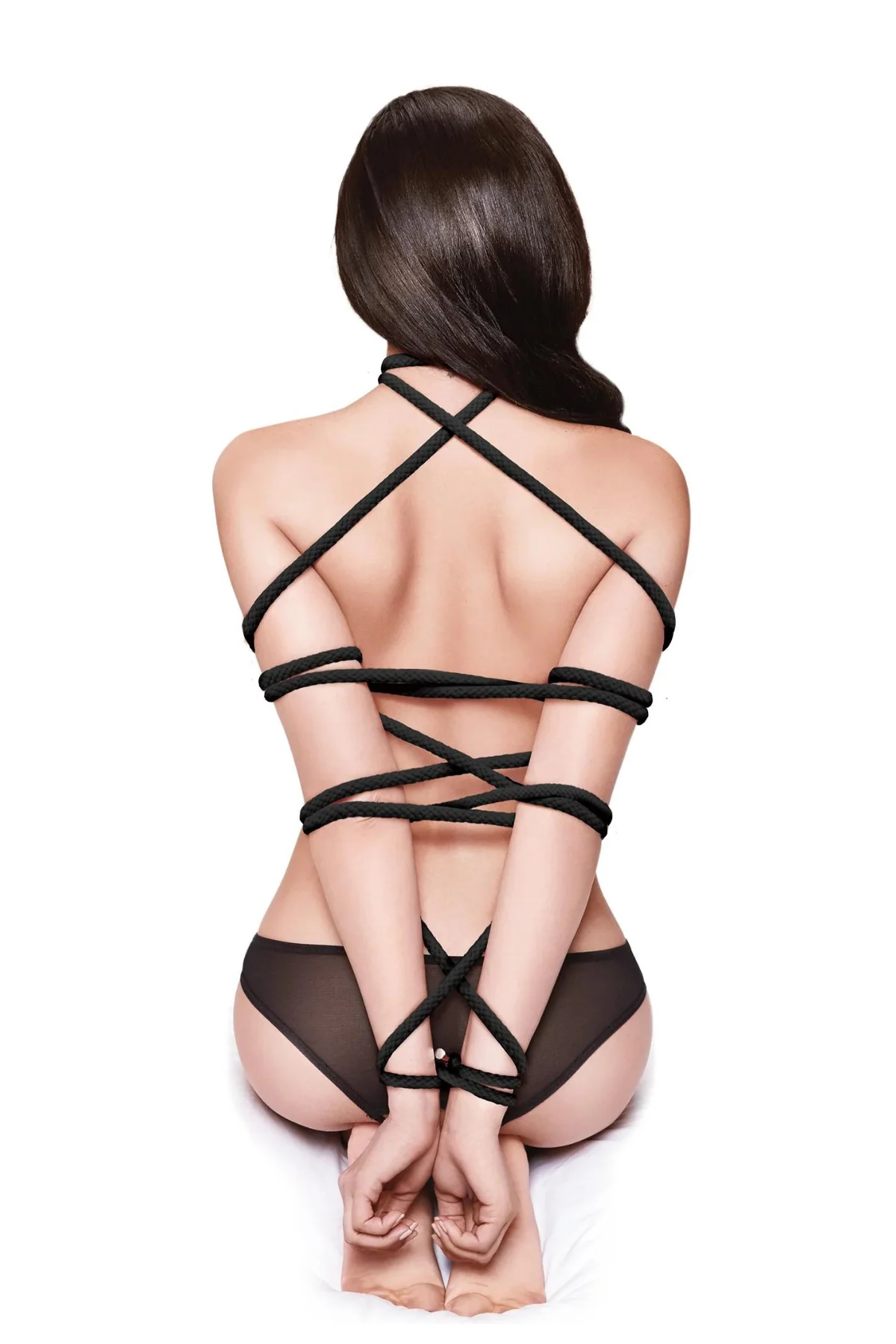
The B in BDSM stands for bondage. Ropes, handcuffs, bondage tape, self-adhesive bandages, and similar gear limit or lock a partner’s body so the pair can chase arousal, body sensation, or pure aesthetics. Bondage is not the whole SM toolkit. It can set up sex or other BDSM acts, or it can be the point by itself—rope work, breast bondage, and so on. For many people sex matters, but it is not the only driver; how the tie looks can sit at the center.
A dominant often gets off on the submissive’s compliance and the hand-off of power. Restraint can also make the bound partner easier to take into other sadomasochistic acts. Pleasure runs both ways: the bound person can ride helplessness and stillness; the person tying can ride the sight of a partner locked down. Some scenes skip the follow-on play entirely and chase only what the restraint itself does to mind and body.
Why people want to be tied varies. Some find that once the body is fixed, attention drops inward and they feel oddly calm—one participant line runs that some people need to be tied in order to be free. Others like fighting the restraints, or mixing domination with partnered sex and pain. Motives sort into rough types: purposeful restraint that makes spanking or similar acts easier, not bondage for its own sake; decorative bondage that turns the bound person into erotic photography or party furniture; corporal restraint in uncomfortable or painful positions used as D/s punishment; film-style bondage that stays soft and aesthetic, tied loosely enough to escape; and meditative restraint, less common in Western play but important in Japanese shibari, sometimes linked to religious tradition, with more weight on the bound person’s mental state than on the body pose.
Scenes, Gear, and Safety
Bondage shows up in negotiated adult rape or kidnapping fantasies, dominant/submissive role-play, and predicament bondage. Gear includes rope, straps, spreader bars, X-frames, mechanical restraints, bodysuits, and specialty pieces such as single gloves, sleepsacks, bondage hooks, and bondage tables. Many parties run bondage workshops where experienced players coach technique.
Safety is not optional. Know basic anatomy. Ask the bound person how they feel. Check for numbness, coldness, and skin-color change. If the mouth is gagged or speech is blocked, use a backup signal—humming a simple tune, or dropping an object held in the hand. Inversion and suspension carry higher risk: head injury, nerve compression, circulation trouble, fainting from raised blood pressure. Poses chosen for photos and video may be unsafe or only holdable for a short time; they need strong, experienced players. Highly artistic Japanese rope work usually takes years before the risk drops.
Self-bondage is riskier still because it breaks the rule never to leave a bound person alone. Timers, keys frozen in ice, and other “tunnel game” tricks temporarily hand control away. If a medical emergency hits with no one to cut free, damage can be serious or permanent. Combine that with asphyxia and it can kill.
Technique Families and Soft Bondage
Technique clusters into about six families: tying limbs together; spreading or extending limbs; fastening someone to a cross, chair, or table; suspending the bound partner; slowing movement with a corset or tight bodice; and wrapping the whole body in soft elastic material—mummification. Soft bondage is commoner than many people think: holding wrists, putting on cuffs, or simply ordering someone to stay still—verbal bondage. Aesthetic-first variants such as shibari or kinbaku can stay close to Japanese tradition or mix in Western restraint ideas.
![SDDM-175 Beautiful Girl Bondage Drama Mark of M 6 -Fragrant Young Lady- Nanami Nanase [Exclusive]](https://bdsmwild.com/wp-content/uploads/2026/09/SDDM-175-Exclusive.jpg)
![[Art Video] 1921 Fallen to Slave 9 Woman of the Female Core Pleasure Lust Prison Torment Pictures Aoi Uehara Hikaru Hara](https://bdsmwild.com/wp-content/uploads/2026/08/Art-Video-1921.jpg)
![[Art Video] 1775 Lewd Nurse Shameful State Emi Shimada Mariko Tsutsui [Exclusive]](https://bdsmwild.com/wp-content/uploads/2026/09/Art-Video-1775-Exclusive.jpg)